











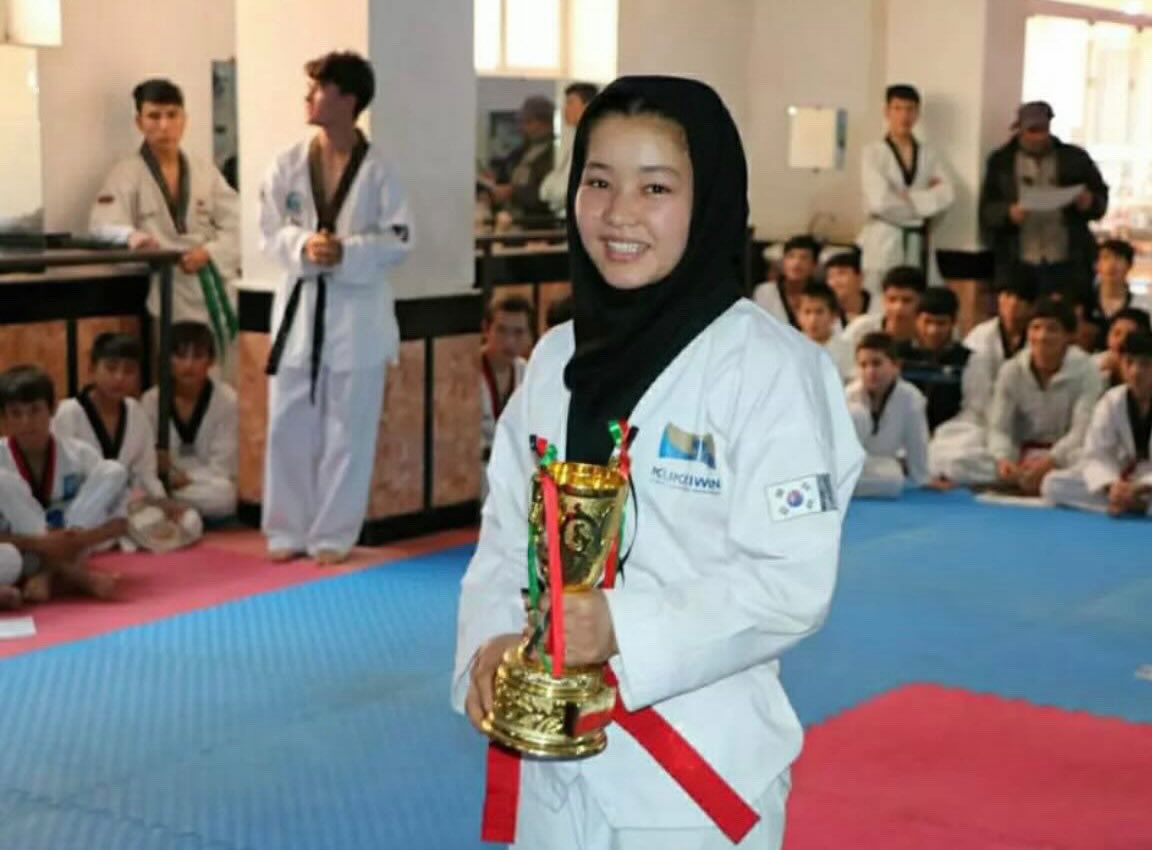




A 22-year-old Afghan woman, Khadija Ahmadzada, is facing a potential death sentence by stoning for secretly teaching girls taekwondo in a hidden courtyard at her home.
Ahmadzada was arrested by the Taliban’s morality forces on January 10 in Herat for defying the ban on women participating in sports.
Activists are now fearing for her life, with some rumors suggesting she may have already been sentenced to death.
British-Afghan social activist Shabnam Nasimi expressed growing concerns for Ahmadzada’s safety, highlighting the urgent need for international attention to prevent the execution of the sentence.
The Taliban’s restrictions on women’s participation in sports are part of a broader pattern of intimidation targeting women professionals in Afghanistan.
Since seizing power in 2021, the Taliban has imposed sweeping restrictions on women’s rights, including bans on female participation in sports, education, and employment.
Ahmadzada’s detention has sparked protests from Afghan women’s rights activists and sports figures, who condemn the arrest as a fundamental affront to basic freedoms.
“There are rumours from people around Khadija that the court has ruled on an extreme death sentence – stoning – for the crime of practicing and playing sport,’ Nasimi said in a video shared on Instagram.
“For anyone who doesn’t know what stoning is, it’s when stones are thrown at a living human being until they bleed, collapse and die.”
Nasimi said Ahmadzada’s family had been left in the dark since her arrest and warned that international pressure may be her only chance of survival.
She added that drawing global attention to the case could force the Taliban to hesitate, fearing scrutiny and intervention, rather than acting in secrecy.
‘If Khadija becomes famous enough, they may back off. They may release her with a warning because it becomes harder to pretend she never existed,’ Nasimi said.
According to Nasimi, witnesses claim Taliban morality officers raided Ahmadzada’s home in western Afghanistan and dragged her from the house during the operation.
She said the 22-year-old was detained alongside her father, with both held for more than a week.
Nasimi added that Ahmadzada’s family has received no official information about their whereabouts or legal status, while a Taliban judge is said to be deciding her case.
Activists fear the lack of transparency surrounding her detention has put her at serious risk.
The alleged arrest comes after the Taliban imposed sweeping restrictions on women and girls following their return to power in 2021, including a blanket ban on female participation in sport.
Women were barred from training, competing or coaching, with authorities declaring sport ‘un-Islamic’ and insisting women should remain out of public view.
Since then, female athletes across Afghanistan have been forced underground or into exile, with those who continue to train in secret risking arrest, detention and punishment by the regime’s morality police.
Activists say Ahmadzada’s case highlights the extreme dangers faced by women who defy the ban, even in private settings.
The detention has sparked protests from Afghan women’s rights activists and sports figures, who denounce the arrest as an affront to basic freedoms and call for her immediate release.
Richard Bennett, the United Nations Special Rapporteur on human rights in Afghanistan, has urged the Taliban to ensure Ahmadzada’s safety and release her, highlighting the detention as part of a broader pattern of intimidation against women professionals across the country.
Since the Taliban seized power in Afghanistan in August 2021, daily life has been reshaped by the expanding list of bans and restrictions.
Female-only gyms and sports centres have been shut, while women have been barred from exercising in public spaces.
Amusement parks and funfairs have also been segregated or closed to women, with officials saying mixed-gender recreation is not permitted.
The clampdown has extended beyond leisure, with women banned from secondary schools and universities, restricted from many jobs, and ordered to follow strict dress codes when outside the home.
Rights groups say the steady erosion of freedoms has left many women confined largely to their homes and fearful of punishment for perceived rule-breaking – a climate activists warn now threatens Khadija Ahmadzada’s life.
Author












Leave a comment