





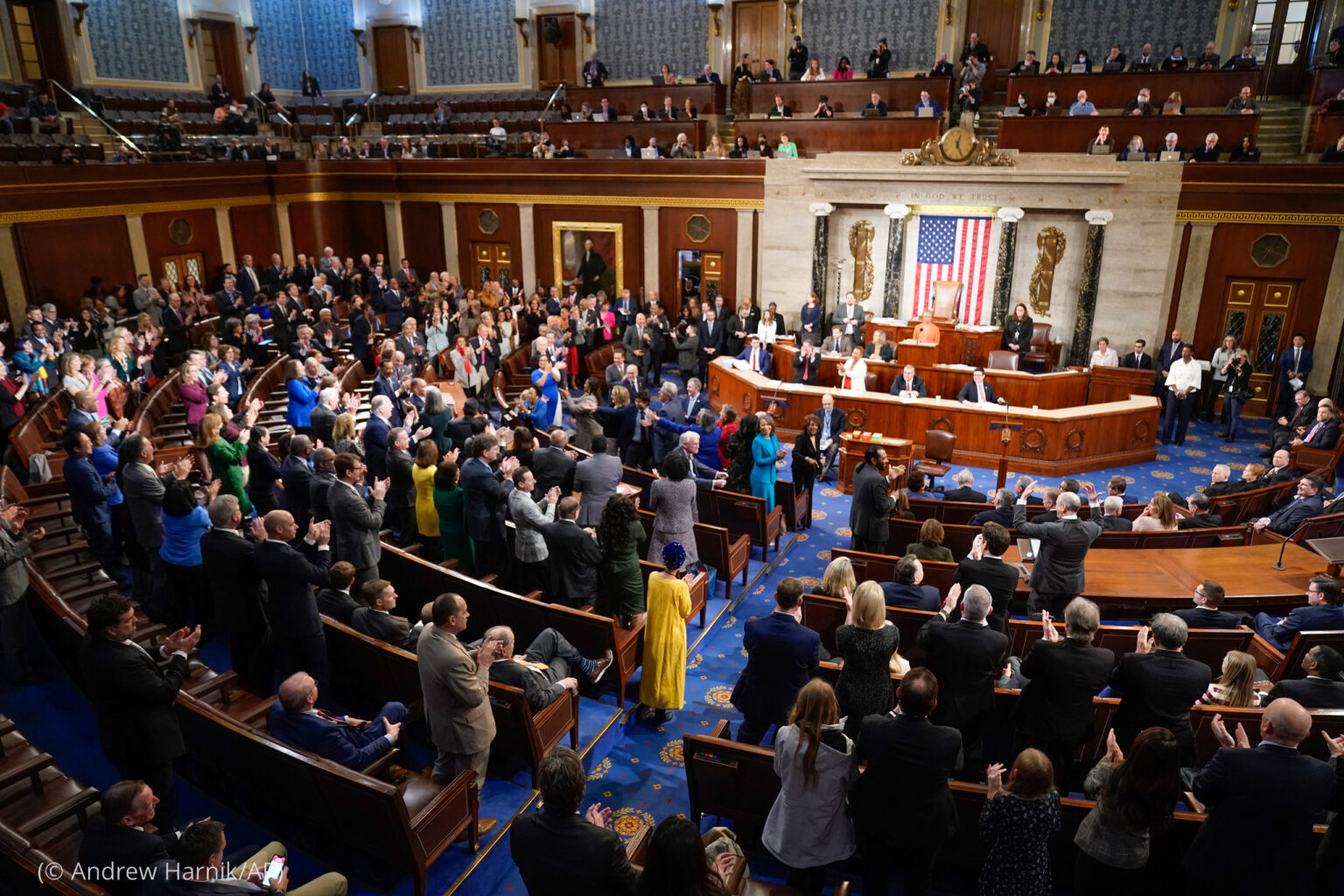

US lawmakers are pushing for tougher restrictions on Nigeria’s access to American assistance, citing persistent security failures and what they describe as aggressive lobbying efforts targeting Congress.
The move was disclosed on Wednesday when Congressman Riley Moore shared details on his official X account regarding a new provision in the proposed State Department funding bill.
The measure seeks to tie portions of US aid to measurable improvements in Nigeria’s security and governance.
“The Tinubu administration is spending millions lobbying Congress while failing to adequately address the genocide Nigerian Christians face daily,” Moore said.
He explained that the bill would withhold up to 50 percent of certain US funds designated for Nigeria’s central government until the Secretary of State certifies that Abuja is taking effective steps to curb violence, support victims, and enable displaced communities to return home safely.
“@HouseAppropsGOP just passed our annual State Department funding bill, which takes serious steps to address this crisis,” Moore added.
The legislation would also impose stricter congressional oversight, requiring more detailed spending plans and tighter monitoring of all security and humanitarian disbursements.
“In this bill, I worked with Mario Díaz-Balart to restrict security assistance to Nigeria unless certain criteria are met,” the lawmaker stated.
The proposal prioritizes atrocity prevention, religious freedom, accountability for security forces, and humanitarian relief, while also supporting stronger action against armed groups operating in affected regions.
Moore reiterated that the framework reflects growing bipartisan concern in Congress over insecurity and mass displacement in Nigeria, particularly in the Middle Belt, and he called for even stricter scrutiny in future funding cycles.
The latest move builds on earlier US policy responses to Nigeria’s security and human rights challenges.
In October 2025, President Donald Trump designated Nigeria a “Country of Particular Concern,” citing widespread attacks on Christians and what he described as an “existential threat” to Christianity in the country.
Trump subsequently directed lawmakers, including Moore and House Appropriations Committee Chairman Tom Cole, to investigate and report back.
That review produced congressional recommendations for stronger measures, including proposals to restrict Nigerian beef exports as leverage to pressure armed groups into disarming.
These recommendations were outlined in a report titled Ending the Persecution of Christians in Nigeria.
The report details a multifaceted strategy to improve security, including economic pressure, early warning systems, robust disarmament initiatives, and reintegration programs for militias.
It also advocates systemic reforms in Nigeria’s judicial and policing sectors, alongside targeted sanctions and visa bans for individuals fueling the violence.
Nigeria’s government has firmly rejected accusations of targeted persecution against Christians, maintaining that the nation’s insecurity stems from a complex mix of terrorism, banditry, and communal conflict.
Reports in January 2026 indicated that the Federal Government engaged a lobbying firm for $9 million.
Washington has also signaled willingness to increase support through enhanced intelligence sharing and expedited processing of Nigerian defense requests.
In December 2025, President Trump announced a “powerful and deadly strike” on an ISIS base in northwest Nigeria, an operation Nigerian officials later confirmed they supported following a terrorist attack in Maiduguri.
The renewed legislative push underscores intensifying scrutiny in Washington over Nigeria’s security crisis and the future direction of American assistance to Africa’s most populous nation.
Author




Leave a comment