















By Maryanne Awuya
To shield Nigeria’s food systems and global trade from the rising tide of pests and diseases, the Nigeria Agricultural Quarantine Service (NAQS) has advocated more robust plant biosecurity protocols.
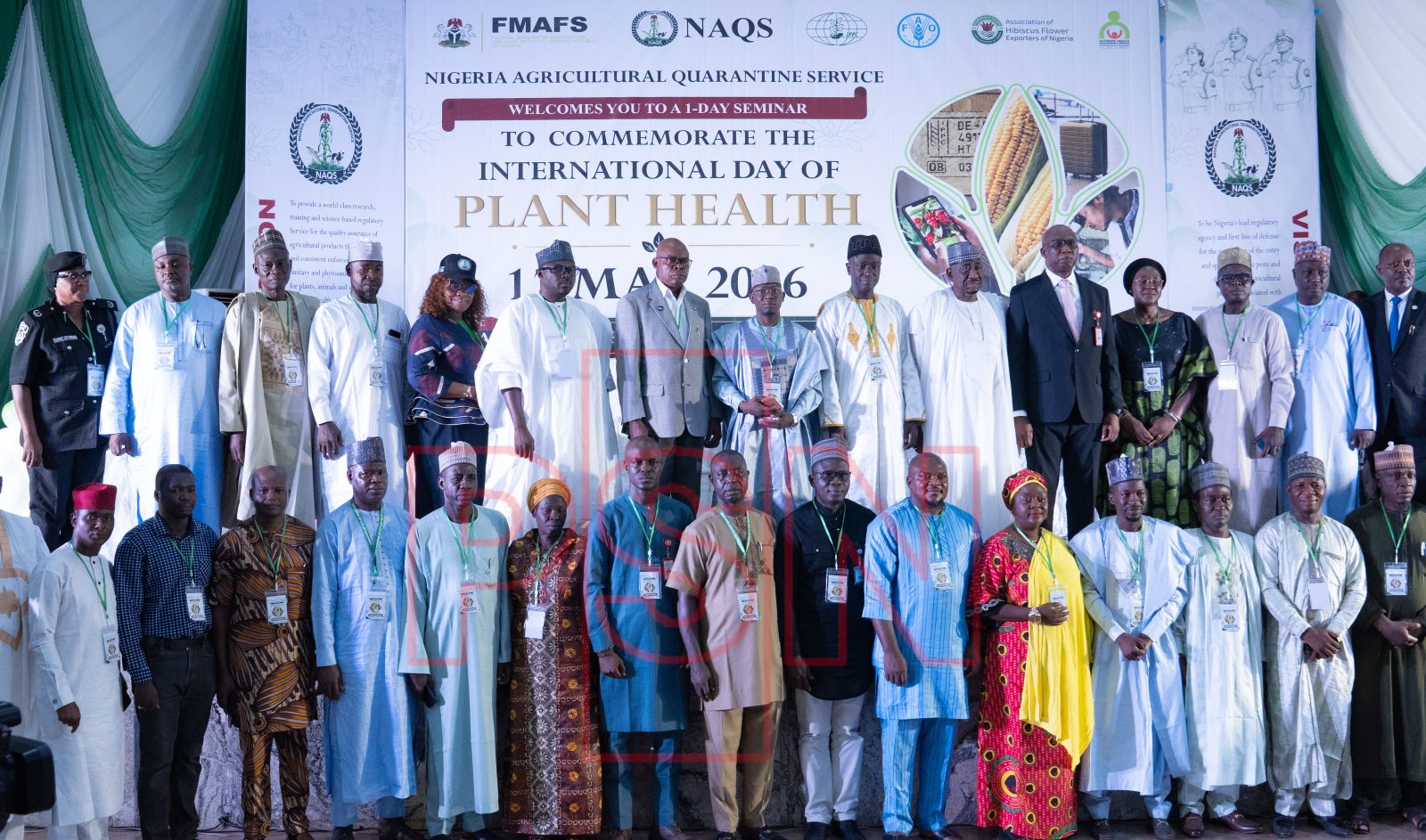
This plea was the focal point of the 2026 International Day of Plant Health, themed “Plant Biosecurity for Food Security,” held this Tuesday in Abuja.
During the event, NAQS Governing Board Chairman, Alhaji Abdullahi Abbas, highlighted biodiversity as the cornerstone of the nation’s agriculture, noting its critical role in crop resilience and adaptation to a shifting climate.
He said: “In a country like Nigeria blessed with rich ecological diversity, safeguarding our plant resources is not only an environmental responsibility but also a strategic imperative for national food security and economic sustainability.”
 According to him, NAQS remains committed to protecting Nigeria’s biodiversity through robust surveillance systems and adherence to international phytosanitary standards aimed at preventing the introduction and spread of harmful pests and diseases.
Abbas also called for stronger collaboration among government agencies, farmers, researchers, and international partners to promote sustainable agricultural practices and preserve indigenous plant species.
“We must invest in sustainable agricultural practices that promote the preservation of indigenous plant species and support innovation that enhances biodiversity while increasing food production,” he stressed
The Comptroller-General of NAQS, Dr. Vincent Isegbe, said plant health was essential to human survival, stressing that no nation can thrive without protecting its agricultural resources.
“Plant is life. Without plants, we cannot survive. The food we eat, the clothes we wear, and even our health depend on plants,” he said.
Isegbe emphasized that international agricultural trade depends heavily on phytosanitary certification to ensure exported products are free from harmful pests and diseases.
He said that even a single infected seed or grain could devastate an entire agricultural economy if proper checks are ignored.
“One infected seedling, cutting, rhizome, fruit or grain lot can introduce pests and diseases into farms, warehouses, and entire value chains,” he said.
Also speaking, President of the Federation of Agricultural Commodity Associations of Nigeria (FACAN), Alhaji Sheriff Balogun, said plant health is directly linked to food security, export quality, and the survival of Nigeria’s agricultural value chain.
According to him, unhealthy crops lead to reduced yields, post-harvest losses, export rejections, and financial losses for farmers.
“The health of plants is very crucial to the whole ecosystem and food system in Nigeria. This is not just a celebration; it is a call for everyone involved to put all hands on deck to ensure healthy plants,” Balogun stated.
 Dr. Shakiru Kazeem, FPPC Contact Person for Nigeria, said plants account for about 80 per cent of human food consumption and nearly 98 per cent of oxygen production, making plant protection critical for human survival.
He confirmed that NAQS has continued to strengthen inspection, diagnostics, treatment, and certification processes to ensure agricultural commodities moving in and out of Nigeria are pest-free.
“We are doing a lot in terms of inspection, diagnostics, treatment, and certification to ensure commodities are safe for trade and consumption,” Kazeem said.
He added that the agency is collaborating with research institutions and academia to stay ahead of emerging pest threats and improve national preparedness.
NAQS warned that plant diseases and pests can spread quickly if not properly controlled and called on all stakeholders to support efforts to protect Nigeria’s food security and agricultural trade.
Author










Leave a comment