







President Bola Tinubu has said that debt obligations are consuming half of Nigeria’s wealth, with $11.6 billion earmarked for debt servicing this year.
Addressing the Africa Forward Summit in Kenya, Tinubu took aim at a global financial architecture that he claims leaves Africa “at the receiving end” of economic hardship rather than growth.
According to a statement by Bayo Onanuga, this debt payment represents a critical drain on nearly 50% of the government’s expected income for 2026.
“Every single dollar that leaves our treasury to pay punitive interest rates is a dollar that did not go into our steel sector, our textile mills, our agro-processing plants, or our digital industries.
“We export raw minerals, crude oil, and agricultural commodities, and we import processed goods at a premium. This pattern is not an accident.
“It is the product of a global financial architecture that starves our industries of affordable capital, tolerates massive illicit financial flows, and imposes policy constraints that our competitors themselves never observed when they built their own industrial bases,” he said.
The summit, co-hosted by Kenyan President William Ruto and French President Emmanuel Macron, drew leaders and senior officials from more than 30 African countries.
Among those who delivered opening remarks were United Nations Secretary-General António Guterres and Chairman of the African Union Commission Mahamoud Ali Youssouf.
Tinubu said Africa’s persistent export of raw materials and importation of finished goods at premium prices was the direct consequence of an international system structured against the continent’s industrial development.
According to him, Africa’s share of global manufacturing value remains below two per cent despite decades of political independence.
The President stressed that Nigeria had undertaken painful but necessary economic reforms through sovereign decisions rather than external impositions.
He listed the removal of fuel subsidies, unification of exchange rates, recapitalisation of the banking sector with over $3.4 billion and Nigeria’s exit from the Financial Action Task Force grey list as part of the reforms already implemented.
President Tinubu said the measures had helped deliver a declining debt-to-GDP ratio projected at 32.3 per cent in 2026, stronger external reserves of $45.5 billion and renewed investor confidence.
He, however, lamented that even reforming African economies remained trapped by an unfair financial system.
Tinubu stated: “How can an African manufacturer compete with a competitor in Europe, Asia, or North America when the cost of borrowing in our nations is five to ten times higher?
“How can we build cross-border industrial value chains under the African Continental Free Trade Area when our infrastructure projects face a financing gap deepened by the very institutions meant to bridge it?”
Declaring that the present financial system had become “an instrument of industrial disarmament for Africa,” President Tinubu said: “Nigeria is not asking for charity.
“We are demanding a financial system that intentionally enables Africa to industrialise; to process its own minerals, refine its own crude oil, manufacture its own pharmaceuticals, and compete fairly in global markets.”
The President advocated stronger regional cooperation in maritime security and blue economy development, describing ocean governance as central to Africa’s future prosperity.
He pledged that Nigeria would intensify regional coordination by making its Deep Blue Project maritime intelligence infrastructure available as a shared data hub for willing Gulf of Guinea countries.
According to him, interoperable systems, harmonised laws and seamless joint enforcement must become operational realities across the region.
“Maritime sovereignty does not repel investment; it attracts it. Secure sea lanes, predictable regulation, and functional courts are the preconditions that unlock private capital,” the President said.
He added that Nigeria would continue advancing climate-aligned port modernisation and digital transformation within the maritime sector.
“The oceans have no duplicate as a common heritage of mankind. For Africa, moving from sea blindness to ocean sovereignty is not a choice; it is a generational duty.”
On migration, President Tinubu called for expanded safe, orderly and legal migration pathways while urging international partners to address the economic conditions fuelling irregular migration.
He said Nigeria had integrated migration management into its broader economic transformation agenda through infrastructure investments, agricultural modernisation and banking reforms designed to stimulate enterprise and rural livelihoods.
The President urged development partners to dedicate part of Official Development Assistance to programmes capable of reducing the desperation driving illegal migration.
“People who have jobs, security, and hope at home do not typically risk their lives in the back of a smuggler’s truck,” he said.
President Tinubu also urged African countries to work together towards building a more effective global migration governance architecture.
While acknowledging the Global Compact for Safe, Orderly and Regular Migration as a starting point, he described it as underfunded and non-binding.
He reaffirmed Nigeria’s support for the African Union Migration Policy Framework and the Khartoum Process.
On the sidelines of the summit, the President held a bilateral meeting with the President of Madagascar, Michael Randrianirina.
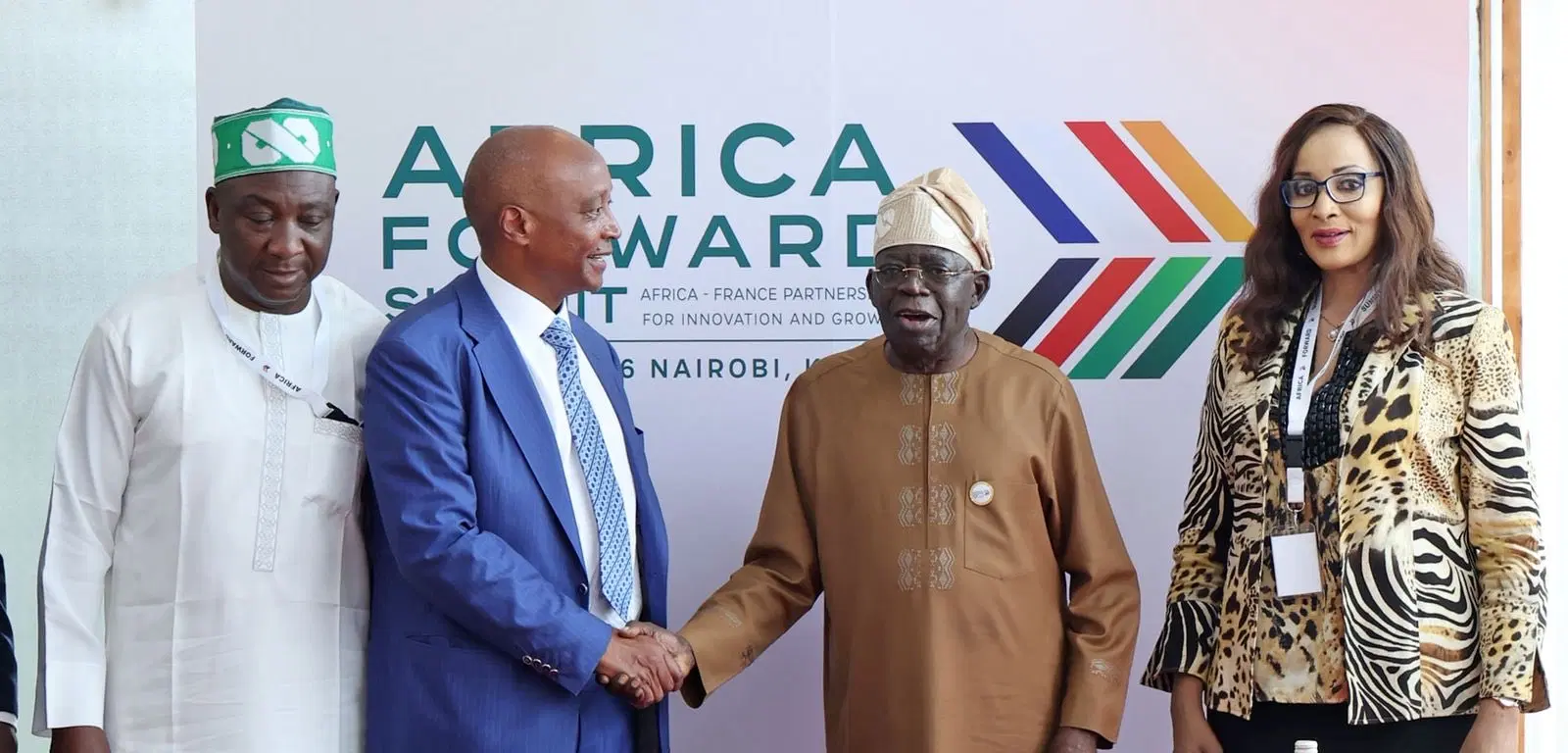
He also met with the President of the Confederation of African Football, Patrice Motsepe, during which Nigeria expressed readiness to host the 2026 CAF Awards.
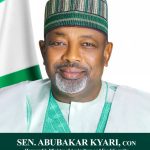
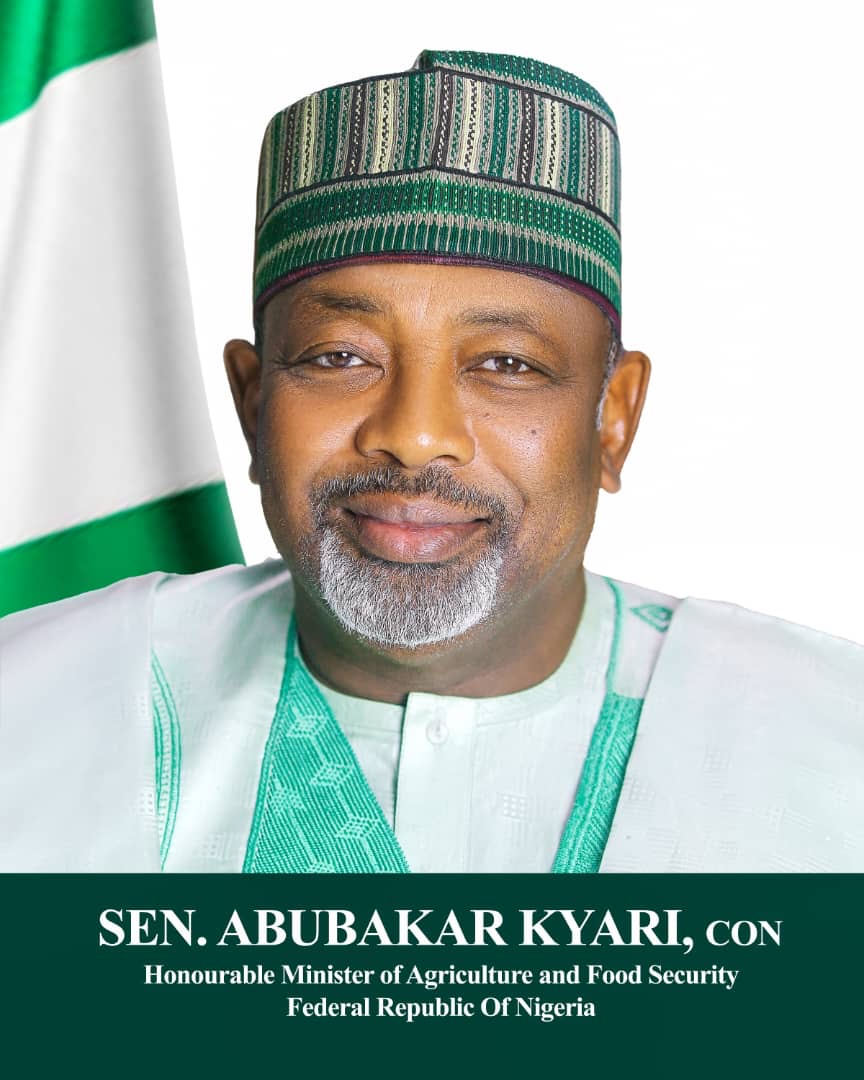
The Nigerian delegation included Minister of Foreign Affairs Bianca Odumegwu-Ojukwu; Minister of Finance and Coordinating Minister of the Economy Taiwo Oyedele; Minister of Agriculture and Food Security Abubakar Kyari; Minister of Marine and Blue Economy Adegboyega Oyetola; Minister of Environment Balarabe Abbas Lawal; Minister of Industry, Trade and Investment Jumoke Oduwole; and Minister of Communications, Innovation and Digital Economy Bosun Tijani.
Business leaders included Aliko Dangote, Abdulsamad Rabiu, Tony Elumelu and Aigboje Aig-Imoukhuede.
Others on the delegation were Chief Executive Officer of the Nigerian Investment Promotion Council, Aisha Rimi; Minister of State-designate for Foreign Affairs, Sola Enikanolaiye; Director-General of the National Council on Climate Change, Omotenioye Majekodunmi; Nigerian Ambassador to France, Ayodele Oke; and Director-General of the National Intelligence Agency, Mohammed Mohammed.
The ministers engaged in high-level bilateral talks with counterparts from Kenya, France, and across the continent.
These discussions, held at the University of Nairobi and the KICC, centered on leveraging Africa’s demographic strengths through youth engagement and entrepreneurship.
The summit’s broader agenda tackled critical drivers of growth, including AI, digitalization, and agro-industrial development.
Beyond technology, participants worked on frameworks to turn political promises into actionable industrialization strategies, covering sectors from healthcare and trade to climate change and the creative arts.
Author



Leave a comment