






By Samuel Akpan
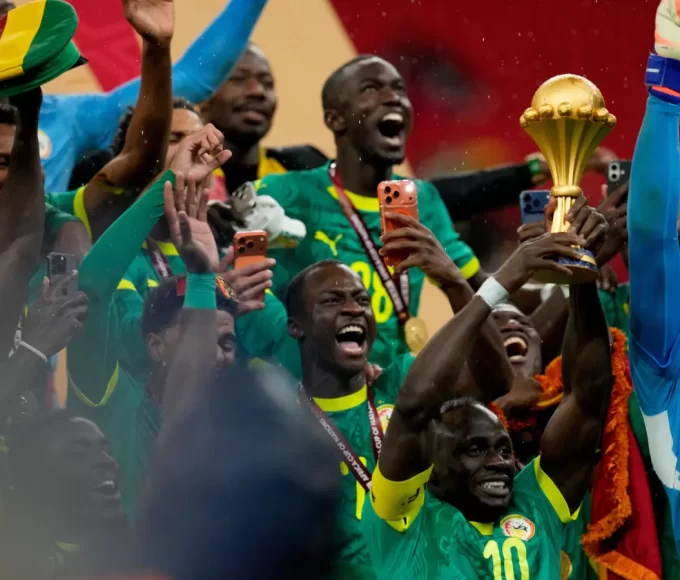
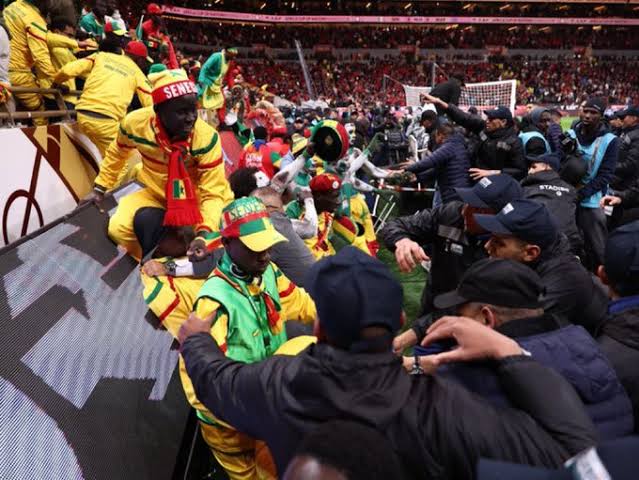
In a landmark display of compassion and continental solidarity, King Mohammed VI of Morocco has granted a royal pardon to Senegalese supporters convicted in connection with the final of the TotalEnergies CAF Africa Cup of Nations Morocco 2025, drawing warm praise from African football leaders.
The move has been welcomed by the Confédération Africaine de Football (CAF), whose president described it as a shining example of football’s ability to foster peace and togetherness across borders.
In a statement on Sunday by the governing body communication department, CAF President Dr Patrice Motsepe expressed deep gratitude on behalf of the organisation’s member associations, which represent 54 African countries.
“On behalf of the CAF Member Associations who represent 54 African countries, I would like to express our deep gratitude to His Majesty King Mohammed VI, may God assist him, for granting His Royal Pardon to the Senegalese supporters convicted of offences relating to the final match of the TotalEnergies CAF Africa Cup of Nations Morocco 2025,” Motsepe stated.
He added that CAF has always stressed football’s role in bridging divides.
“CAF has consistently emphasized its commitment to utilize football to contribute to uniting our people from different racial, ethnic and religious backgrounds,” the CAF chief said.
“The pardon by His Majesty King Mohammed VI, is an uplifting and motivating illustration of the power of football to unite and bring our people together in Africa and worldwide.”
Motsepe disclosed he was particularly moved by the deep historical bonds between the two nations.
“I was amazed and impressed when I was briefed about the historic and extensive ties between the people of Senegal and Morocco, when I visited these two countries a few weeks ago,” he noted.
Looking ahead to the FIFA World Cup 2026, Motsepe extended CAF’s full support to Africa’s participating teams.
“CAF wishes Morocco, Senegal, Egypt, Algeria, Tunisia, Ghana, South Africa, Cote d’Ivoire, Cape Verde and the Democratic Republic of Congo, everything of the very best during the FIFA World Cup 2026,” he declared.
“We are confident that they will make Africa proud.”
Persecondnews reports that the relationship between Senegal and Morocco stretches back over a millennium, rooted in ancient trans-Saharan trade routes that linked Morocco to West Africa through Senegal.
These commercial exchanges facilitated not only economic interaction but also the movement of scholars, traders, and ideas.
A cornerstone of this bond is the Tijaniyya Sufi order, founded in the 18th century by Sheikh Ahmed Tijani in Fez, Morocco.
The order spread widely across Senegal, where it remains highly influential, with followers making pilgrimages to the zawiya in Fez.
This spiritual fraternity has long served as a bridge, reinforcing cultural and religious affinity between the two nations.
Formal diplomatic ties were established on November 15, 1960, shortly after Senegal’s independence.
King Mohammed VI has placed exceptional emphasis on the partnership, making multiple visits to Senegal (in 2001, 2004, 2005, 2006, 2008, 2013, and 2015) — more than to any other African country.
These visits have driven practical cooperation in areas such as agriculture, fisheries, education, health, infrastructure, water management, and air transport.
Morocco is a significant investor in Senegal, particularly in banking, insurance, energy, and infrastructure.
Joint business forums and private-sector initiatives further strengthen economic links, with both sides seeking to rebalance trade in Senegal’s favour while expanding co-development projects.
The relationship has repeatedly demonstrated its strength.
In the wake of tensions following the TotalEnergies CAF Africa Cup of Nations Morocco 2025 final, where some Senegalese supporters faced legal issues, King Mohammed VI granted a royal pardon to the convicted fans on humanitarian grounds, citing the “age-old fraternal ties” between the two countries.
This gesture was widely welcomed in Senegal, including by President Bassirou Diomaye Faye, and underscored football’s role in highlighting — rather than undermining — the deeper bonds.
Author




Leave a comment