











By Omoyeni Ojeifo
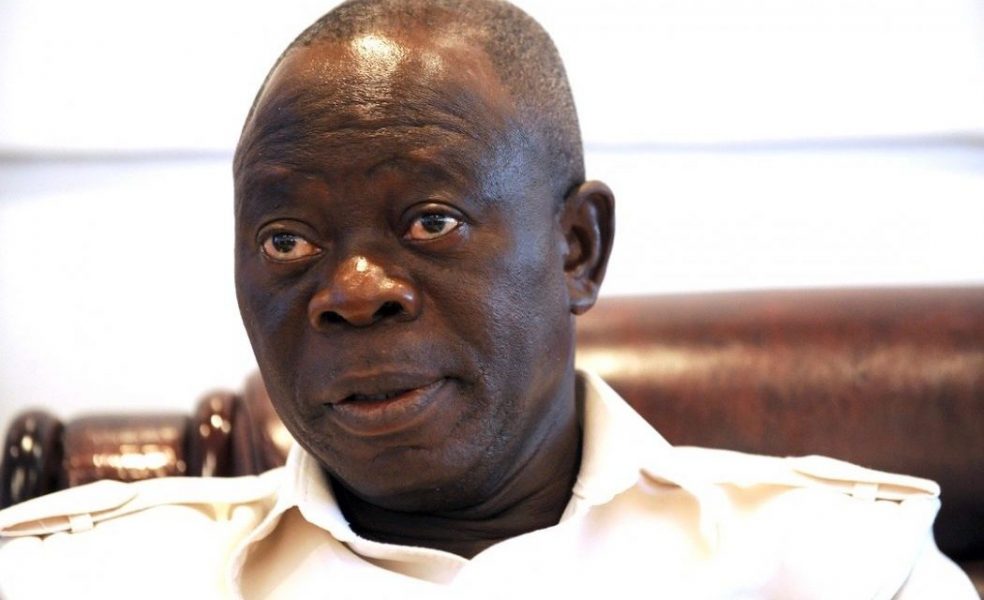
Sen. Adams Oshiomhole has again criticised the Senate’s controversial amendment to its standing rules.
He warned that altering parliamentary procedures to block perceived rivals could set a dangerous precedent for Nigeria’s democracy.
Oshiomole gave the warning while featuring in an interview on Arise TV monitored by Persecondnews on Tuesday.
The Edo North senator criticized recent leadership changes under Senate President Godswill Akpabio, specifically a new rule requiring lawmakers to serve two consecutive terms before becoming eligible for principal offices.
Oshiomhole argued that this amendment seems designed to sideline certain individuals and ignores the practical realities of parliamentary service.
“You don’t make laws for specific individuals that you fear may emerge tomorrow. That is the beginning of the road to dictatorship,” he said.
The former Edo governor maintained that the amendment process itself was flawed, insisting senators were not given adequate time to scrutinise the proposed changes before they were debated and passed.
According to him, lawmakers were denied advance copies of the amendment despite its constitutional and institutional implications.
“My view is that we must not rush in making laws. Every clause and every word must benefit from scrutiny.”
Oshiomhole also accused the Senate leadership of refusing to allow a formal division of the chamber during voting, despite his attempt to invoke Senate Order 70, which he said would have ensured transparency on how senators voted.
“The constituents need to know who voted for what,” he said, arguing that voice votes were insufficient for major rule amendments affecting the future composition of Senate leadership.
According to him, Akpabio’s earlier tenure in the Senate was interrupted after he left to serve as minister before returning to the upper chamber.
“Strictly speaking by the interpretation of the rules that have been made, he has only done less than three years for the purpose of ranking,” Oshiomhole argued.
He also questioned the rationale behind changing rules for future assemblies rather than allowing incoming lawmakers determine their own procedures.
The senator said the Senate’s subsequent reversal of part of the amendment, particularly the provision requiring senators elect to be sworn in before contesting presiding offices, reinforced concerns that the process had been hurried and poorly thought through.
“The Senate had to revise itself because it made rules that conflicted with the Nigerian Constitution,” he said.
Oshiomhole also defended his controversial call for the nationalisation of South African-owned businesses operating in Nigeria following repeated xenophobic attacks against Nigerians in South Africa.
The senator had previously suggested that companies such belonging to South Africa in Nigeria should be nationalised if South African authorities continued to fail in protecting Nigerians.
Defending the position, he argued that human lives should take precedence over foreign investment interests.
He also addressed criticisms surrounding the Electoral Act, particularly debates over electronic transmission of results and the use of the Bimodal Voter Accreditation System, popularly known as BVAS.
According to him, lawmakers sought to avoid legal ambiguities that could jeopardise election outcomes in areas with poor network coverage.
The controversy over the Senate rule amendment has continued to generate debate within political and legal circles ahead of the 2027 elections.
Author









Leave a comment