














By Omoyeni Ojeifo
Nigeria’s public universities are entering a new phase of academic stability with the Federal Government pointing to three consecutive years of uninterrupted academic calendars as a major success story of its ongoing educational reforms, signaling an end to the era of constant campus disruptions.
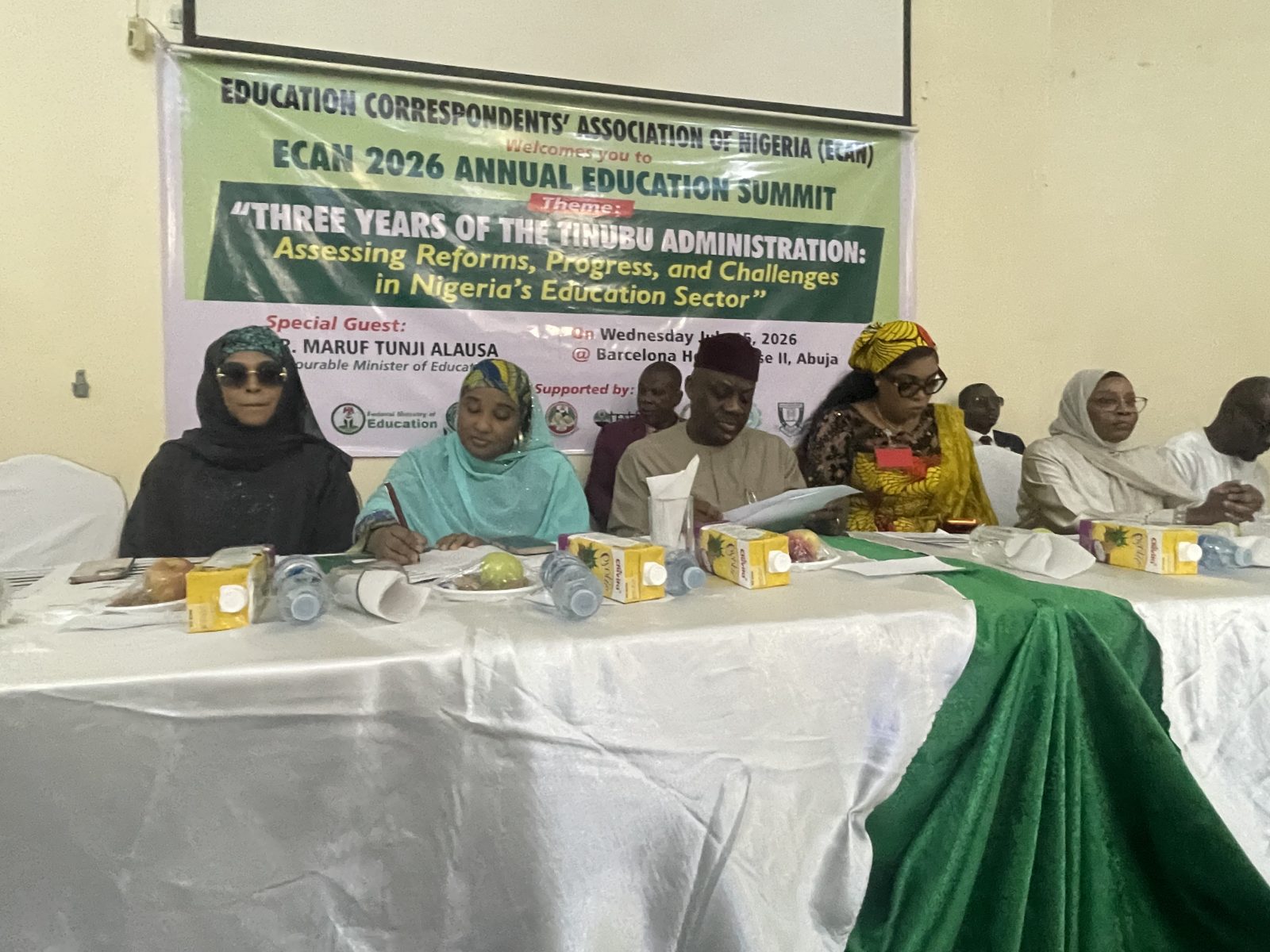
Dr. Tunji Alausa, Minister of Education, stated this on Tuesday while declaring open the 2026 Annual Education Summit of the Education Correspondents Association of Nigeria (ECAN) in Abuja. The summit was themed: “Three Years of the Tinubu Administration: Assessing Reforms, Achievements and Challenges in Nigeria’s Education Sector, Persecondnews reports.
Reviewing the administration’s performance in the education sector, the minister said deliberate reforms had restored stability to tertiary education, expanded access to learning and improved quality across all levels of the system.
“For once in three years, we haven’t had any stoppage in our tertiary education system. This is a big deal. We resolved it responsibly and have put in place a framework where both sides will continue to negotiate periodically,” he said.
The minister said the stability had enabled the government to implement reforms that expanded access to tertiary education across the country.
“Last year, we increased admissions from about 707,000 to over one million students. This admission cycle, we’re targeting about 1.5 million admissions. This is what transformative reform is all about.”
Alausa said the reforms were also improving the quality and global competitiveness of Nigerian universities.
“This year, 24 Nigerian universities are among the world’s top 1,000 universities. Seventeen of them are public universities. This reflects the reforms we have undertaken in our education system.”
The minister said interventions introduced by the administration had also brought more children back into classrooms while efforts continued to establish accurate national data on out-of-school children.
“In the last 24 months, we’ve moved over one million children off the streets into school. We’re working with the National Bureau of Statistics to determine the actual figure because we do not have 15 or 17 million out-of-school children again.”
Alausa said the government had repositioned Technical and Vocational Education and Training (TVET) to equip young Nigerians with practical skills and improve employment opportunities.
“Today, over 150,000 students are being trained across about 1,600 centres nationwide. They’re receiving monthly stipends, industry-relevant training and starter packs to help them transition into jobs and entrepreneurship,” he said.
The minister also highlighted the government’s efforts to address access challenges through social protection programmes, including initiatives aimed at supporting vulnerable families and keeping children in school.
“Over 90 per cent of children dropping out of school is due to poverty, not insecurity. That is why we are deploying social safety programmes to support parents and keep their children in school.”
He urged education correspondents to continue reporting responsibly and make effective use of the ministry’s education data platforms to promote transparency and accountability in the sector.
“You are the voice that amplifies these reforms. Use the data available, verify your information and continue reporting in a way that is credible because what you do impacts the entire country.”
Persecondnews also reports that the minister noted that government had shifted to evidence-based planning, using digital data to identify gaps in infrastructure, teacher deployment and school enrolment across the country.
Author












Leave a comment