








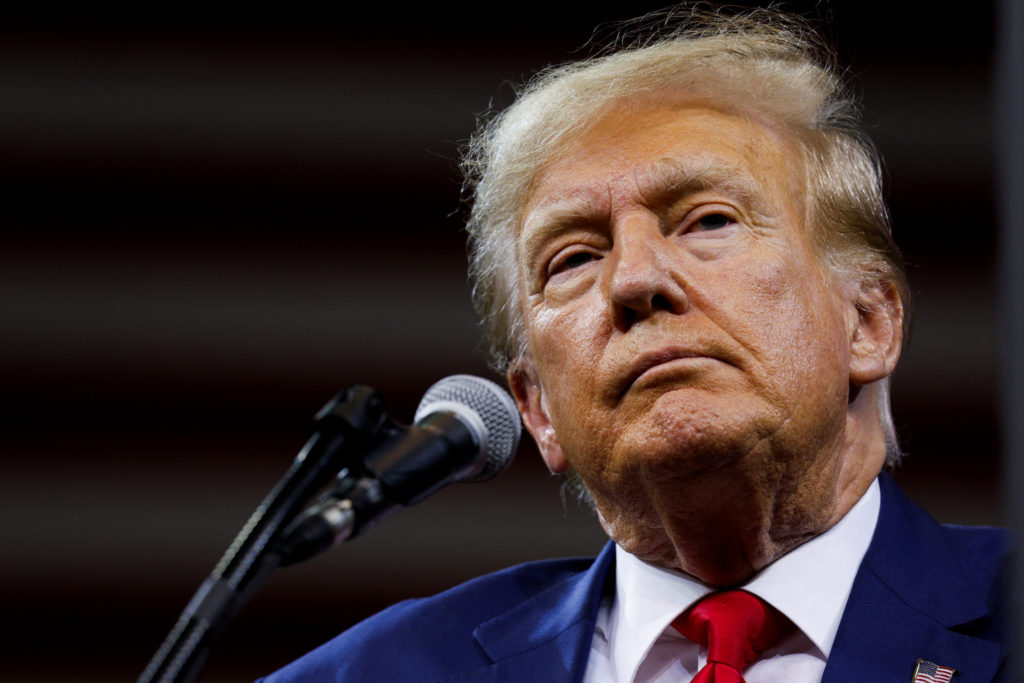




President Donald Trump has indicated the US naval blockade of Iran may stretch on for months, triggering a sharp jump in global oil prices to their highest level in more than four years—a surge that persisted into Thursday.
The president is scheduled to receive a detailed briefing Thursday on fresh options for potential military steps against Iran from Admiral Brad Cooper, commander of US Central Command, according to two sources familiar with the plans.
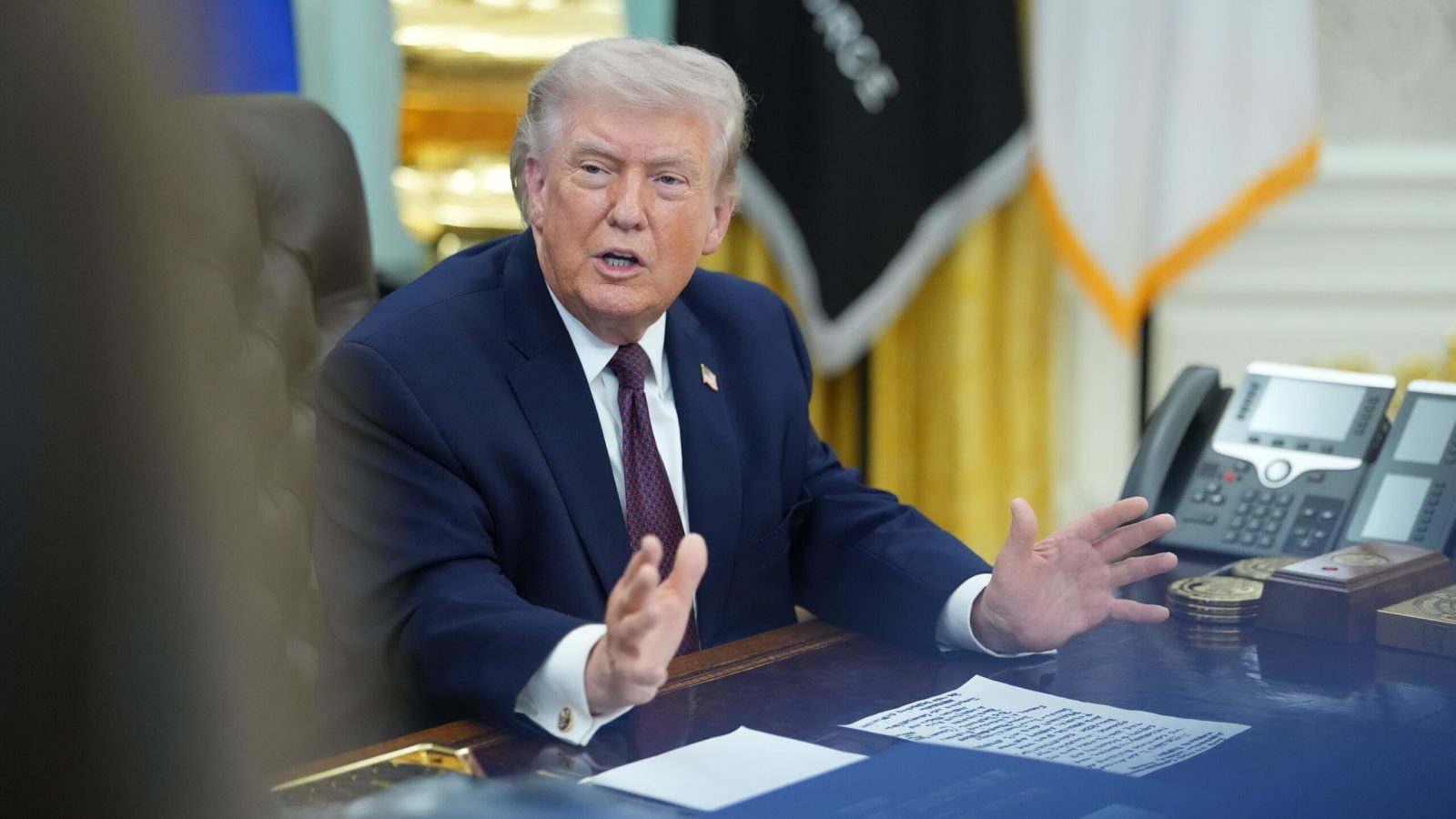
While meeting with oil executives, Trump argued that blocking Iranian ports—which Tehran has insisted must be lifted before any agreement—is far more effective than bombing.
“They are choking like a stuffed pig. And it is going to be worse for them,” he told Axios, referring to the naval action.
US Central Command announced Wednesday on X that it had hit a major milestone by successfully redirecting the 42nd commercial vessel trying to break the blockade.
It added that 41 tankers holding 69 million barrels of oil remain unsellable by the Iranian regime, with an estimated value topping $6 billion.
Trump is under heavy political pressure to wind down the conflict, which remains unpopular even among parts of his own base, has raised costs for American consumers, and unsettled key US allies.
Oil prices climbed to four-year highs, with the US benchmark Brent surging more than seven percent to $126.41 for June delivery and West Texas Intermediate rising around three percent to $110.31, though both contracts later gave back some gains.
Iran has tried to use its grip on the Strait of Hormuz—the narrow chokepoint carrying roughly one-fifth of global oil shipments—as leverage after coming under attack.
On Wednesday the US leader sharply criticized German Chancellor Friedrich Merz, warning he could slash the number of American troops in Germany because Berlin refuses to support the war in Iran or help with any peacekeeping mission in the Strait of Hormuz.
Merz became a fresh target of Trump’s frustration after commenting earlier this week that Iran was “humiliating” Washington at the negotiating table.
Senior US officials, including Vice President JD Vance, twice had to turn back last week from planned trips to Pakistan for talks with Iran, which has questioned Trump’s seriousness about diplomacy.
American officials say they remain unsure who actually speaks for Iran—whether the hardline Revolutionary Guards, now even more powerful, or the diplomats—following Israeli strikes that eliminated several top leaders.
The UN Development Programme cautioned that the war, which has also driven up fertilizer prices, could push more than 30 million people into poverty across 160 countries.
“It’s development in reverse,” UNDP chief Alexander De Croo told AFP.
Despite the cleric-led government’s defiant posture, the Iranian rial has tumbled to historic lows against the dollar.
Residents of Tehran, speaking to AFP journalists in Paris, described a mood of deep despair.
“Every time in recent years that negotiations have taken place, the economic situation of the people has only gotten worse. Sanctions have either started or intensified,” said a 52-year-old architect who asked not to be named.
“The issue is always nuclear. There’s no talk about people, the economy or freedom. People have the right to not even want to hear the word ‘negotiation’,” he added.
Iran has offered to loosen its control over the Strait of Hormuz if Washington ends the blockade and enters broader talks, but the Trump administration has voiced skepticism about the idea.
Iran’s parliament speaker Mohammad Bagher Ghalibaf, a prominent figure since the war began, said Wednesday that the US naval blockade is designed to sow division and “make us collapse from within.”
Fighting continues on the Lebanese front despite a recently extended ceasefire between Israel and Hezbollah, the Iran-backed group that pulled Lebanon into the conflict by firing rockets at Israel. Israel responded with airstrikes and a ground invasion.
For the first time since the truce started, the Lebanese army reported Tuesday that an Israeli strike hit its troops, wounding two soldiers in the south. A second strike on Wednesday killed one Lebanese soldier.
“Israel must finally realise that the only path to security is through negotiations, but it must first fully implement the ceasefire in order to move on to negotiations,” Lebanese President Joseph Aoun said.
A UN-backed report Wednesday warned that more than 1.2 million people in Lebanon now face acute hunger because of the latest war.
Author






Leave a comment