









By Ajumai Ameh
When the Ghana Airlines came into existence, the industry was very different from today. State-owned carriers were the norm then. In this report, Persecondnews X-rays the rise and fall of Ghana Airways.
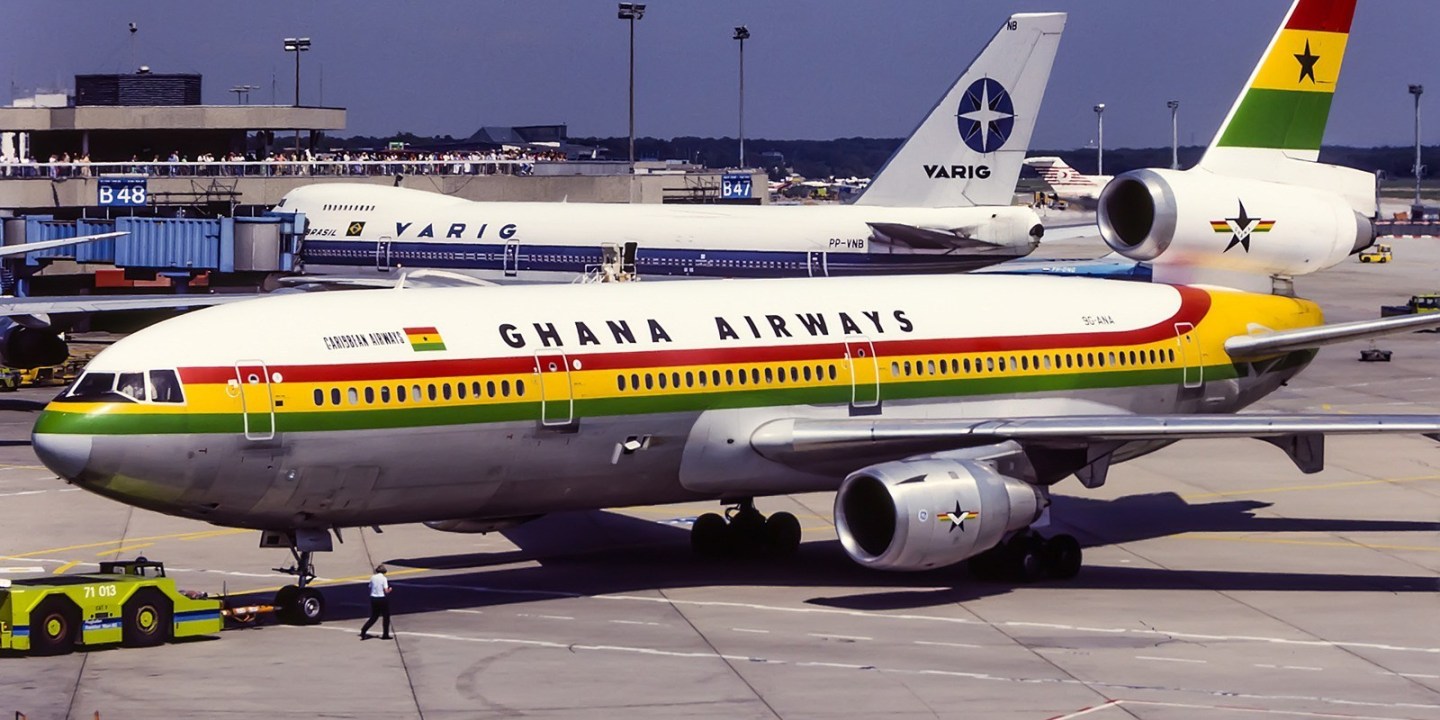
Ghana Airways was the national airline of the Republic of Ghana, with its main base of operation, and hub, at Kotoka International Airport in Accra. It was founded by Ghana’s government in 1958, even though it was a joint venture under a seven-year agreement between the government and the British Overseas Aircraft Corporation (BOAC). The government had 60 per cent stake in the airline. BOAC staff ran the airline while Ghanaian personnel were sent to London for training.
When the airline came into existence, the industry was very different from today; the state-owned carriers were the norm then. The problem with this was that in an industry that runs on the thinnest of profit margins, state-run carriers always depended on handouts from the state to function.
Over time, the increase in demand for air travel gave rise to private carriers. Bloated, overstaffed, inefficiently state-run airlines found it hard to compete with private carriers which offer the same services, but in a more innovative way.
In 1960, Ghana Airways ordered two British-built Vickers Viscounts; a move which led to the then-President, Kwame Nkrumah, accused of being in cahoots with Western governments. To counter this, the government which owned a majority stake in Ghana Airways, entered into an agreement with the Soviet Union for six Ilyushin Il-18s at the cost of £670,000 each. When the aircraft arrived, they were operated by Soviet crews while Ghanaian pilots were being trained.
In November of 1960, Ghana Airways also took delivery of a four-engined Antonov An-12 turboprop.
Jet Era
The jet age brought about the jet engine which revolutionized air travel. In other not to be left out, Ghana Airways ordered two Boeing 707-420s and three Vickers VC10s. The plan was to use the new jets on flights to the United States along with commencing service to Sydney and Tokyo.
Looking to distance itself further from foreign influences, Ghana saw its airline as a symbol of the newly independent state and reached an agreement with BOAC to buy out the British companies’ 40% stake in the airline. To seal the agreement, Ghana Airways simultaneously signed a contract renewing BOACs management agreement which was first signed in 1958.
In July 1961, the Ghanaian government announced that it was reorganizing the airline and canceled Ghana Airways’ commitment for the two Boeing 707s. The Airways also terminated its pool agreement with BOAC in 1962; three years before it was due to expire, and signed a new agreement with Alitalia to cooperate on flights between Accra and Rome. By 1963 relations between the UK carrier and Ghana Airways were nearly nonexistent despite BOAC still handling Ghana Airways ground operations at London Heathrow.
Massive debt
In 2002, Ghana Airways Chairman, Sam Jonah, disclosed the airline had incurred about $160 million debt and would not survive without a foreign partner, following the seizure of one of the airlines’; DC-10s. It was seized at London Heathrow when a British creditor of the airline got a legal junction to recoup some of the £4 million that it was owed.
The British creditor later released the DC-10 after receiving a payment of $1 million. In September 2002, the Ghanaian government announced that it had entered into an agreement with South Africa’s Nationwide Airlines, adding that Ghana Airways would be renamed Ghana Nationwide International Airlines. However, this relationship did not last long, as the government withdrew from the deal in 2003 and became involved with British Midland.
Under the plan, British Midland would supply two Airbus A330s for the Accra-London and Accra-New York routes, with the DC-10s being used on other international long-haul routes. British Midland said that for New Ghana Airways regional routes, it would operate a fleet of Fokker 100s.
In 2004, under the pretext of operating unsafe aircraft on an out-of-date license, the United States Department of Transportation banned the airlines, forcing it to cancel its New York and Baltimore flights.
The banning led to the Ghana Airways Board being fired by the government and the government taking over full control of the airlines. In 2005, the talk was that Ethiopian Airlines had offered to help keep Ghana Airways afloat but that the Ghanaian government would only get a 25% stake in the airline. This idea did not go down well, and when the government refused to give the airline any more money, it was liquidated in June.
Last year, some 15 years after being liquidated, the Ghanaian government announced that a Memorandum of Understanding (MoU) had been signed with Egypt Air, hoping there will be light at the end of tunnel for moribund airlines.
Author






Leave a comment