












By Opeyemi Oke
It is a given that of the three needs of man, food comes first and its availability is the bedrock for any other form of growth – be it physical or economic. In effect, the food economy is deeply interrelated with globalisation, changes in consumer demand for energy, the ICT revolution, sustainability issues, and shifts in the relationship between private companies and public regulators. Clearly, it is the first rung in the quest for economic independence.
Given that Nigeria is Africa’s largest country with the fastest growing population, the nation’s food needs continue to rise. But the increase in food production has not kept pace with population growth. A consequence of this is mirrored in the rising food imports and declining levels of national food self-sufficiency.
Clearly, one of the main factors undermining agricultural output is the general sub-optimal yield per hectare due to low fertilizer application among other factors. For decades, this has been the bane of agriculture in Nigeria. Curiously, the role of fertilizers in crop yields and agricultural productivity are usually underestimated by many. That’s why mineral fertilizers are used to supplement the soil’s nutrient stocks with minerals that can be quickly absorbed and used by crops.
It is worth recalling that in 2015, President Muhammadu Buhari inherited an agricultural sector that was weakened by serial policy inconsistencies. Nigeria solely depended on importation of fertilizers and a subsidy regime that only served to assuage the thirst of corrupt middlemen. But the President would have none of that. He was determined to reverse this position in a sustainable manner.
More, late distribution of fertilizer to farmers, delivery to unintended beneficiaries, price distortion in markets, crowding out private sector investments and late payment of suppliers added to the mix that made the national agricultural policies of 2006 to 2015 untenable and incapable of improving Nigeria’s fortune in food production.
Encumbered by a debt burden of over N60 billion in subsidies, moribund blending plants and over-reliance on imports, the Buhari administration incepted the Presidential Fertilizer Initiative (PFI) – beginning from the 2nd of December 2016 – kick-started the process that eventually liberated the agricultural sector from the clutches of poorly implemented policies of past administrations.
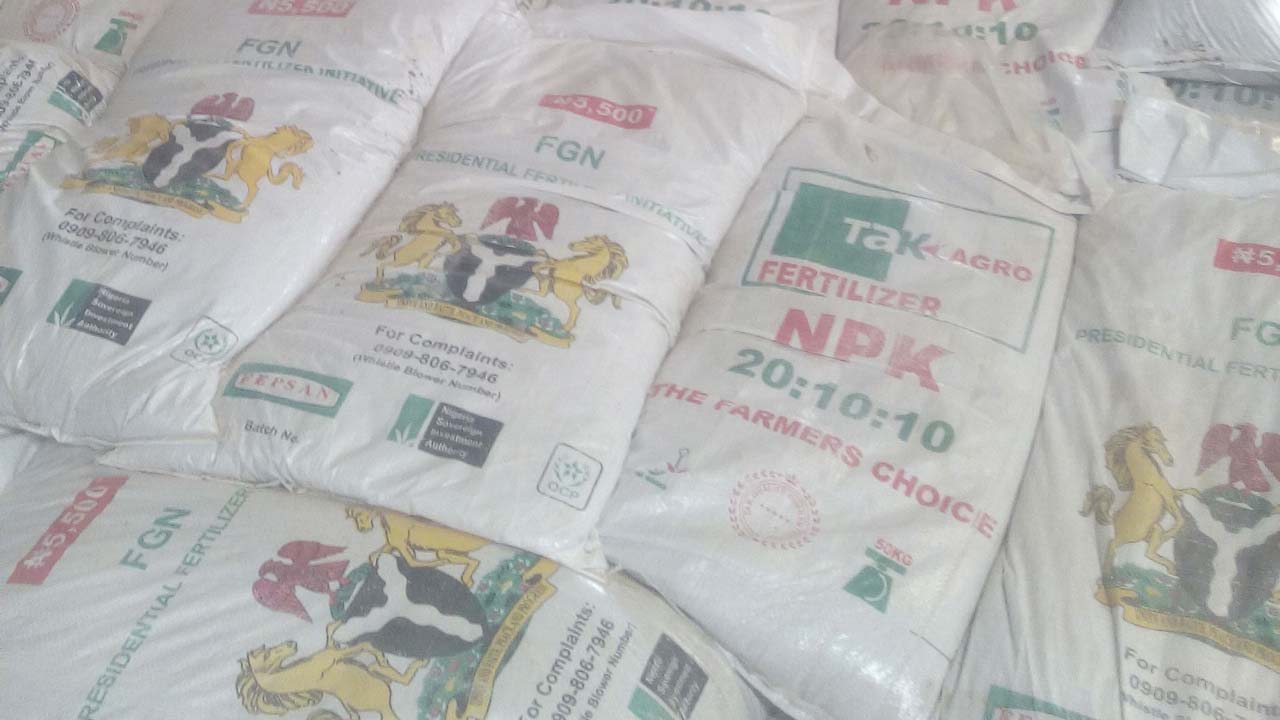
The Presidential Fertilizer Initiative (PFI) was set up and designed to ‘disrupt’ the status-quo of importing blended fertiliser, by directly negotiating discounted contracts to procure the four constituent raw materials for NPK Fertiliser sourced from Europe – and blending these locally to produce NPK Fertiliser at reduced cost.
Succinctly captured, the PFI is a catalytic intervention initiated by the President, underpinned by several policy realignments to revive the nation’s hitherto comatose domestic fertilizer blending industry and the underlying value chain supporting the critical sector. Designed as a five-year rolling plan in the first instance, PFI consists of five unique stages which combine to augment the country’s domestic industrial capacity.
In the first stage, the President engineered the supply of high-quality raw materials at scale to domestic blenders. Secondly, the current government’s import substitution programme was scaled and gradually, restrictions were placed on importation of finished blends of fertilizer. As the blenders attained financial independence and operational wherewithal, the third stage – a total ban on importation of finished fertilizer products – was then implemented.
In the fourth stage, the President sought the backward integration towards the domestic production of raw materials (Phosphate, Potash etc.) not currently produced locally – while in the fifth and final phase, government will stimulate a gradual move towards open market commercial production of fertilizers. Notably, the President has made significant strides in ensuring that all the stages above are achieved before the conclusion his administration.
In order to manage the programme on behalf of government as a fund manager and programme manager in strict compliance with the programme objectives and under clear governance systems, the Nigeria Sovereign Investment Authority (NSIA) was appointed to serve as the implementing entity.
Besides the centrality of NSIA, operating through a Special Purpose Vehicle, NAIC-NPK Limited and responsible for funding and implementing the PFI, there are other key parties to the programme. These include – the Federal Ministry of agriculture and Rural Development, Office of the National Security adviser (NSA), Central Bank of Nigeria and the Fertilizer Producers and Suppliers Association of Nigeria (FEPSAN).
Others also include OCP: State-owned Di Ammonium Phosphate producer, on behalf of the Government of Morocco, the Blending Plants accredited under the PFI, the Agro-Dealers and State Governments who off-take the finished products from the Blending Plants and retail to the farmers, International Institute for Tropical Agriculture (IITA), Ibadan and Ahmadu Bello University, Zaria – for testing the products to ensure consistent in quality of product mix.
Cut to the bone, the PFI has resuscitated the fertilizer blending industry, increasing operational plants from 4 in 2016 to 41 as of year-end 2020, saved Nigeria a whooping US$200 million in foreign exchange, and ₦60 billion in budgetary provisions for fertiliser subsidy, enhanced food security as a result of the increase in food production, reduced food-induced inflation and stimulation of economic activities across the agriculture value chain and created over a hundred thousand direct and indirect jobs.
This year, after painstaking assessment and review by the presidency, the NSIA is being restructured to take the back seat and allow the industry grow on its own. This is to make the overall program more sustainable.
An elated FESPAN chairman Thomas Etuh proclaimed recently: “With the restructuring of the PFI for sustainability, we are doing 1.5 million metric tonnes of blended NPK this year. From 44 plants this year, we are moving to 54 this year. We commend the President and NSIA for this partnership and look forward to more areas of collaboration.”
According to NSIA Managing Director Uche Orji: “We bring three things to every process – accountability, transparency and the reputation and capital base of the NSIA…. “On his part, Aminu Umar Sadiq, Executive Director, NSIA, revealed that, “The role of the NSIA has been fundamental in relation to the PFI and FEPSAN…NSIA has also been the financiers to the implementation within the first four years…”
Beyond the broader goal of ensuring food security for the country by providing high-grade fertilizer to enhance harvest, the Buhari administration is by this initiative reinforcing its commitment to reviving and diversifying the economy, and creating growth, through a focus on agriculture. The stupendous grounds covered by the focused presidential exertions in the critical fertiliser sector have linkages with the new trajectory and home run.
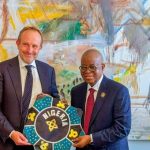
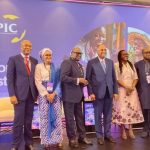
Last week, on Thursday, March 25, during a virtual meeting with members of the Presidential Fertiliser Initiative (PFI) and Fertiliser Producers and Suppliers Association of Nigeria (FEPSAN) led by Mr. Thomas Etuh in Abuja, a clearly elated President Buhari told his rapt audience that recent developments in the Nigerian fertiliser value chain is moving the country to becoming a regional and global fertiliser powerhouse. He also stated that a new $1.3b worth basic chemicals platform that will produce ammonia and fertilisers in Nigeria will be ready for commissioning in the coming months. The new plant, he revealed, will be built in partnership with the Kingdom of Morocco.
According to Buhari, “His Majesty, the King of Morocco and I, have agreed to extend the current phosphate supply agreement between the Kingdom of Morocco and Nigeria. We both believe that to consolidate and expand on the successes recorded thus far; we must secure raw material supplies to our blenders.
“Furthermore, to improve the balance of trade between Nigeria and Morocco, the two countries have signed an agreement to develop a $1.3 billion basic chemicals platform in Nigeria that will produce ammonia, phosphoric acid, sulphuric acid, and various Nitrogen, Phosphorus and Potassium (NPK), and Diammonium Phosphate (DAP) fertilisers using Nigeria’s gas reserves.”
President Buhari noted that the new plant when completed would complement the existing Dangote and Indorama Chemicals facilities which produce urea, ammonia, and other industrial raw materials. On the activities of the FEPSAN, the President expressed happiness with the progress made over the past five years, saying investments in the fertiliser and agricultural inputs sector have continued to grow despite the country going through recessions during the period.
His words: “Though many investors chose to take their monies out of Nigeria, you continued to invest. Today, we are seeing the fruits of your smart, long term and patriotic decisions. This is why all Nigerians should be proud of the personal commitments and sacrifices you all made in getting us to where we are today.
“Another commendable trait worth mentioning is that all your investments have been balanced between urban and rural Nigeria; these are the types of investments needed to address the unemployment and security challenges our nation is facing today.”
FEPSAN President, Thomas Etuh, highlighted the commitment and supportive roles of President Buhari in birthing the PFI which commenced the sectoral revitalization process explaining that the singular initiative had lifted the country from scarcity to availability of the essential agro input. Etuh reminded the President of the initial mandate given to FEPSAN members through the PFI programme in 2016, saying that the success of the initial mandate was being leveraged to further widen opportunities.
His words: “Mr. President, when you invited us for a role in the PFI programme, there were only four blending plants in Nigeria operating at less than 40 percent capacity. But today, we are proud to announce the existence of 40 blending plants in the country, all operating at 100 percent capacity. Today, we are proud to announce that all the blending plants in Nigeria source 60 percent of their raw material locally.”
A major highlight of the meeting was the restructuring of the PFI, to ensure it was fully private sector-led, and would provide all the funding for the procurement of raw materials necessary for fertiliser production in the country.
A powerful vision pulls in ideas, people and other resources. It creates the energy and will to make change happen. It inspires individuals, diverse stakeholders and organizations to commit, to persist and to give their best. This is the story of the Presidential Fertiliser Initiative – a flagship agricultural sector programme of the President Buhari administration – a resounding success. For fertiliser production, he has indeed hit the home run.
Baba For All!!!!
Oke writes from Lagos
Author










Leave a comment