















By Samuel Akpan
The Port Management Association of West and Central Africa (PMAWCA) is launching a new statistician network to push data-driven management across the region.
The initiative aims to enhance decision-making and boost port competitiveness.
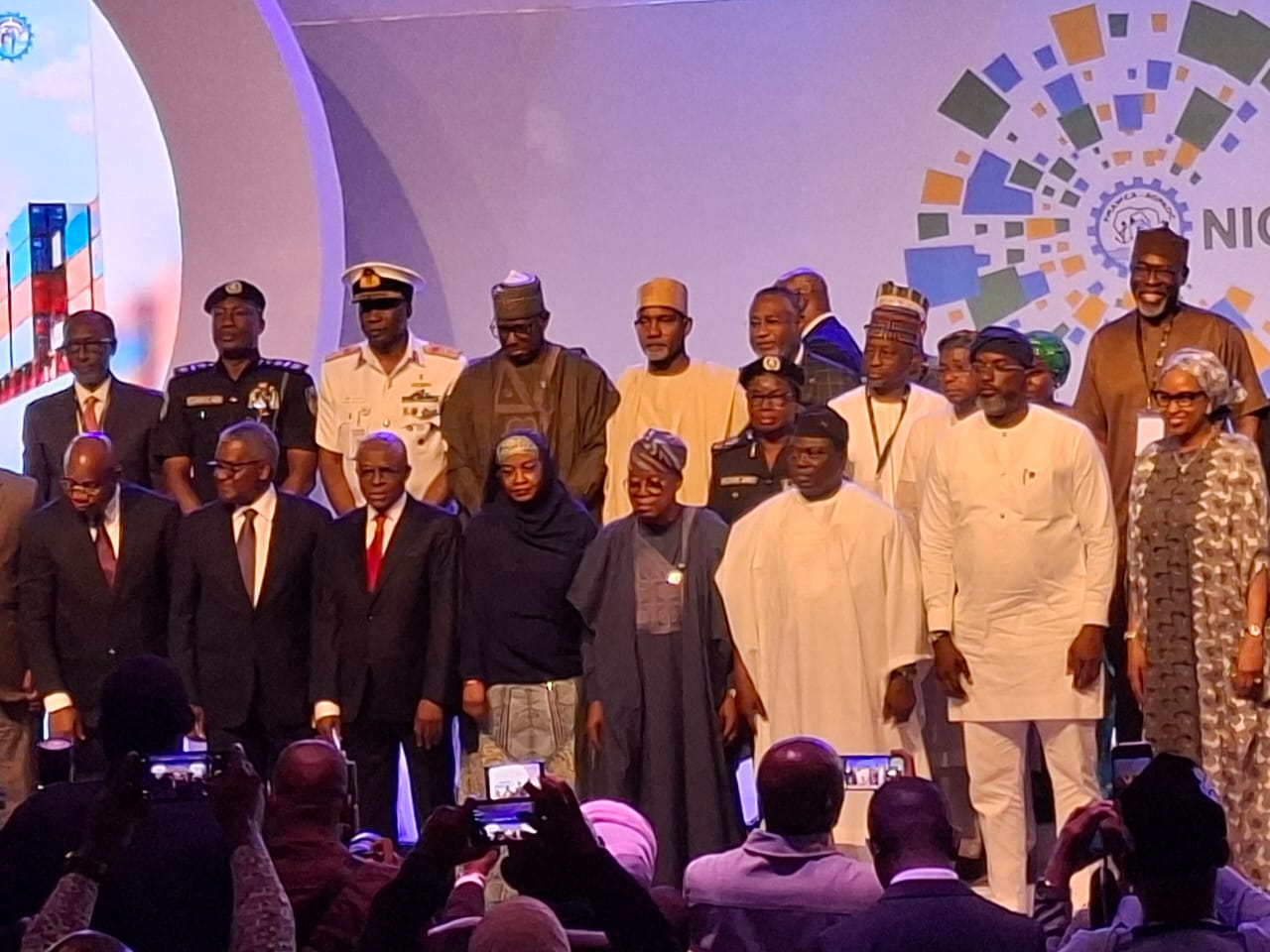
The project took the centre stage on Tuesday during the second day of PMAWCA’s mid-year session in Lagos.
Speaking to Persecondnews on the sidelines of the event, PMAWCA Project Manager, Mr. Tantoh Rowland noted that a historical lack of reliable data has long hindered the region’s port performance.
“Prior to 2025 when the statistician network was created, we discovered that we don’t tell our story in figures and precision as we should,” he told PSN correspondent at the Eko Convention Centre.
Explaining that the network was built specifically to address that gap,.Rowland said: “There is a new network tool we created in 2025, it’s called the statistician network. This was created because data-driven decisions are needed to shape our operations in the ports.”
According to him, the tool focuses on collecting and processing operational data for regional use.
“The network is tasked with collection of the right data, processes it and deploy it rightly for our region.”
He said the database will help track key performance indicators that influence global competitiveness.
“So we are developing a strong database that will take into consideration container traffic, turnaround time, rotation time, berthing time.
“These are all indicators that can give us an idea of what to expect in the global market,” he said.
Noting that Tuesday’s program involved multiple simultaneous sessions, Rowland said: “Today’s meeting is running parallel with the statistician session and the finance ad-hoc committee to strategize and synergize for our regional goals.”
He outlined PMAWCA’s three-tier governance structure:“The highest governing body is the Council, which is made up of all the port managing directors in our region.”
Rowland further explained that leadership rotates regularly: “There are six members chosen through a rotational format determined by all the MDs.”
On the council’s role about the implementation between annual meetings, he said the six members would meet every mid-year to evaluate how the secretariat, which is another structure of PMAWCA, is implementing resolutions, the day-to-day running of the association.
“They prepare the end-of-year Council event which will be taking place in Equatorial Guinea in November,” he said.
On digitalization, Rowland stressed urgency following new IMO rules, stating that the digitalization of ports across the region is a task that must be done.
“The competitive nature of our market has caught up with us and we must step up,” he said.
He added, “The International Maritime Organization (IMO) issued a 2024 mandate requiring all member states to streamline ship clearance procedures by permitting the electronic submission of port, customs and immigration data through a single entry point. So on the front burner of the closed session today is the digitalization of regional ports.”
PMAWCA collaborates closely with the IMO, SSATP (Africa Transport Policy Program), World Bank, and other bodies to roll out the Maritime Single Window across member states.
A key December 2025 workshop in Abidjan (for 12 Francophone countries) shared lessons on MSW implementation, with follow-up sessions planned for English- and Portuguese-speaking nations in 2026.
These platforms tackle fragmented procedures and promote single-entry electronic data submission for faster ship clearance.
Progress varies by country, but regional cooperation is accelerating.
PMAWCA’s initiatives include harmonizing data templates, sharing best practices, and exploring partnerships (e.g., with AfDB and EU-funded projects like SCOPE Africa).
Earlier workshops at annual councils have focused on digital readiness to reduce turnaround times and meet IMO FAL Convention standards.
Nigeria, a PMAWCA leader, is investing heavily in infrastructure upgrades, automation, and the National Single Window to position itself as West Africa’s trade hub. Similar digital reforms are underway in ports across Côte d’Ivoire, Senegal, Ghana, and beyond.
Overall, PMAWCA’s three-tier governance — Council of Managing Directors, Board, and Secretariat — ensures coordinated action.
With over $27 billion currently invested in regional port projects, digitalization is no longer a luxury—it’s a necessity.
It is now the fundamental driver for efficiency, transparency, and sustainable growth across the sub-region.
Author













Leave a comment