











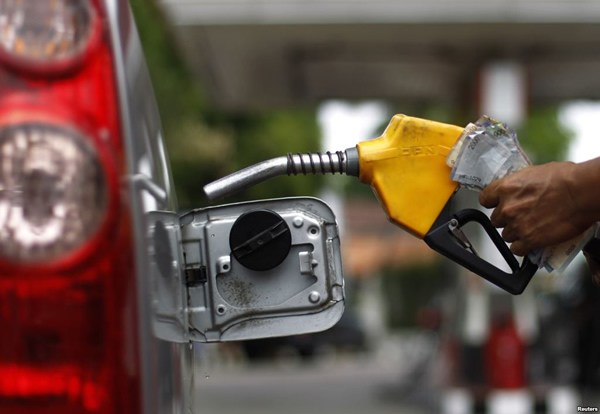



The Federal Competition and Consumer Protection Commission (FCCPC) has flagged potential consumer exploitation in Nigeria’s downstream oil sector, noting that local fuel prices remain high despite a sharp drop in global crude costs.
According to the regulator’s market surveillance, refiners, depot operators, and marketers have only introduced minor price cuts, which fail to reflect the steep decline in international oil markets.
In a statement released on Sunday by Director of Corporate Affairs Ondaje Ijagwu, the commission stated that a review of current gantry and retail prices proves consumers are not yet benefiting from the global market relief.
It stated:“The Federal Competition and Consumer Protection Commission has expressed concern over findings from an ongoing surveillance of the downstream petroleum market suggesting undue exploitation of consumers.
“A review of the gantry prices of local refiners, marketers, depot operators and retail outlet operators revealed token reductions in prices that are not commensurate with the steep fall in crude prices in the global market.”
The Executive Vice Chairman/CEO of the FCCPC, Tunji Bello, said the commission was concerned by what appeared to be a one-sided response to changes in crude oil prices.
According to him, operators in the downstream sector often move swiftly to raise pump prices whenever crude oil prices increase but are reluctant to pass on the benefits to consumers when prices fall.
Bello said: “To be clear, the Commission does not regulate or approve petroleum prices in a deregulated downstream market. Our responsibility under the Federal Competition and Consumer Protection Act, 2018, is to promote competitive markets, prevent anti-competitive conduct, and protect consumers from unfair, deceptive and exploitative business practices.
“We are concerned that while dealers often respond swiftly by hiking pump prices whenever crude prices rise, it is curious that it is taking forever for consumers to benefit significantly when crude prices fall. Competitive markets must work fairly in both directions.”
The commission’s concerns come amid a sharp reversal in global oil prices following a ceasefire agreement between the United States and Iran and the reopening of the Strait of Hormuz, a major global oil shipping route.
Persecondnews recalls that the price of petrol had remained high despite crude oil prices falling to about $73 per barrel on Wednesday, their lowest level since the US-Iran conflict began in February.
Crude oil prices, which had climbed to about $120 per barrel in April amid fears of supply disruptions arising from the Middle East crisis, have since fallen to around $73 per barrel, returning to levels last seen in February.
The earlier surge in crude prices triggered immediate increases in local fuel prices, with petrol selling for between N1,350 and N1,500 per litre in several parts of the country, while diesel prices climbed to about N2,000 per litre.
In February, however, petrol sold for between N800 and N900 per litre.
Despite the significant decline in crude oil prices, the commission noted that petrol is still being sold at an average of about N1,200 per litre across the country, while some local refiners currently have gantry prices ranging from N1,025 to N1,075 per litre.
Although the FCCPC acknowledged that domestic fuel prices are influenced by several commercial factors, including foreign exchange fluctuations, logistics costs, financing expenses, refining costs and distribution charges, it maintained that competitive market forces should ordinarily have led to more substantial reductions in pump prices.
Bello said: “Market liberalisation does not diminish businesses’ obligations to compete fairly or consumers’ right to fair treatment. Where credible evidence indicates conduct that undermines competition, exploits consumers or otherwise contravenes the Federal Competition and Consumer Protection Act, the Commission will investigate and take appropriate enforcement action.”
He urged Nigerians to continue reporting suspected cases of anti-competitive conduct, price manipulation and other unfair market practices through the commission’s complaint channels.
The FCCPC’s concerns are likely to reignite debate over the effectiveness of the deregulated petroleum market, with many consumers and industry stakeholders questioning why reductions in international crude oil prices have not translated into proportionate declines at the pumps.
Since the removal of fuel subsidy and the full deregulation of the downstream sector, fuel prices in Nigeria have become increasingly tied to movements in global crude oil prices and exchange rate fluctuations.
However, consumer groups have repeatedly accused marketers of implementing price increases almost immediately while delaying price reductions whenever market conditions improve.
The FCCPC said its warning signalled possible regulatory scrutiny of pricing practices in the sector as pressure mounts on operators to ensure that the gains from lower crude oil prices are passed on to consumers.
Author










Leave a comment