















By Maryanne Awuya
Health experts and civil society organizations have intensified calls for stricter regulations on salt content in processed foods, warning that excessive sodium consumption is fueling hypertension, stroke, heart disease and kidney failure among Nigerians.
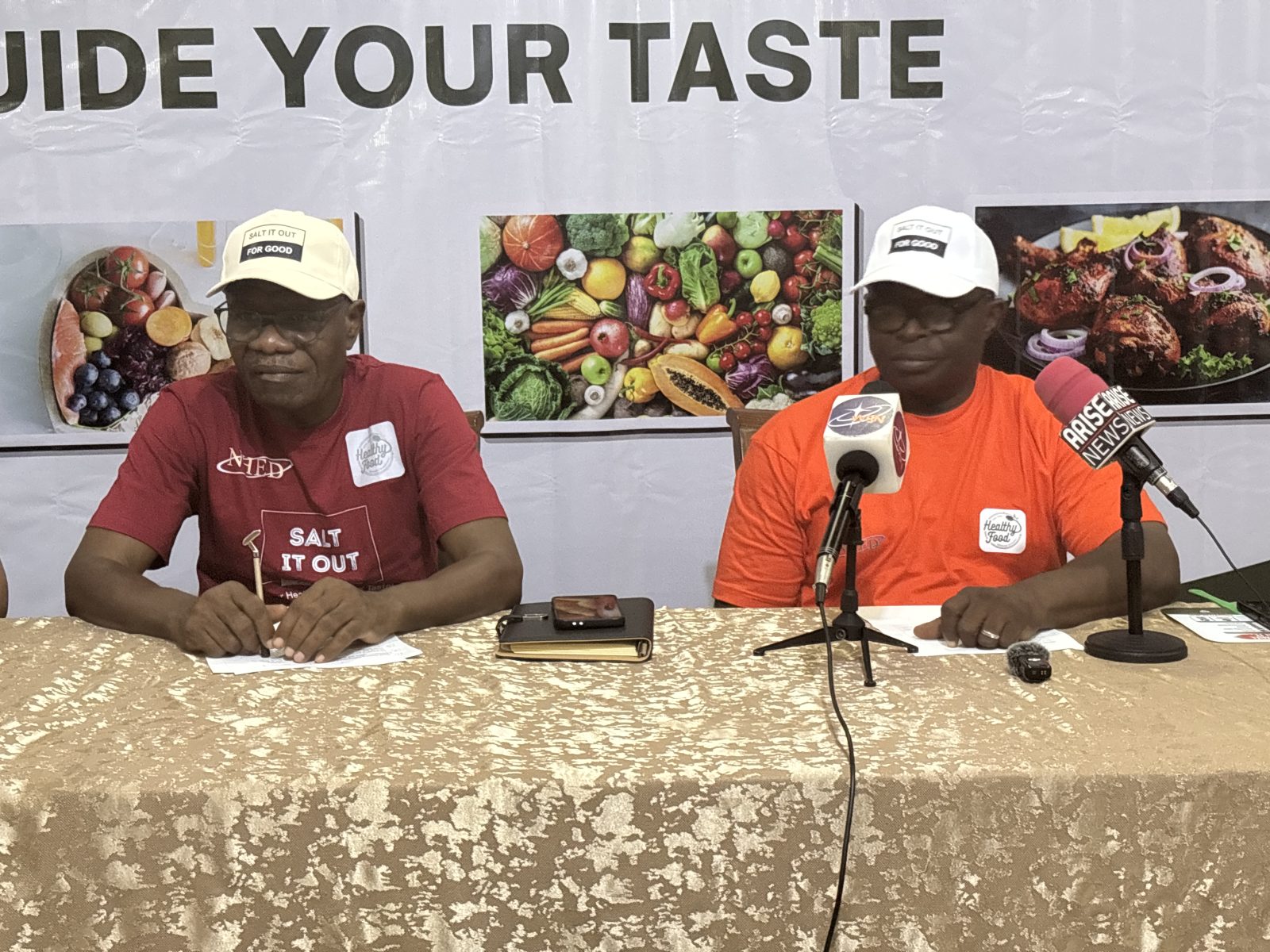
Speaking during a press conference on Thursday in Abuja covered by Persecondnews, stakeholders stressed the urgent need for healthier food policies, improved nutrition labeling and stronger public education on the dangers of excess salt intake.
The event, organised by the Network for Health Equity and Development, focused on this year’s theme, “Salt It Out”
Experts at the briefing noted that many Nigerians unknowingly consume high levels of sodium daily through seasoning cubes, processed foods, bread, snacks, fast foods and processed meats.
County Director, NHED, Dr. Emmanuel Sokpo said excessive sodium intake has become a major contributor to the growing burden of non-communicable diseases in the country.
According to him, hypertension, commonly described as a “silent killer,” affects millions of Nigerians, many of whom remain unaware of their condition until severe complications occur.
Sokpo explained that reducing salt consumption remains one of the simplest, cheapest and most effective public health interventions available to prevent avoidable deaths linked to cardiovascular diseases.
He also called for stronger food labeling regulations and sustained public awareness campaigns to help consumers make healthier dietary choices.
Technical & Public Health Lead, NHED, Dr. Jerome Mafeni urged stakeholders to ensure that public health messaging translates into real behavioural change, especially through wider community engagement.



The President, Nigerian Dental Association, Dr. Elias Martin Emedom, stressed the importance of extending awareness campaigns to rural communities, noting that many residents still lack access to basic nutrition information.
He said oral health is closely linked to overall wellbeing and warned that excessive salt intake contributes to a wider range of non-communicable diseases beyond hypertension.
Representative, Corporate Accountability and Public Participation Africa, Busola Olukemi called on the Nigerian government to establish stricter legal frameworks to regulate unhealthy ultra-processed foods.
She advocated mandatory sodium reduction targets, front-of-pack warning labels and restrictions on the marketing of unhealthy foods to children and vulnerable groups.
Olukemi also urged authorities to impose taxes on high-sodium foods and enforce truthful advertising by food manufacturers.
The stakeholders further called on the National Agency for Food and Drug Administration and Control and the Federal Ministry of Health and Social Welfare to strengthen regulations aimed at promoting healthier diets and reducing the burden of diet-related diseases.
Persecondnews reports that World Salt Awareness Week 2026 (May 11–17) highlights reducing salt intake to prevent hypertension, stroke, heart disease, and kidney damage, while bringing together health professionals and stakeholders to promote healthier diets and improve Nigeria’s food environment.
Author












Leave a comment