











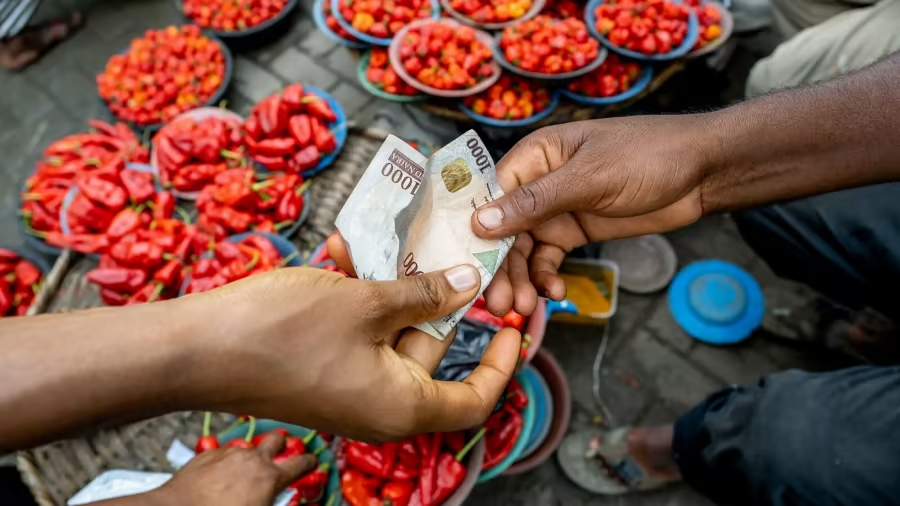



Nigeria’s annual inflation rate moderated slightly in February 2026, dipping to 15.06% from the 15.1% recorded in January.
According to the National Bureau of Statistics (NBS) Consumer Price Index (CPI) report released on Monday, this marginal decline marks a continued cooling of year-on-year price pressures.
While the headline figure suggests a subtle deceleration, it underscores the government’s ongoing struggle to achieve long-term price stability following years of double-digit spikes.
“The CPI, which measures the rate of change in prices of goods and services, declined by 0.04 percent (month-on-month) compared to the January 2026 headline inflation rate,” the NBS explained in its report.
The bureau further highlighted the year-on-year performance, noting significant relief compared to the prior year.
“On a year-on-year basis, the Headline inflation rate was 11.21% lower than the rate recorded in February 2025 (26.27%),” it stated.
“This shows that the Headline inflation rate (year-on-year basis) decreased in February 2026 compared to the same month in the preceding year (i.e., February 2025).”
Delving into the monthly dynamics, the NBS pointed out an acceleration in the rate of price rises from one month to the next.
“On a month-on-month basis, the Headline inflation rate in February 2026 was 2.01%, which was 4.89% higher than the rate recorded in January 2026 (-2.88%),” the agency said.
“This means that in February 2026, the rate of increase in the average price level was higher than the rate of increase in the average price level in January 2026.”
Additionally, the report covered the longer-term trend in average price changes.
“The percentage change in the average CPI for the twelve months ending February 2026 over the average for the previous twelve-month period was 21.03 percent, showing a 3.02 percent increase compared to 18.01 percent recorded in February 2025,” the NBS added.
This latest update from the statistics agency comes amid broader economic discussions on cost-of-living adjustments and policy responses to inflation trends in Africa’s largest economy.
Author








Leave a comment