












The enactment of Nigeria’s Electoral Act 2026 has ignited a fresh wave of national debate just as opposition leaders warn that several controversial amendments threaten to stifle democratic competition and could trigger political instability if not urgently addressed.
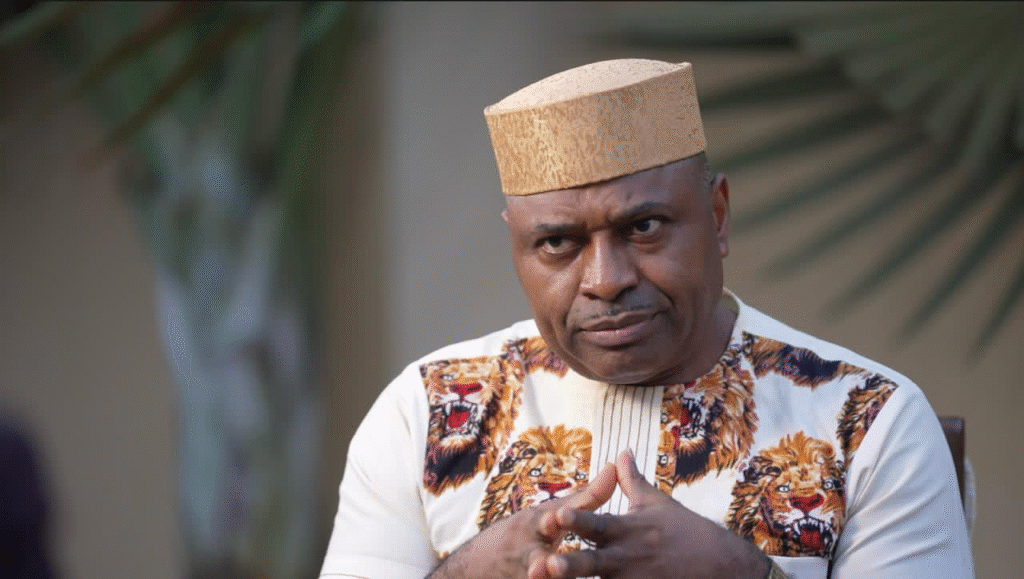
Speaking on Arise TV on Tuesday monitored by Persecondnews, Mr. Kenneth Okonkwo, a legal practitioner and member of the African Democratic Congress (ADC) National Working Committee, argued that the new law is not “set in stone.”
Rejecting calls for political parties to simply conform to the new rules, Okonkwo insisted that the law’s passage demands rigorous national scrutiny rather than passive acceptance.
He emphasized that restoring trust in the system is a collective responsibility, echoing findings from the International Republican Institute and the National Democratic Institute that Nigeria’s democratic credibility requires a unified effort from all citizens.
“What we are seeing now is growing disenchantment. Grievances are mounting, faith in electoral democracy is diminishing, and we have to be very careful,” he said.
When asked if the Electoral Act 2026 could realistically be returned to the National Assembly for revision, Kenneth Okonkwo insisted that legislative reversals are both possible and precedented.
He cited the rapid constitutional amendments made during the late President Yar’Adua’s illness as proof that the law can be changed within a week if the political will exists.
Okonkwo further alleged that the 2026 Act was itself a product of sudden, last-minute changes.
He claimed that consensus reached before a legislative recess—specifically regarding mandatory electronic result transmission—was dismantled shortly after lawmakers returned, reportedly due to pressure from ruling party leadership.
He accused the ruling All Progressives Congress of weaponising state institutions to “rig elections even before they happen,” warning that Nigeria risks sliding toward anarchy if public confidence continues to erode.
Persecondnews reports that at the heart of the opposition’s challenge are Sections 70, 77, and 84 of the new Act.
Okonkwo raised particular concern over Section 77, which imposes a strict digital compliance mandate on political parties.
Under this provision, parties must maintain a digital membership register featuring sensitive personal data—including National Identification Numbers (NIN), home addresses, and LGAs—and submit the verified database to the electoral commission at least 21 days prior to any primary election.
Under the Act, only individuals listed in this register can vote or be voted for in party primaries, and parties that fail to comply risk being barred from fielding candidates altogether.
“These are booby traps,” Mr. Okonkwo said. “They are designed to cage political parties and strangle the opposition.”
He argued that while digitalisation itself is not the problem, the timing is.
Newer or smaller parties, he said, are being given less than two months to comply with requirements that older parties have had years to implement.
By contrast, he noted, the ruling party—founded in 2013—has long had access to institutional advantages.
“Our resistance is not to digitalisation,” he clarified. “We want electronic everything. But you cannot impose this one month to primaries and say, ‘Do it or lose your right to contest.'”
The ARISE TV programme’s anchors challenged the opposition’s timing, noting that Senate Leader Opeyemi Bamidele had previously described the law as a product of extensive consultation.
They suggested that parties should prioritize internal digital reforms rather than fighting enacted legislation.
However, Okonkwo rejected the “tardy” label, claiming the final Act was a bait-and-switch that differed fundamentally from earlier agreements.
He praised the “brave resistance” of lawmakers like Senator Enyinnaya Abaribe, who staged walkouts and protests, arguing that the opposition was essentially “defrauded” through a lack of transparency.
The debate intensified as anchors labeled some opposition efforts as ineffective, accusing them of failing to scrutinize the bill’s finer details.
Okonkwo countered by shifting the spotlight to the media, accusing journalists of failing their watchdog duties by not exposing altered provisions.
Another anchor fired back, citing the media’s success in uncovering previous legislative forgeries—such as disputed tax laws—while noting the opposition’s failure to seek judicial redress.
The exchange also touched on the recent FCT Area Council elections with Okonkwo clarifying his claim that they were held under an “unknown law,” explaining that the governing legislation had not been properly gazetted or published at the time.
“One principle of the rule of law is that before you enforce a law, the people must know what it is. Otherwise, it does not bring orderliness to society.”
He maintained that while copies of the Act circulated electronically, this did not amount to official publication by government gazette, which he argued is a prerequisite for enforceability in a democratic society.
Persecondnews recalls that on Monday, 16 February, 2026, the National Assembly Conference Committee on Electoral Matters submitted its review proposing the amendment on the electoral act, after which the Senate and the House of Representatives deliberated on and approved the Committee’s recommendations the following day.
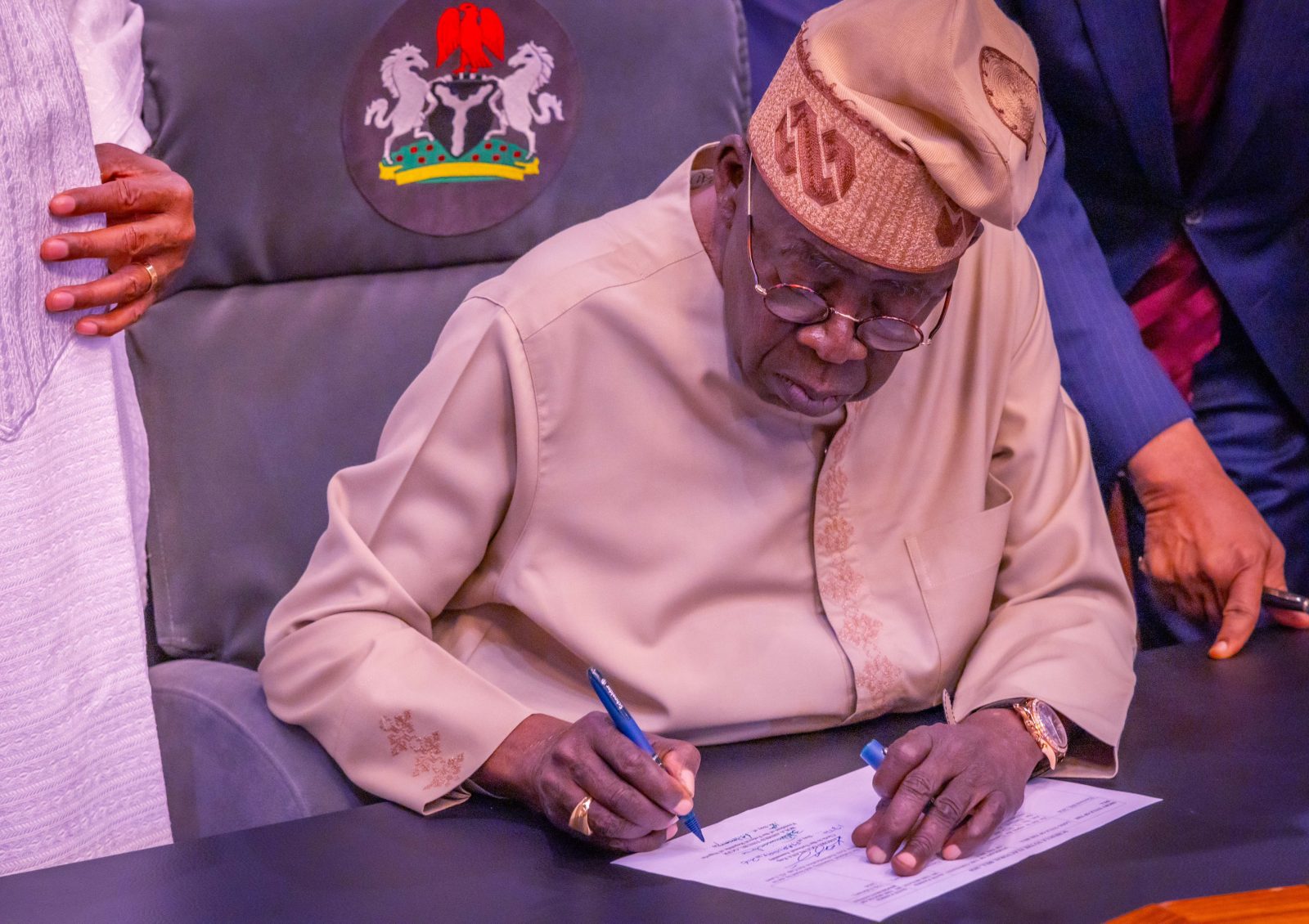
On February 18, 2026, President Tinubu gave his assent to the Bill to become the Electoral Act 2026.
On the heels of this, however, Persecondnews recalls that ADC and the New Nigeria Peoples Party (NNPP) launched a scathing attack on the newly enacted Electoral Act 2026 at a joint media briefing, branding the legislation a “direct assault on democratic values,” alleging it was designed to pave the way for a one-party state.
As Nigeria edges closer to another election cycle, the dispute over the Electoral Act 2026 underscores deeper anxieties about trust, transparency, and fairness in the country’s democratic process.
While government figures maintain that the law followed due process, opposition voices are calling for amendments, extended timelines for compliance, and broader national dialogue to prevent what they describe as “manufactured disenchantment.”
Author








Leave a comment