












Air Conditioners
BreakingHealthTrending Story

Air Conditioning May Be Spreading COVID-19

1.1k
Advertisement


By Brenda Goodman


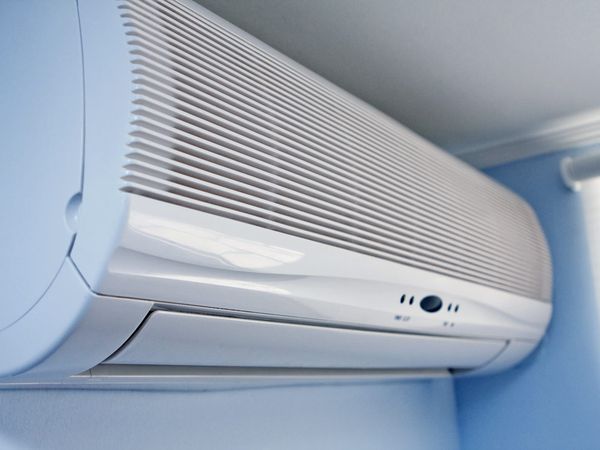
As COVID-19 cases rise rapidly across the globe, some scientists believe there could be an important, but overlooked factor in the spread of the virus in the region–air conditioning.


Air conditioning is also risky because of the way air handlers work. When outdoor temperatures are extreme, HVAC systems adjust the mix of fresh air they pull in to save energy, says Edward Nardell, MD, professor of environmental health and immunology and infectious diseases at Harvard’s T.H. Chan School of Public Health.


That means the hotter it is outside, the more indoor air recirculates, which means, “You’re breathing a higher percentage of the same air that other people are exhaling,” Nardell says.


“You’re more likely to be touching the same surfaces that have been contaminated by people speaking and coughing etc.,” he says.

If someone in the building is shedding the new coronavirus, it can build up in the recirculated air.


And this may seem obvious, but air conditioners have fans that blow the air around. That gives the smallest viral particles—aerosols–extra lift to say suspended in the air for longer. “The air currents that are produced by air conditioners and also fans and other air moving devices can carry particles further than they might otherwise go,” he says.


Air conditioners also remove moisture from the air, “and we know viruses prefer dry air,” he says.


In certain situations, that combination of factors may create the perfect conditions for contagion.

So far, there are just a few studies pointing to the role of air conditioning in the spread of COVID-19. They indicate more research in the area is needed. In July, Chinese scientists published a short study detailing the results of their investigation of a cluster of COVID-19 cases linked to the same restaurant. The 10 diners who fell ill were all sitting at tables on the same side of the room. The tables were spaced more than 3 feet apart, though, indicating that the virus probably wasn’t being passed through larger droplets, which fall out of the air pretty quickly. Instead, they think “strong airflow” from a wall mounted air conditioner probably spread aerosols, or “micro-droplets”, from a single infected, but asymptomatic person over the tables, infecting three different families.

See also  Is This the Beginning of the End of the Internet?
A similar study, from the University of Nebraska Medical Center, detected genetic material from the virus in air samples collected from rooms of COVID-19 patients, even air samples collected from more than six feet away.

Steps for Safer Indoor Air

Shelly Miller, PhD, a professor of mechanical engineering who studies indoor air quality at the University of Colorado, says that the easiest thing to keep the virus from building up inside is to bring in more outdoor air. In homes, that means opening windows and doors regularly to let fresh air in.  That’s harder to do in commercial buildings.

“What we’ve been recommending to minimize risk indoors is to provide 100% outside air, which you can’t do if you’re trying to heat or cool because it just costs way too much money,” she said.

Credit- WEBmd

Author

Leave a comment

Related Articles

Global Brain Health Crisis: 3.4Bln People Affected as Nigeria Launches Major Brain Health Initiative

By Omoyeni Ojeifo More than 3.4 billion people, representing over 40 per...

Stakeholders Push Improved Brain Health Care as Nigeria Marks World Brain Day

By Omoyeni Ojeifo Stakeholders in Nigeria’s health sector have called for stronger...

Ebola Outbreak: Oxford Launches Human Trials for New Vaccine as DR Congo Crisis Deepens

By Maryanne Awuya A new experimental vaccine against the Bundibugyo strain of...

Peace Corps Offers 187,000 Personnel to Bolster Security in Nigeria

By Omoyeni Ojeifo From grassroots peacebuilding to community support initiatives, the Peace...