








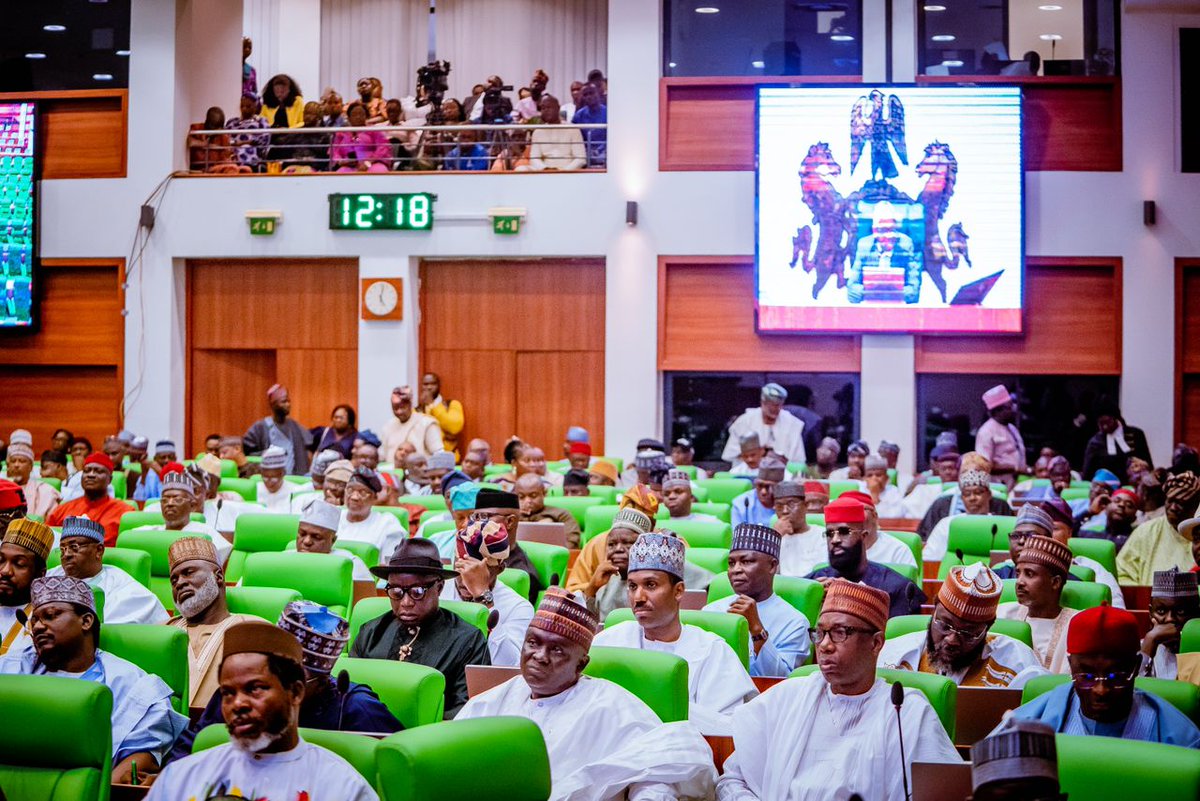




The bill before the National Assembly seeking to amend the Nigeria Data Protection Act 2023, aiming to regulate the activities of bloggers operating within the territorial boundaries of Nigeria is
repressive and muzzling and should be immediately withdrawn, a rights group has demanded.
The Socio-Economic Rights and Accountability Project (SERAP) urged Senate President Godswill Akpabio, and Speaker of the House of Representatives, Tajudeen Abbas to step down the bill.
SERAP urged Mr Akpabio and Mr Abbas “to ensure that any amendment to the Nigeria Data Protection Act promotes and protects the rights of bloggers and other journalists and does not undermine the fundamental human rights of Nigerians.”
SERAP also urged Mr Akpabio and Mr Abbas to end the imposition of unnecessary restrictions on the rights of Nigerians online and Internet-based content.
It said: “There is currently a bill titled “A Bill for an Act to Amend the Nigeria Data Protection Act, 2023, to Mandate the Establishment of Physical Offices within the Territorial Boundaries of the Federal Republic of Nigeria by Social Media Platforms and for Related Matters” (the “bill”).
“The bill among others seeks to regulate bloggers including by requiring all bloggers to register local offices and join recognised national association for bloggers. The bill has passed its first and second reading in the Senate.”
In the letter dated April 12, 2025 and signed by SERAP’s Deputy Director, Mr. Kolawole Oluwadare, a lawyer, the organisation stated: “This bill is a blatant attempt to bring back and fast-track the obnoxious and widely rejected social media bill by the back-door.”
“If passed, the bill would also be used to ban major social media platforms—including Facebook, X (formerly Twitter), Instagram, WhatsApp, YouTube, TikTok, and independent bloggers if they ‘continuously fail to establish/register and maintain physical offices in Nigeria for a period of 30 days.
“Lawmakers should not become arbiters of truth in the public and political domain. Regulating the activities of bloggers and forcing them to associate would have a significant chilling effect on freedom of expression and lead to censorship or restraint.
“The bill may also be used to block access of Nigerians to social media platforms. Blocking access to social media platforms is a flagrant violation of fundamental rights.
“In addition to infringing on Nigerians’ right to access to information and digital technology, the proposed bill would also severely hamper business operations in the country, as many are reliant on foreign tools, services and technologies for their operations, as well as other sectors that rely on online information.
“The bill would force international tech companies out of the Nigerian information landscape by requiring them to establish/register and maintain physical offices in the country. It would violate the requirement that the right to freedom of expression applies ‘regardless of frontiers.
“Should the National Assembly and its leadership fail to withdraw the bill to regulate the activities of bloggers, and should any such bill be assented to by President Bola Tinubu, SERAP would consider appropriate legal action to challenge the legality of any such law and ensure it is never implemented in the public interest.
“The regulation of bloggers may be used to muzzle any dissenting voice and to silence any form of criticism or negative opinion on the policies and practices of the ruling party or the Government.
“Authorities may also use the proposed regulation as a pretext to punish bloggers solely for the peaceful exercise of their human rights.
“The bill seems to be directed at bloggers living in Nigeria and elsewhere, with severe adverse effects on the freedom of expression of a very wide range of individuals.
“The proposed amendment to the Nigeria Data Protection Act, 2023 fails to meet the requirements of the Nigerian Constitution 1999 [as amended] and international human rights treaties to which the country is a state party.
“The amendment, if passed would adversely affect unregistered bloggers operating ‘within the territorial boundaries of Nigeria.’”
SERAP also said:“The proposed amendment may also be used to violate the rights to privacy, freedom of peaceful assembly and of association as protected by the Nigerian Constitution 1999 [as amended] and international human rights standards.
“The proposed amendment is entirely inconsistent and incompatible with Nigeria’s obligations to respect and ensure the effective realisation of the right to freedom of opinion and expression. The amendment would disproportionality suppress a wide range of expressive conduct essential to a democratic society.
“The bill would pose major barriers and threats to any individuals, especially journalists, human rights defenders and civil society organisations who may be critical of the government, as well as stifle democracy and media freedom.
“Mandatory regulation of journalism is incompatible with the right to freedom of expression. There is no legitimate reason why bloggers – or in fact members of the general public – should be subject to mandatory regulation or licensing to express themselves.
“Blogging plays an invaluable role in the free flow of information. Bloggers should never be required to register with the government or other official agencies to blog.
“The bill may also be used as a pretext to force bloggers to disclose their sources. The right to protect sources is a cornerstone of freedom of the press, without which sources may be deterred from assisting the press in informing the public on matters of public interest.
“The Nigerian Constitution and human rights treaties which the country has ratified protect protects everyone’s right [including bloggers] to maintain an opinion without interference and to seek, receive and impart information and ideas of all kinds, regardless of frontiers and through any media.
“Nigerian authorities including the National Assembly have legal obligations to ensure an environment in which a diverse range of opinions and ideas can be freely and openly expressed and debated.
“The requirement of necessity implies an assessment of the proportionality of restrictions, with the aim of ensuring that restrictions target a specific objective and do not unduly intrude upon the rights of targeted persons.
“As noted in the 2005 Joint Declaration of the special rapporteurs on freedom of expression, ‘[n]o one should be required to register with or obtain permission from any public body to operate an Internet service provider, website, blog or other online information dissemination system, including Internet broadcasting.
“In their 2011 Joint Declaration on Freedom of Expression and the Internet, the four special mandates for the protection of freedom of expression highlighted that regulatory approaches in the telecommunications and broadcasting sectors cannot simply be transferred to the Internet.”
Author












Leave a comment