















By Omoyeni Ojeifo
The Independent National Electoral Commission (INEC) says it is deploying AI-driven anomaly detection tools to monitor database traffic and protect its public portals against cyber intrusions and unauthorised alterations ahead of the 2027 elections.
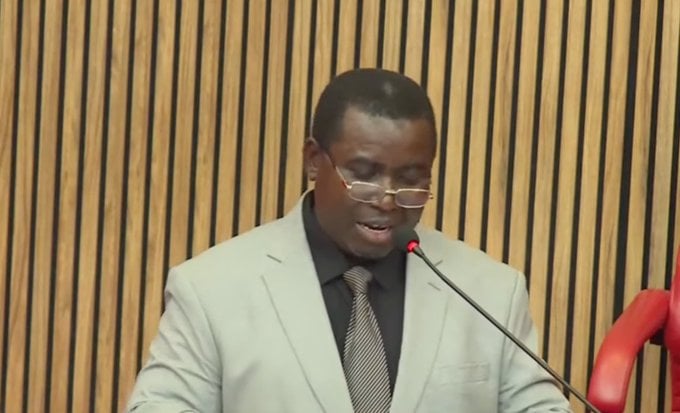
INEC Chairman Prof. Joash Amupitan disclosed this on Tuesday in Abuja at a world news conference and national stakeholders’ meeting marking 100 days to the elections.
Amupitan explained that the technology would complement automated AI auditing tools being integrated into the Commission’s result verification process under a five-pillar AI Governance Framework.
“Automated AI auditing tools are being integrated into our results verification process under a five-pillar AI Governance Framework, operating under mandatory human oversight,” PerSecondNews correspondent at the briefing quotes the INEC boss as saying.
The chairman explained that the Commission was finalising an AI Governance Framework and Policy while working with international technology leaders on AI-driven anomaly detection.
“The tools would monitor database traffic and protect public portals against cyber intrusions or unauthorised alterations during the electoral process.”
Amupitan warned that generative AI, voice cloning and deepfake videos could fabricate election officials’ voices, result sheets and official documents, making election-related disinformation harder to detect.
“The greater danger is not any single falsehood. When deepfakes render lies believable, real truth is greeted with scepticism, and cynicism replaces civic engagement,” he emphasised.
He outlined technology, public education and media partnerships as the Commission’s three-pronged response to election-related disinformation.
Amupitan urged media organisations to establish fact-checking desks, use digital forensic tools and verify election-related information with INEC before publication.
“Establish fact-checking desks and use digital forensic tools. Verify with INEC before you publish. Resist the declaration of privately collated results,” he urged.
He reminded journalists that result declarations remain the responsibility of the Commission under the Electoral Act, urging the media to prioritise accuracy when reporting election results.
“In national elections, it is far more important to be right than to be first,” he stressed.
Beyond AI, Amupitan disclosed that INEC had strengthened the Bimodal Voter Accreditation System through software hardening, battery optimisation and biometric calibration.
The Commission has acquired 57,000 new BVAS devices, while a nationwide inventory, functionality and GPS verification exercise has been completed.
“A six-day stress-testing exercise across all configured BVAS devices has been scheduled for 23rd to 28th October 2026,” Amupitan said.
“State-level training of Registration Area Technical Support personnel will take place in November, with a strategic briefing scheduled for December 13,” Amupitan said.
“LGA readiness audits are scheduled for January 13 and 14, 2027, while RATECH support will be deployed on both election days,” he added.
PerSecondNews recalls that the Commission had earlier announced that a nationwide mock accreditation and election simulation would hold in November.
The exercise will test personnel, hardware and network protocols under operational conditions ahead of the 2027 General Election.
The Chairman reiterated the Commission’s commitment to the exercise and emphasized that it would deploy its enhanced eEC8A system to authenticate polling-unit result sheets.
The system will upload authenticated results directly to the public IReV portal as part of measures to strengthen result verification.
Amupitan also disclosed that the downloadable PVC had been tested during the Osun election and used for voters whose physical PVCs were stolen.
“Technology remains the bedrock of our commitment to transparent results,” he maintained.
He further disclosed that the Commission would upgrade its Media Accreditation Portal before the end of October to receive applications from domestic and international media organisations.
“Public enlightenment is not only about telling Nigerians how to vote. It is also about protecting the information they rely on,” he said.
“The Commission will intensify voter education through radio and television jingles, local-language broadcasts, mobile cinema units and town-hall sessions.
“It is also partnering with public figures, cultural icons, civil society organisations and the National Orientation Agency to strengthen public enlightenment ahead of the election.”
Amupitan maintained that the technology measures would complement the Commission’s wider preparations to protect the integrity of the 2027 electoral process.
Author








Leave a comment