











Highlight

Nigeria’s Capital Inflows Surge 84% to $10.37bn in Q1 2026

"Notably, foreign direct investment into Nigeria plunged by 80 percent in January 2026 as investors increasingly channelled funds into bonds and money market instruments despite the sharp rise in overall capital inflows"

91
Advertisement


By Samuel Akpan

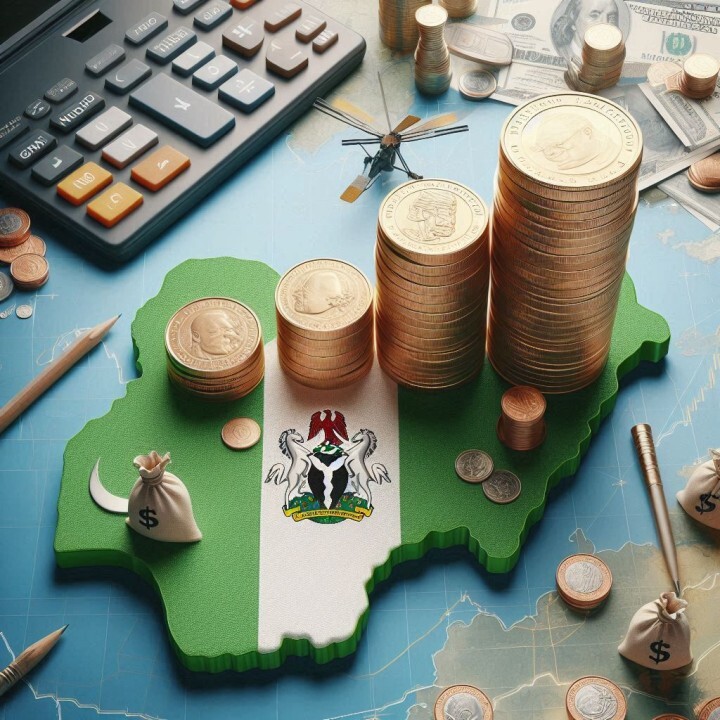
Nigeria attracted $10.37 billion in foreign capital in Q1 2026, marking an 83.83 percent increase from $5.64 billion a year ago and a 60.97 percent jump from the previous quarter’s $6.44 billion.

Portfolio investments dominated the inflows, totaling $9.86 billion or 95.09 percent of the overall figure.

Foreign direct investment accounted for only $135.08 million (1.30 percent), while other investments made up $374.48 million (3.61 percent).

Notably, foreign direct investment into Nigeria plunged by 80 percent in January 2026 as investors increasingly channelled funds into bonds and money market instruments despite the sharp rise in overall capital inflows.

Within the portfolio segment, money market instruments attracted the largest share at $6.50 billion, followed by bonds at $3.23 billion and equity investments at $131.81 million.

The banking sector emerged as the top destination, receiving $7.55 billion or 72.79 percent of total capital imported.

The financing sector followed with $2.43 billion (23.42 percent), while production and manufacturing drew $152.27 million (1.47 percent).

Other sectors that received foreign investments included shares, trading, agriculture, information technology services, telecommunications, oil and gas, transport, construction, healthcare, education and consultancy services.

The United Kingdom remained the leading source of capital, providing $5.08 billion or 49.01 percent of the total, ahead of the United States with $3.18 billion (30.69 percent) and South Africa at $983.83 million (9.49 percent).

 Among banks, Standard Chartered Bank Nigeria Limited handled the highest inflow at $4.41 billion (42.56 percent).

Stanbic IBTC Bank Plc received $2.78 billion (26.79 percent), while Rand Merchant Bank accounted for $930.82 million (8.97 percent).

See also  NNPC, ExxonMobil Fine-Tune Strategy for Improved Production
Other banks that facilitated inflows included Citibank Nigeria, Access Bank, First Bank of Nigeria, Guaranty Trust Bank, Zenith Bank, FCMB, Ecobank, Fidelity Bank and United Bank for Africa.

The National Bureau of Statistics compiled the figures from Central Bank of Nigeria data based on fresh foreign capital reported by commercial banks.

The statistics exclude other components of foreign direct investment such as reinvested earnings.

Author

Leave a comment

Related Articles

First Lady Oluremi Tinubu Urges Greater Women Participation in Governance

By Omoyeni Ojeifo First Lady Senator Oluremi Tinubu has urged women to...

Ucheibe, Ordega Hit Super Falcons Camp For Senegal Double-Header

By Samuel Akpan The Super Falcons’ camp in Ikenne, Ogun State, received...

15 Colleges of Education Receive FG ICT Support to Boost Digital Learning

By Omoyeni Ojeifo In a major push to upgrade teacher training and...

Just In: Owo Church Massacre: Four Terrorists Handed Death Sentence Four Years On

Four years after the horrific massacre at St. Francis Catholic Church in...