World Press Freedom Day (May 3) is a UN-designated moment to celebrate media independence and honor the bravery of journalists worldwide.
It highlights the essential link between a free press and a healthy, accountable society.
However, the day often highlights government hypocrisy. While officials frequently issue statements affirming their commitment to the press, their actions often tell a different story—eroding the constitutional rights to free speech through restrictive laws and state pressure.
In Nigeria, the legal landscape for press freedom is a tug-of-war between strong constitutional guarantees and a growing web of restrictive statutes. While the supreme law protects the right to speak, several “clawback” clauses and modern security laws have created a challenging environment for journalists.
Constitutional Provisions
The primary legal shield for free speech is found in Chapter IV of the 1999 Constitution (as amended).
Section 39 (1): Explicitly states that “Every person shall be entitled to freedom of expression, including freedom to hold opinions and to receive and impart ideas and information without interference.”
Section 39 (2): Grants every person the right to own, establish, and operate any medium for the dissemination of information, though it notes that television or wireless broadcasting requires a license from the President.
Section 22 Imposes a duty on the press, radio, television, and other agencies of the mass media to “at all times be free to uphold the fundamental objectives contained in this Chapter and uphold the responsibility and accountability of the Government to the people.”
Laws Limiting or Endangering Freedom
Despite these guarantees, Section 45 of the Constitution allows these rights to be restricted by any law that is “reasonably justifiable in a democratic society” for the sake of defense, public safety, public order, public morality, or public health. This has paved the way for several restrictive laws:
The Cybercrime Act (2015)
The most frequently used tool against digital journalists and bloggers.
Section 24 (Cyberstalking): Criminalizes sending messages that are “grossly offensive” or “knowingly false” to cause annoyance, inconvenience, or insult. Because “insult” and “annoyance” are not clearly defined, this section is often used to arrest journalists who criticize public officials.
Criminal Defamation (Criminal Code & Penal Code)
Unlike many democracies where defamation is a civil matter, Nigeria maintains criminal defamation.
Under the Criminal Code (South) and Penal Code (North), a journalist can face imprisonment for publishing material deemed “defamatory,” regardless of whether the intent was to serve the public interest.
Shaping a Future at Peace: The Meaning of Press FreedomPersecondnews reports that this year’s observance is marked under the theme “Shaping a Future at Peace: The Role of Free and Independent Journalism in Promoting Peace, Dialogue, and Conflict Prevention.”
The United Nations says press freedom remains essential to peacebuilding and conflict prevention but warns that it is increasingly under threat globally.
Rising Detentions and Global Concerns
Persecondnews earlier reported that the United Nations warned that at least 330 journalists are currently detained globally, alongside hundreds of citizen journalists and bloggers.
The UN High Commissioner for Human Rights, Volker Türk, says attacks on journalists are becoming increasingly normalised.
He notes that laws on defamation, disinformation, cybercrime, and terrorism are being used in some cases to silence reporters, while costly legal actions serve as tools of intimidation.
Türk calls for urgent action, urging governments to strengthen legal protections, ensure swift investigations into attacks, end impunity, and protect journalists from surveillance and harassment.
Journalism, Peace, and the Struggle for Truth
Across different regions, journalists say their work remains central to promoting peace and dialogue but increasingly dangerous.
“Press freedom allows truth to prevent conflict,” one journalist said. “When it is attacked, misinformation spreads faster.”
A member of the Nigerian Union of Journalists, Gold Ophir said:“We are meant to build dialogue, but sometimes we do so under pressure. What we do is not just reporting, it is helping people understand each other and avoid unnecessary conflict.”
Field Voices: Journalism Under Pressure
Journalists increasingly describe their profession as a delicate balance between resilience and high-stakes risk. For many, the danger is felt long before it becomes physical.
“I haven’t been a victim of a physical attack yet, but threats have become an inherent part of the job,” says Emmanuel Chibuzor of SuperTv.
Gloria Toor, a communications analyst, notes that hostility often takes quieter forms: “Sometimes it isn’t physical violence, but a constant stream of high-pressure warnings.”
Even for those new to the field, the atmosphere is heavy. “Even without a direct encounter, you are always acutely aware of the risks,” adds budding journalist Annabel Okoro.
Beyond physical threats, the industry is battling a surge in legal intimidation through Strategic Lawsuits Against Public Participation (SLAPP).
These lawsuits are widely viewed as a deliberate attempt to hollow out the profession’s core mission.
“These cases are designed to exhaust journalists financially and emotionally, rather than to seek actual justice,” explains media advocate Margaret Lawson.
The result is a chilling effect on the newsroom: “The mere fear of legal retaliation can dictate what stories actually make it to print,” another reporter admitted.
Ultimately, ensuring the safety of the press remains a collective responsibility that spans every level of society.
Who Protects the Rights of Journalists?
Governments carry the primary responsibility by enacting and enforcing laws that guarantee press freedom, protect journalists from harm, and ensure accountability for attacks.
International bodies like the United Nations help set global standards, monitor violations, and apply pressure on governments to act.
Media organisations are also expected to provide safety training, legal support, and protection for journalists in the line of duty.
Press freedom groups and civil society organisations document abuses, advocate for justice, and support journalists under threat.
Journalists themselves also take precautions, including working in teams, protecting sources, and strengthening digital security.
What Journalists Can Do to Protect Themselves
Journalists are increasingly adopting strategies to stay safe.
“We now work in teams and share locations when covering risky assignments,” one reporter said.
Another added: “We verify contacts, protect our sources, and avoid unnecessary exposure.”
“Protecting your digital communication is now as important as physical safety,” Gloria Toor explained.
Case Spotlight: Assault on Journalist in Bauchi State
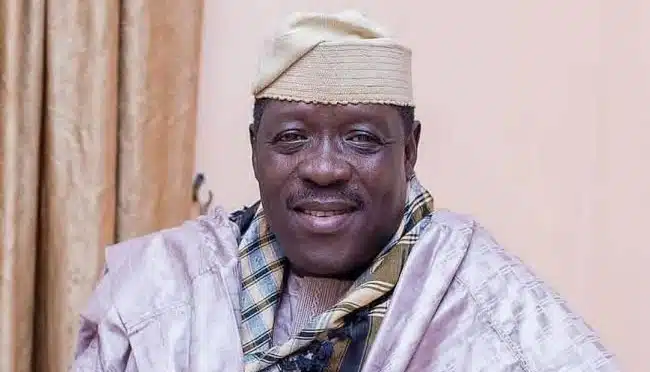
In Bauchi State, journalist Muhammad Sani Adamu of Albarka Radio was beaten by police officers while covering a public event, sustaining head injuries.
The incident has drawn concern among media practitioners, with many describing it as a stark reminder of the risks journalists face, even during routine assignments.
A colleague said: “It shows that even public interest reporting can turn dangerous in an instant.”
As of now, there has been no clear confirmation of disciplinary action against those involved, reinforcing concerns raised by the United Nations about weak accountability and the persistence of impunity in attacks against journalists.
What Government Can Do
The protection of journalists and the safeguarding of press freedom must begin at the state level.
Governments are responsible for enforcing constitutional guarantees of expression and ensuring that journalists can work in the field without fear of harm or harassment from security forces.
True commitment to a free press requires more than rhetoric; it requires the transparent prosecution of those who attack the media and an end to the misuse of laws—such as cybercrime and defamation acts—to silence dissent.
Governments must move beyond mere tolerance to create a truly enabling environment where the press can serve as a watchdog without the threat of legal or physical retaliation.
On this year’s World Press Freedom Day, the debate in Nigeria remains centered on amending the Cybercrime Act to prevent it from being used as a weapon against the “One Voice” of the press.
The message is clear: without protection for journalists and accountability for attacks against them, the role of the media in promoting dialogue, preventing conflict, and building lasting peace remains at risk.



















Leave a comment