









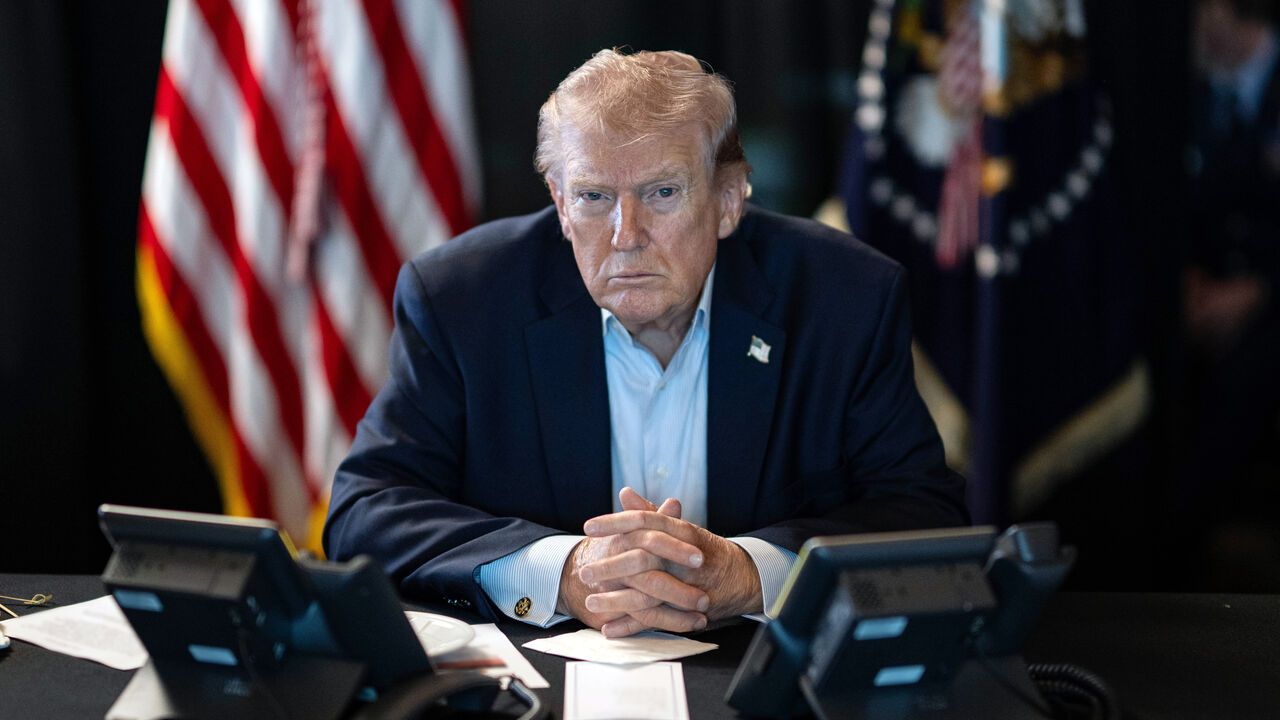




In a dramatic escalation of the burgeoning conflict in the Middle East, U.S. President Donald Trump has moved to provide a cushioning effect to the risk of global energy transport in the on-going US-Iran war crisis.
Persecondnews recalls that on Tuesday, the Trump ordered the U.S. Navy to prepare for armed escorts of commercial tankers through the Strait of Hormuz and directed a federal agency to provide “political risk insurance” to shipping lines after private insurers began a mass exodus from the region.
The moves come as the world’s most vital energy artery sits on a knife-edge.
Following joint U.S.-Israeli strikes on Iranian nuclear and military infrastructure last Saturday—an operation dubbed “Midnight Hammer”—Tehran has retaliated by declaring the Strait of Hormuz “closed.”
Writing on his Truth Social platform, Trump framed the intervention as a necessity to prevent a global economic collapse.
“From this moment on, I have ordered the US Development Finance Corporation (DFC) to provide political risk insurance and guarantees, at a very reasonable price, to ensure the financial security of all maritime commercial vessels, especially energy vessels, transiting the Gulf,” Trump wrote.
DFC is the US government’s development finance agency. Its mission is to “advance US foreign policy and strengthen national security by mobilising private capital” across the world.
Trump emphasized that the United States would not allow the Iranian Revolutionary Guard Corps (IRGC) to dictate global oil prices, which surged 13% earlier this week.”
If necessary, the United States Navy will begin escorting tankers through the Strait of Hormuz, as soon as possible,” he added.
“No matter what, the United States will ensure the FREE FLOW of ENERGY to the WORLD.”
The Strait of Hormuz is a vital trade artery that connects the Gulf to the Indian Ocean.
Around 20 percent of the world’s oil flows through it.
Unfortunately, since the US and Israel launched strikes on Tehran that started a war with Iran three days ago, the price of oil had shot up by more than 15 percent.
The President’s intervention follows a series of harrowing attacks in the Gulf of Oman and the Strait itself.
On March 1, the Joint Maritime Information Center (JMIC) raised the threat level to “Critical” after three vessels—the oil tankers Skylight, Mkd Vyom, and the chemical tanker Sea La Donna—were damaged by drone and missile strikes.
Iranian state media has been explicit. Brig. Gen. Ebrahim Jabbari, a senior adviser to the IRGC commander-in-chief, issued a chilling warning on Monday: “If anyone tries to pass, the heroes of the Revolutionary Guards and the regular navy will set those ships ablaze.”
The catalyst for the U.S. government’s entry into the insurance market was a “Notice of Cancellation” issued by the world’s leading maritime insurers.
Seven of the 12 members of the International Group of P&I Clubs, including Skuld, Steamship Mutual, and NorthStandard, announced they would terminate war-risk coverage in the Gulf effective midnight March 5.
Without insurance, a billion-dollar cargo of LNG or crude oil is effectively a floating liability that no sane board of directors will authorize to sail,” said a London-based maritime analyst.
By utilizing the U.S. International Development Finance Corporation (DFC), the Trump administration is effectively stepping in as the “insurer of last resort.”
DFC CEO Ben Black confirmed the agency is ready to mobilize, stating the goal is to “ensure commerce, capital, and energy can operate at capacity during the ongoing conflict.”
While Iran claims the Strait is closed, U.S. Central Command (CENTCOM) maintains the waterway remains international territory.
However, the reality on the water is one of a “silent blockade.”
Satellite imagery and tracking data from MarineTraffic show over 150 tankers currently anchored in open waters, hesitant to run the gauntlet of Iranian shore-based missiles and “suicide” drones.
General Dan Caine, head of the U.S. military, briefed reporters on Monday, noting that while the U.S. has “sunk or crippled” much of Iran’s surface fleet in the Gulf of Oman, the threat from land-based batteries and small, fast-attack boats remains high.
In previous “Tanker Wars,” U.S. destroyers would lead a column of merchant vessels, providing a “protective bubble” of anti-air and anti-missile defense.
If Trump follows through, it would mark the largest naval escort operation since Operation Earnest Will in the late 1980s.
The global community is watching the March 5 insurance deadline closely.
If the DFC successfully stabilizes the market, the first “federally insured” convoys could begin moving by the weekend.
However, if Iran makes good its threat to “set ships ablaze,” the world may see a direct naval confrontation between Washington and Tehran within days.
Author










Leave a comment