










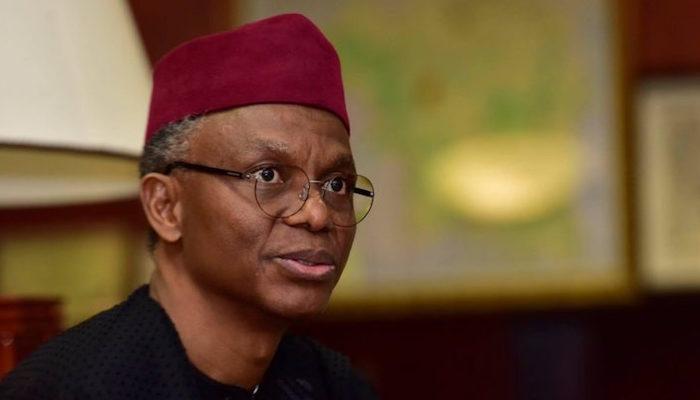




Former Kaduna Gov. Nasir El-Rufai has been arraigned at the Federal High Court in Abuja for allegedly intercepting the phone calls of National Security Adviser (NSA) Nuhu Ribadu.
The charges follow a February 13, 2026, interview on Arise TV, where El-Rufai reportedly admitted that he and several associates—who remain at large—had accessed the NSA’s private communications.
The Department of State Services (DSS) contends that this breach compromised national security and public safety.
Federal prosecutors further allege that El-Rufai knowingly associated with the hackers without notifying authorities, violating both the Cybercrimes (Prohibition, Prevention, etc.) Amendment Act, 2024 and the Nigerian Communications Act, 2003.
The prosecution team for the DSS includes Me Ernest, O.M. Owan Esq, U.M. Bulla Esq, C.S. Eze PhD, and E.G. Orubor Esq, all based at the DSS headquarters in Maitama, Abuja.
The charges, dated February 2026, state that El-Rufai’s actions, as admitted on television, amounted to unlawful use of technical systems and equipment for unauthorized access to communications, an offense punishable under Nigerian law.
El-Rufai’s counsel, Mr. Ubong Esop Akpan, had earlier explained that the former governor received the EFCC’s invitation while abroad.
He described the initial demand for his immediate attendance as “inherently illogical and impractical,” adding that it “defies reason, as it presumes instantaneous compliance from an individual outside the jurisdiction, without regard for logistical realities or legal fairness.”
Akpan said El-Rufai had formally communicated with the EFCC since December 2025, assuring compliance upon his return.
“Yesterday, we explicitly notified them that he would voluntarily appear at their office by 10:00 a.m. on Monday, February 16, 2026, specifying the precise place and time for addressing the invitation,” he said.
He condemned the previous attempt to arrest El-Rufai as “arbitrary conduct” that undermined procedural integrity and infringed upon constitutional provisions guaranteeing fundamental freedoms.
Author











Leave a comment