









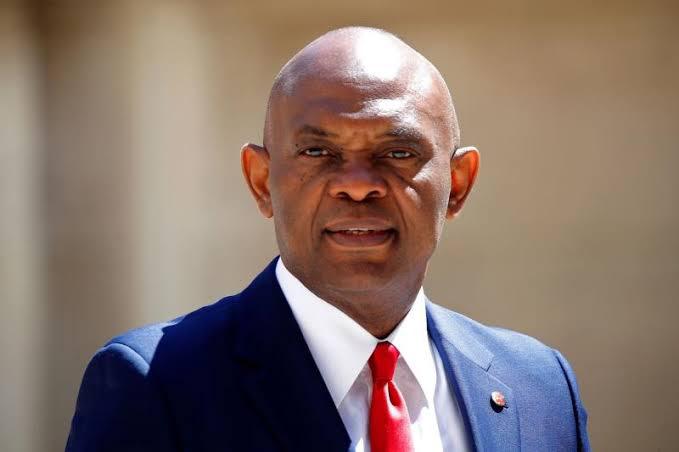






Mr. Mike Igini, a former Resident Electoral Commissioner for the Independent National Electoral Commission (INEC), has cautioned that many National Assembly members risk losing their seats in 2027 over failure to legislate real-time electronic transmission of results.
In a statement released on Sunday titled “Proviso to Real-Time E-Transmission of Polling Unit Results: Why a Majority of Legislators May Not Return in 2027,” Igini argued that securing mandatory, real-time electronic transmission of results in the Electoral Act is their only “survival ticket.”
He urged lawmakers to reflect on past elections, noting that existing legal loopholes have historically worked against incumbents.
“As the National Assembly convenes to reconcile the divergent versions of the Electoral Act Amendment Bill, particularly with regard to the unequivocal demand by the Nigerian populace for mandatory electronic transmission of election results directly from polling units to the INEC Result Viewing Portal (IReV), I urge Honourable and Distinguished Senators to heed the salutary lessons from the misfortunes that befell their predecessors,” Igini stated.
He argued that previous National Assembly failed to address structural weaknesses that later worked against many legislators.
“Those earlier Assemblies, for reasons of convenience and party loyalty, refused to address well-documented election rigging vulnerabilities in our electoral laws, like the very proviso now introduced by the Senate, to qualify direct electronic transmission.
“Such lacunae were exploited to subvert polling-unit outcomes during their tenure by those who denied them re-election party tickets, rendering them victims of the very defects they declined to remedy or introduce to the Act,” he said.
According to Igini, legislators who lost party backing were often unable to defend their mandates despite local support.
“A majority of incumbent legislators who were denied re-nomination tickets by party governors and principal officers of their parties, even when they secured alternative platforms thereafter, were ultimately defeated through manipulation of polling unit results during collation processes, despite robust grassroots support they legitimately obtained in their constituencies and won at polling units,” he added.
He warned that members of the current National Assembly risk facing similar political consequences if ambiguities remain.
“The 10th Assembly now stands perilously close to replicating this lamentable pattern. Those Members not favoured or not in the good books of their respective State Governors or party leaders will foreseeably be denied tickets and, given the prospects of an unprotected or unsecured electronic transmission of polling unit results, will find it exceedingly difficult to translate constituency endorsement, however strong they may be, into electoral victory,” Igini said.
He pointed out that public demand for real-time electronic transmission was rooted in the need to prevent result alteration.
“Nigerians have insistently demanded real-time electronic transmission from polling units to IReV, precisely to forestall post-polling alterations at ward or local government collation centres. Publicly viewable results serve as deterrence and would render such tampering manifest and actionable.”
Igini described the persistent turnover rates in the National Assembly as evidence of systemic electoral vulnerabilities.
“The facts of alarming rate of legislators’ turnover are incontrovertible. Their attrition rate has averaged well above 60 to 70 per cent, with fewer than four in ten Senators and barely one-third of Representatives typically securing re-election,” he said.
He argued that such instability weakens governance and legislative development.
“This chronic instability breeds institutional amnesia, dissipates scarce public resources on perpetual induction and retraining, weakens legislative oversight, and erodes continuity in law-making and executive accountability,” Igini noted.
On the concerns about network limitations, the former commissioner dismissed such arguments as insufficient.
“Before we left office in 2022, INEC and NCC had carried out a survey of network coverage of both 2G and 3G and came with a report of over 97 per cent coverage across Nigeria. Network concerns are therefore largely excuses and completely specious,” he said.
He further warned that qualifying provisions could create opportunities for electoral interference.
“The Senate’s proviso invites mischief, affording opportunities for collusion between influential actors, collation officials, and telecommunication providers to engineer deliberate network failures on election day,” Igini stated.
He urged lawmakers to remove any qualifying clauses that could weaken electronic transmission safeguards, insisting that clear provisions were essential for electoral credibility.
“Real-time electronic transmission is, therefore, not merely desirable; it is essential for the sustenance of our democracy and for deserving legislature members’ political survival,” he added.
As Nigeria prepares for the 2027 general elections, the electronic transmission of results continues to dominate discussions surrounding the amendment of the Electoral Act.
During an emergency plenary on Tuesday, the Senate approved the use of the INEC Result Viewing portal while retaining manual collation as a fallback.
However, the legislative body stopped short of mandating electronic transmission as the primary method and voted against the requirement for real-time result uploads.
Author













Leave a comment