











By Omoyeni Ojeifo
From expanding access to education and upgrading school infrastructure to strengthening teacher capacity, promoting digital learning, funding student innovation and improving university welfare, the Federal Government has outlined its achievements across 26 areas of Nigeria’s education sector.
Education Minister Dr. Maruf Olatunji Alausa presented the Tinubu administration’s 26-point education scorecard, outlining its interventions in teacher welfare, school infrastructure, student financing, digital learning and access to education.
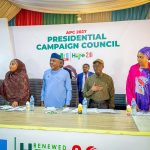
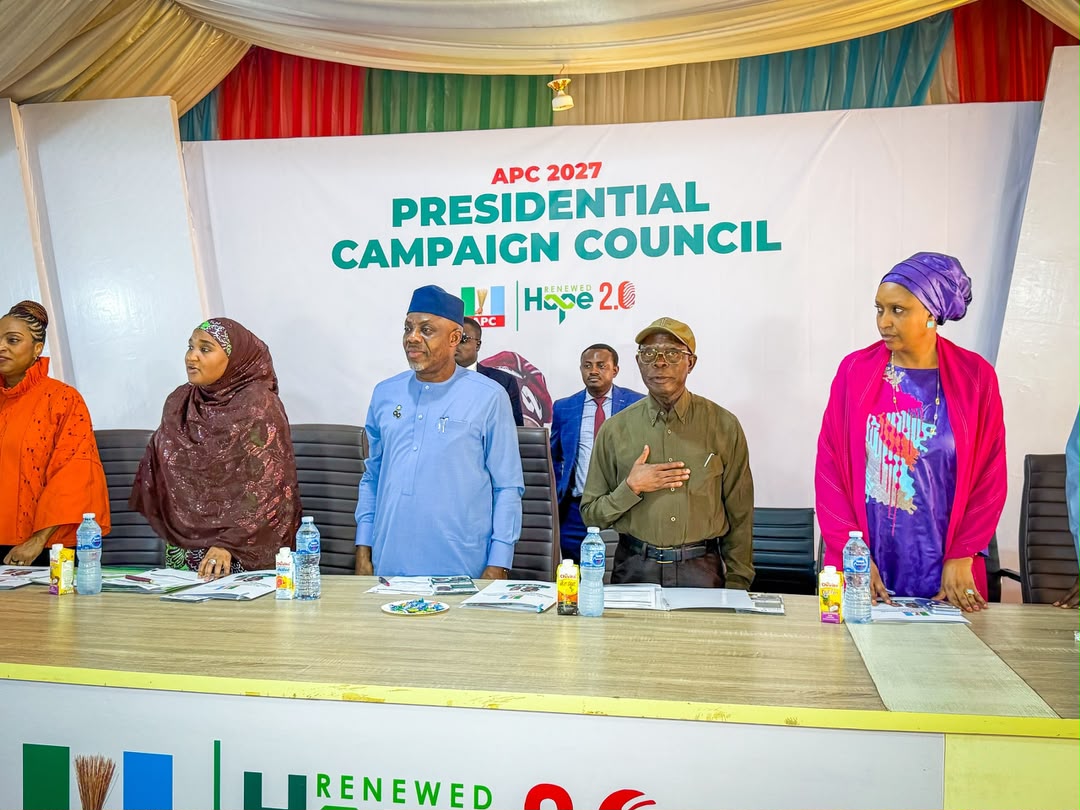
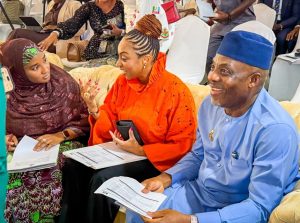
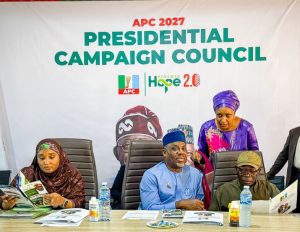
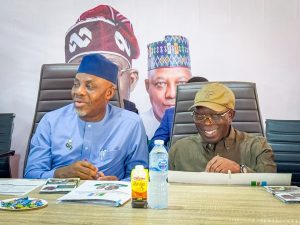
The presentation took place at the All Progressives Congress (APC) Presidential Campaign Council headquarters, in Abuja, on Monday.
PersSecondNews reports that the scorecard documents 26 initiatives, arranged alphabetically from ASUU Agreement to Zero-Rated Education.
The A–D initiatives begin with the ASUU Agreement, under which academic staff remuneration increased by 40 per cent, alongside revised allowances.
The Better Education Service Delivery for All (BESDA) targets out-of-school children, particularly in 17 northern states, while the Campus Mobility Initiative has deployed 780 electric tricycles across 48 universities.
Through Diaspora BRIDGE, 1,141 diaspora experts have registered, reaching 16,675 students across 107 tertiary institutions.
On academic stability, Alausa said: “Students starting a four-year programme in 2023 will graduate in 2027 without breaking their academic calendar.”
The E–H initiatives cover Empowering Educators, Free Technical Education, Girl-Child Education and HOPE Education. Empowering Educators recorded 53,553 teachers registered on EduRevamp, with a target of professionalising 250,000 teachers by 2027.
“Free Technical Education provides tuition, boarding, textbooks and uniforms in federal and selected state technical colleges, with 38 institutions rehabilitated,” he said.
According to him, through the Adolescent Girls Initiative for Learning and Empowerment, AGILE, over 7 million girls have received interventions across 21 states, while HOPE Education, backed by $552 million in World Bank funding, targets 29 million children and more than 500,000 teachers.
Alausa emphasised the importance of educators, saying: “If you want the best quality of education, you have to take care of your teacher.”
The I–L initiatives comprise Inspire Live!, JAMB Admissions Reform, Knowledge Economy and National Learning Assessment. Inspire Live! delivers online lessons from Primary One to Senior Secondary Three.
According to him, JAMB Admissions Reform removed the UTME requirement for admission into NCE programmes, while the Knowledge Economy initiative includes a ₦365 million annual National Laureate Prize for research and innovation.
“The National Learning Assessment has also been reintroduced to measure pupils’ learning outcomes and identify gaps,” he added.
Under the M–P initiative, Medical Education Expansion, Nigerian Education Loan Fund (NELFUND), Out-of-School Children and Almajiri Education, and Prioritising Educators’ Welfare.
Adding that annual nursing enrolment has risen from 28,000 to 115,000, while ₦110 billion is allocated for rehabilitating 24 medical schools. NELFUND has disbursed ₦372.62 billion in institutional fees and student upkeep across 319 institutions.
“The out-of-school education intervention has reintegrated more than one million children, while the Tertiary Institutions Staff Support Fund has disbursed ₦28 billion to 15,000 staff across 153 public tertiary institutions,”he stated.
Defending the administration’s record, Alausa declared: “These are not phantom promises and phantom things. It’s there. I’m not coming to tell you that we’re going to do this one year from now, two years from now.”
The Q–T initiatives comprise Quality Assurance, Renewable Energy for Education, Student Venture Capital Grant and Technical and Vocational Education and Training (TVET).
Quality Assurance includes curriculum changes restoring Nigerian History and strengthening Civic and Heritage Studies. Renewable Energy for Education has delivered solar mini-grids to 37 federal universities and seven teaching hospitals.
“The Student Venture Capital Grant has disbursed more than ₦2.5 billion to 45 student entrepreneurs, while TVET recorded 2.8 million applicants and 156,446 verified trainees,” he noted.
On skills development, Alausa said: “We have either trained or are currently training almost 250,000 Nigerians across close to 1,200 skills training centres.”
The final U–Z initiatives cover University Financial Autonomy, Visibility, Workforce Expansion, eXpanding Digital Access, Youth Entrepreneurship and Zero-Rated Education.
“The education governance portal has onboarded 58 federal universities, 37 federal polytechnics and 27 federal colleges of education. Workforce Expansion targets specialist personnel in occupational therapy, audiology and speech therapy,” he said.
Through eXpanding Digital Access, more than 40 million learners and 215,000 schools have been mapped, while 111 tertiary institutions have joined AWS Academy.
Youth Entrepreneurship has introduced its certification programme in 14 federal universities, while Zero-Rated Education seeks to provide approved educational platforms at reduced or no data costs.
Alausa appealed for another four years for the Tinubu administration, arguing that continuity was necessary to consolidate the education reforms already introduced.
In his remarks, former Edo State Governor and Senator representing Edo North, Adams Oshiomhole, defended President Bola Tinubu’s education reforms, urging Nigerians to allow the administration’s policies to run their full course.
“Why are those afraid of the termination of this wonderful initiative? We should retain the chief initiator and chief executor of the programme, President Bola Ahmed Tinubu. After eight years, let us see who will come and say they want to withdraw these policies.”
Also, in her keynote address, Hadiza Bala Usman, Assistant Secretary of the APC Presidential Campaign Council, said communicating government performance was an essential component of governance.
“Communicating government performance is an essential component of effective government. Nigerians deserve to know not only what their government has promised, but what has been produced.”
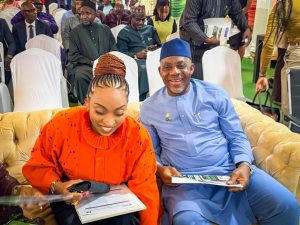
PerSecondNews correspondent reports that the review was attended by the Special Adviser to the President on Information and Strategy, Mr Bayo Onanuga, Minister of Industry, Trade and Investment, Dr Jumoke Oduwole; Minister of State for Education, Dr Suwaiba Said Ahmad, NiDCOM Chairman, Abike Dabiri-Erewa, and other stakeholders of the APC.
Author






Leave a comment