















By Omoyeni Ojeifo
Stakeholders have been challenged to close the gap between policies and their impact on the people they are designed to serve, ensuring that innovations translate into measurable improvements in the lives of underserved communities.
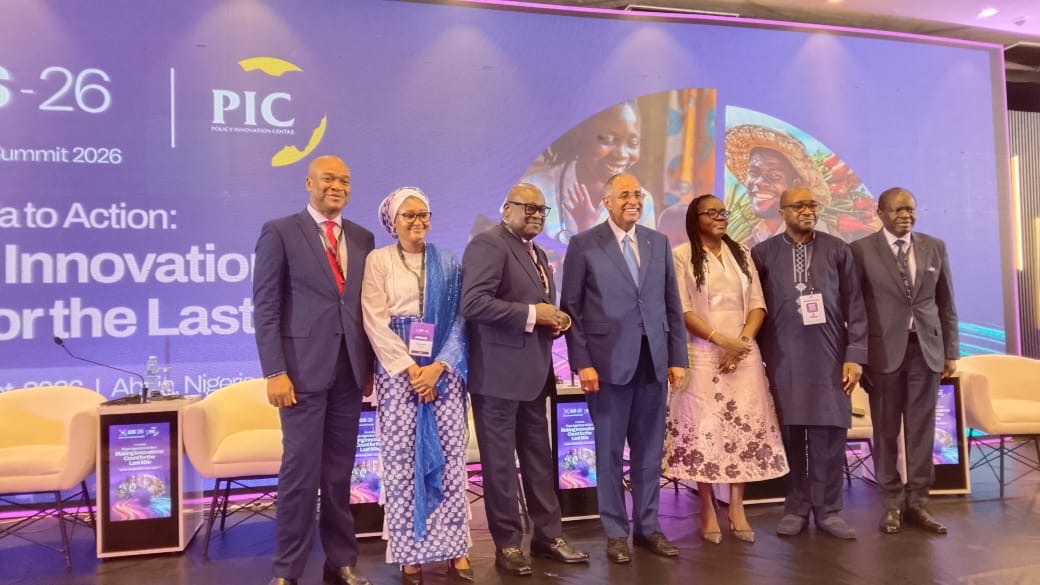
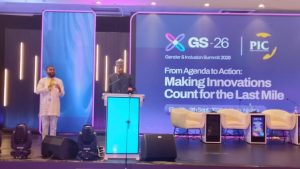
The Chairman of the Policy Innovation Centre, Mr. Udeme Ufot, made the call at the Gender and Inclusion Summit 2026 (GS26), organised by the Policy Innovation Centre in Abuja under the theme, “From Agenda to Action: Making Innovations Count for the Last Mile,” in Abuja on Tuesday.
Ufot challenged stakeholders to move beyond developing policies and making commitments to ensuring that they are implemented, scaled and produce measurable improvements in people’s daily lives.
“From Agenda to Action calls on us to move beyond commitments and focus on implementation, scale and measurable results. We must ensure that the policies and solutions we develop are practical, sustainable and able to reach the people they are intended to serve,” Ufot declared.
He identified women and girls in underserved communities, young people, persons with disabilities, rural populations and other groups as among those who remain furthest from opportunity and services.
“The Last Mile brings the focus to those who remain furthest from opportunity and services. This includes women and girls in underserved communities, young people, persons with disabilities, rural populations and other groups,” he explained.


Ufot maintained that innovation should be judged by its impact, with successful solutions expected to improve services, expand economic opportunities, strengthen systems and improve wellbeing.
“Making Innovations Count requires us to look beyond novelty and focus on impact. Innovation must translate into better services, greater economic opportunity, improved wellbeing and stronger systems,” he maintained.
He urged government, development partners, the private sector, civil society, academia and communities to take responsibility for turning ideas into results and ensuring that inclusion becomes measurable.
“Let us move beyond dialogue to practical commitments, clear responsibilities and sustained implementation.
“Let us ensure that government, development partners, the private sector, civil society, academia and communities each play their part in turning ideas into results,” Ufot urged.
On his part, Chairman of the Nigerian Economic Summit Group, Mr. Niyi Yusuf, challenged stakeholders to examine whether commitments made during previous editions of the summit were reaching the people who needed them most.
“For too many women, girls, young people and persons with disabilities, especially those in our most underserved communities, the distance between a policy on paper and a changed life remains wide,” Yusuf declared.
Yusuf explained that policies and programmes would have little effect if they failed to reach people at the point of need, particularly those in underserved communities.
“An innovation only counts when it arrives. A programme, however well-designed, changes nothing until it reaches the woman at the very end of the road,” he said.
He called for stronger partnerships and practical road maps capable of translating evidence and commitments into action for people furthest from opportunities and essential services.
“We do not gather merely to deliberate; we gather to design and to deliver. Our aim is singular: to move from agenda to action, and to ensure that innovation counts for the people furthest from opportunity.”
PerSecondNews reports that rhe two-day summit brings together policymakers, development partners, business leaders, innovators, researchers and advocates to explore practical solutions that can improve lives and expand opportunities for women, youths, persons with disabilities and other underserved communities.
Author













Leave a comment