









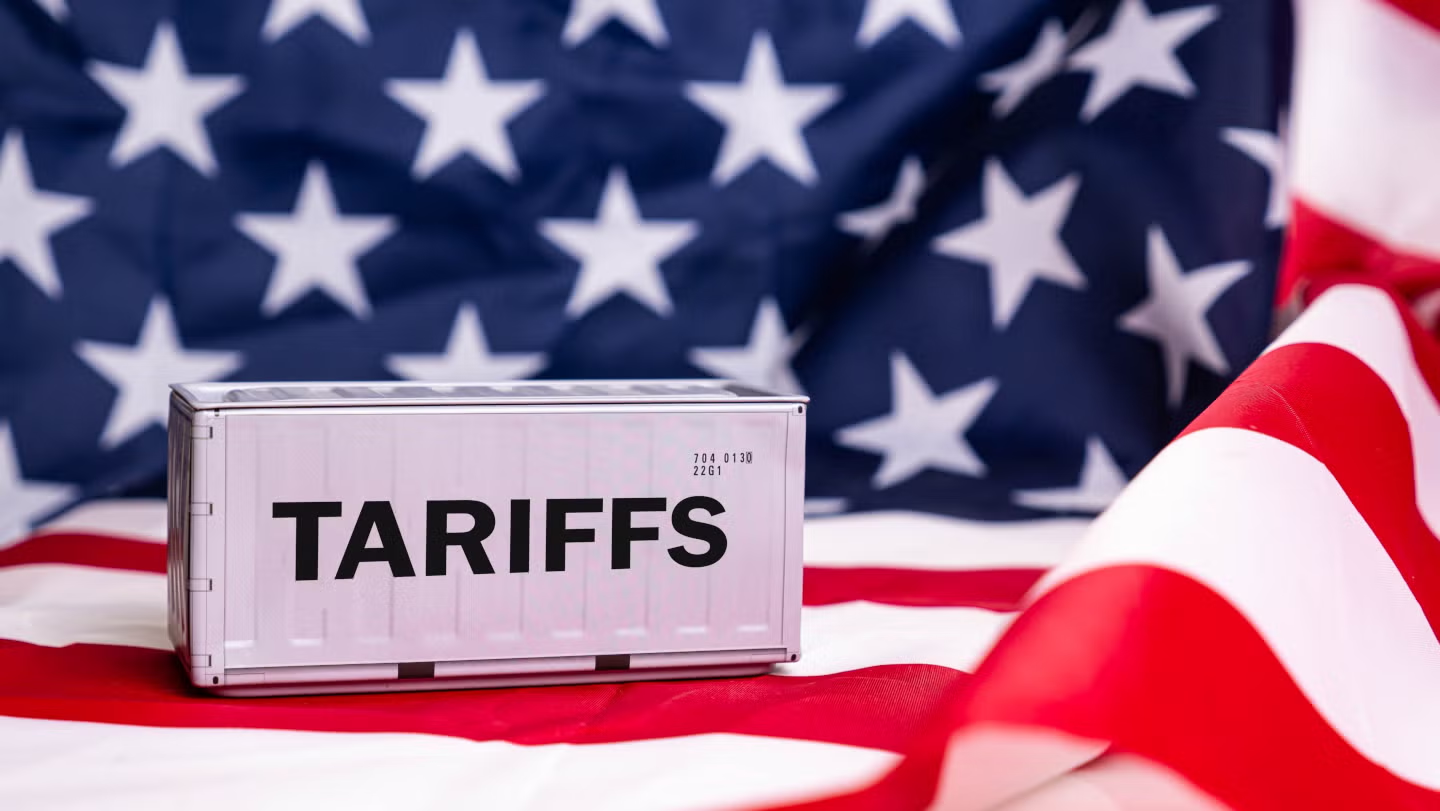



Nigeria risks seeing US tariffs on its exports climb to 27.5 per cent after being named among 60 economies failing to effectively ban imports of forced labour-produced goods.
The Office of the United States Trade Representative (USTR) disclosed its findings on Tuesday, following an inquiry initiated on March 12, 2026, under Section 301 of the U.S. Trade Act of 1974.
The agency ruled that the failure of the targeted economies to prohibit and properly police inflows of goods made with forced labour was unreasonable and burdened American commerce.
It has therefore proposed additional duties, now subject to public consultation.
If approved, the new charges would build on the existing 10 per cent baseline tariff under President Donald Trump’s reciprocal trade framework, lifting the overall rate on Nigerian goods to 27.5 per cent. U.S.
Trade Representative Ambassador Jamieson Greer stressed the broader stakes, stating: “The failure of our most important trading partners to address the importation of goods made with forced labour is unacceptable.
“This creates a dynamic where American workers are forced to compete globally on an uneven playing field. We will no longer tolerate this disparity.
Some trading partners have taken initial steps to prevent the importation of forced labour goods, including through the USMCA and commitments in Agreements on Reciprocal Trade.
However, each of our trading partners must do more to ensure that trade does not perversely encourage and entrench forced labour globally.”
The USTR placed Nigeria among 54 economies found to have neither imposed nor effectively enforced bans on forced labour imports.
Other African countries listed include Algeria, Angola, Egypt, Libya, Morocco and South Africa.
The findings also cover major trading partners across Asia, Europe, the Middle East and the Americas, including China, India, Japan, South Korea, Bangladesh, Malaysia, Thailand, Vietnam, Saudi Arabia, Qatar, Kuwait, the United Kingdom, Switzerland, Norway, Australia, Brazil, Argentina and Israel.
Six further economies — Canada, Ecuador, the European Union, Indonesia, Mexico and Pakistan — were identified as having forced labour import prohibitions but failing to enforce them properly.
These gaps, the USTR said, distort global competition by letting firms using forced labour undercut compliant businesses and weaken international efforts to eliminate such practices.
On remedies, the agency proposes a 10 per cent additional duty on products from economies that have adopted or committed to forced labour import bans or partial regimes, while recommending 12.5 per cent for all other economies, including Nigeria.
It further outlines a textile mechanism to allow limited volumes of apparel and textile imports from qualifying economies into the United States at a reduced Section 301 tariff rate.
The probe drew testimony from nearly 60 witnesses and about 500 written comments and rebuttals.
Although the measures remain under review and are not yet in force, they target labour-related distortions rather than applying broad reciprocal tariffs.
The final outcome after consultations could carry major implications for Nigeria and other affected economies that depend on access to the American market.
Author





Leave a comment