














By Omoyeni Ojeifo
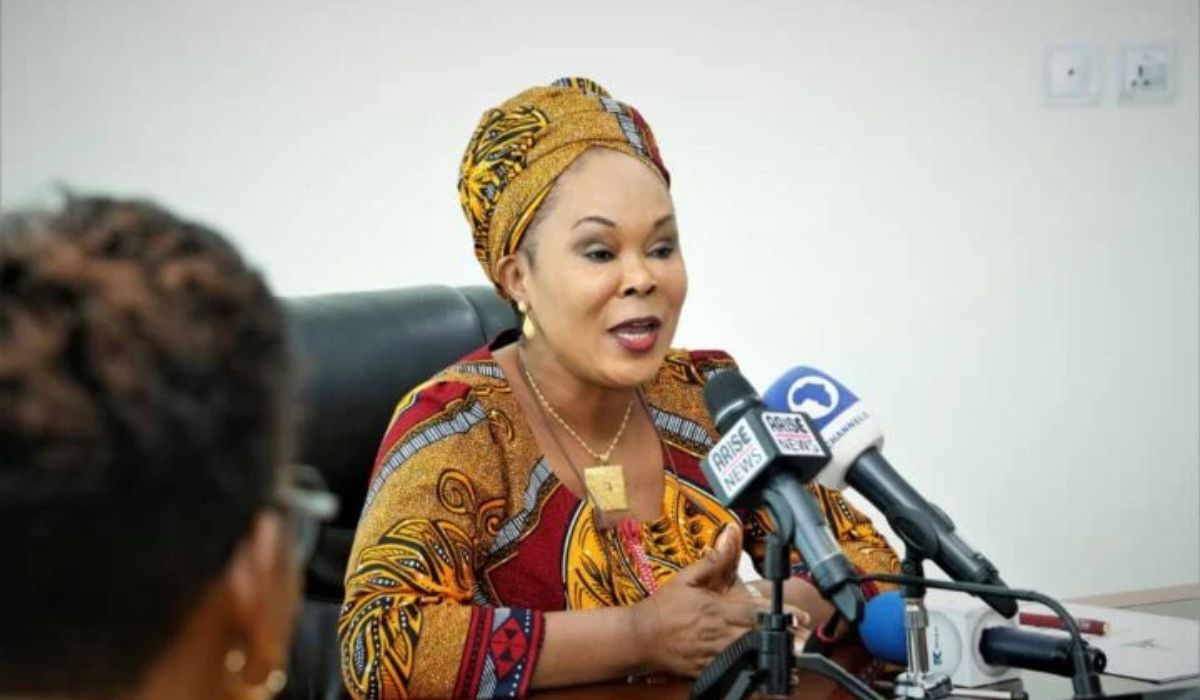
Former Minister of Women Affairs, Uju Kennedy-Ohaneyne, has said bureaucratic bottlenecks and institutional resistance within the civil service often undermine the implementation of presidential policies and weakening the impact of government reforms under the Renewed Hope Agenda.
Featuring in an interview on Arise News monitored by Persecondnews on Thursday, the former minister argued that execution gaps, rather than policy design, remain a major obstacle to effective governance in Nigeria.
“Many of challenges are deeper in system and how implementation is carried out across institutions generally nationwide, and that is why coordination and execution remain weak in governance delivery,” she said.
She maintained that governance delivery is often slowed down by operational inefficiencies within implementing agencies.
“The President said three to six months to bring in rice free of anything. What frustrates us is that customs and other workers frustrate the process at implementation level nationwide.”
Ohanenye, however, commended President Bola Tinubu for ongoing reform efforts, noting that despite implementation challenges, the administration’s direction on economic stabilisation and food security reflects strong policy intent.
She also argued that leadership cannot be isolated from institutional weakness, stressing that governance delivery requires collective responsibility across the system rather than over-centralisation on the presidency.
“What will he do? Will share himself into millions and be everywhere? We ourselves are supposed to fully help ourselves, I am sorry to say this generally speaking here,” she emphasized.
The ex-minister questioned the effectiveness of Nigeria’s budget process and oversight structure, suggesting that weak scrutiny at different stages of appropriation affects national outcomes.
“Who writes the budget? Are they not civil service budgets? Are they not meant to scrutinise and understand how the system works and serves the people properly in governance system ?”
On governance communication and media accountability, she urged journalists to interrogate systems more deeply rather than focus on surface-level political narratives.
“The media should go beyond headlines and press narratives to interrogate systems properly, so that citizens can understand what is really happening within government implementation processes,” Persecondnews quotes the ex-minister as saying.
She commended the Tinubu Torchbearers initiative, describing it as a structured grassroots mobilisation platform designed to expand women’s participation in political and civic engagement.
“The Torchbearers initiative is not just symbolic, it is a structured mobilisation platform linking women across communities to actively participate in sustaining governance and political engagement,” she said.
Persecondnews recalls that the Tinubu Torchbearers was inaugurated on Wednesday in Abuja by the First Lady, Sen. Oluremi Tinubu, as a grassroots mobilisation platform to strengthen women’s participation and support for the Renewed Hope Agenda.
Author









Leave a comment