







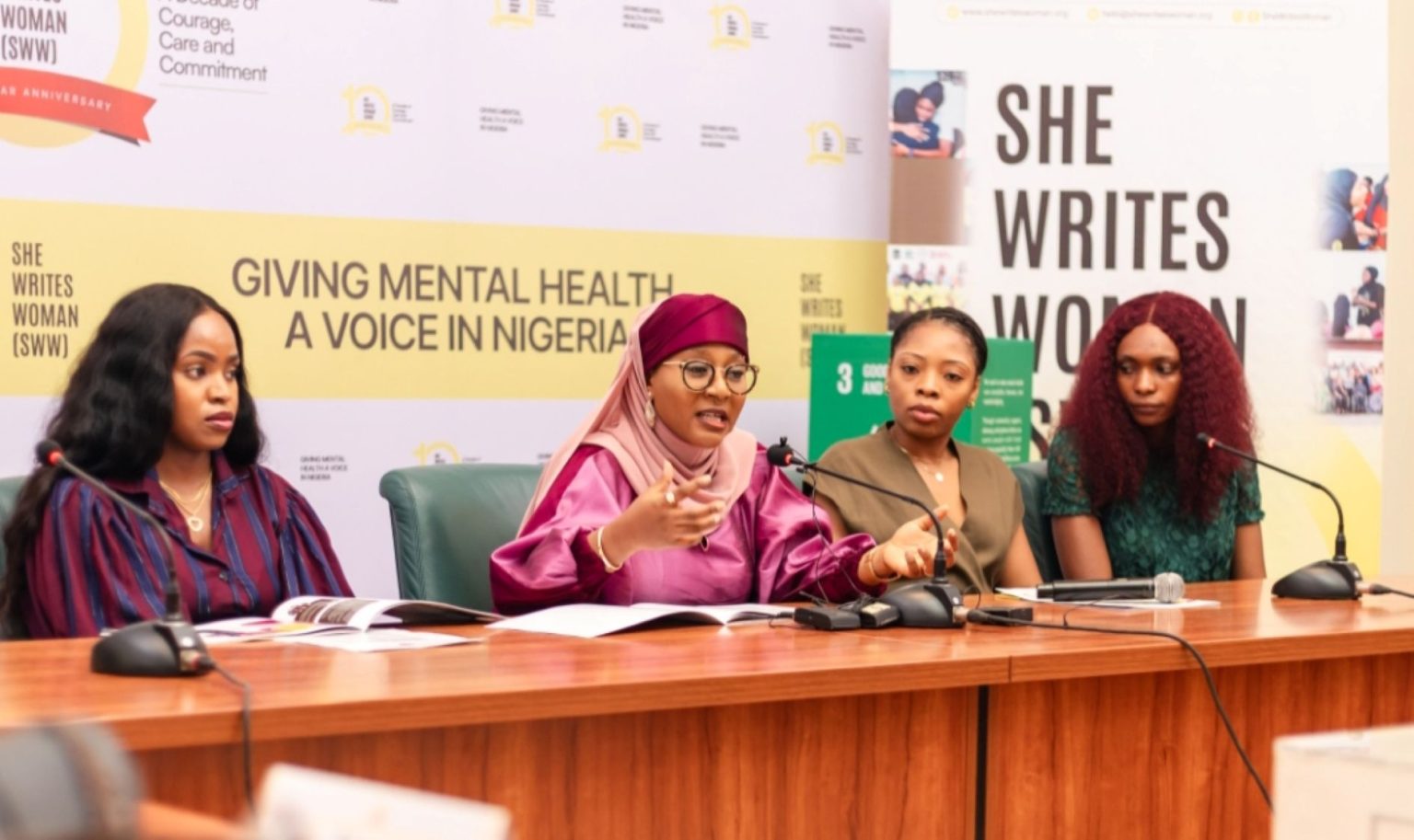




Marking its 10th anniversary of advocacy, the NGO She Writes Woman (SWW) has renewed its call for the inclusion of individuals with lived mental health experiences in Nigeria’s decision-making processes.
Speaking at a media briefing in Abuja on Tuesday, Founder and Executive Director Hauwa Ojeifo characterized the organization as a movement, more than an NGO, dedicated to amplifying voices typically sidelined by formal systems.
“SWW is a movement that gives mental health a voice in Nigeria by empowering those with lived experience of mental health and psychosocial disabilities to tell their own stories, develop solutions, and advocate for their rights,” Persecondnews correspondent at the event quotes Ojeifo as saying.
“Our mission is to ensure that people with mental health conditions are included in decision-making at all levels.”
The milestone report, the first of its kind, compiles mental health and suicide-related data from a frontline crisis support organisation across Nigeria’s six geopolitical zones, offering insights into realities often undocumented in national data.
Martina Ibe, Programme Manager at She Writes Woman, emphasized the organization’s mission, stating: “We wanted to create a space where people can speak and be heard.
“At the early stages of our founding, our systems were limited we were not operating 24/7, we were not fully equipped to serve across different languages, and we had not yet built an inclusive structure.
“But over the years, the people we have served have shaped us. We listened, and we adapted.”
Also speaking at the briefing, Programme Manager at the Disability Rights Fund, Mr. Theophilus Odaudu, commended the organization’s contributions to mental health advocacy and disability rights.
He noted that despite longstanding challenges in advancing psychosocial disability rights, the organisation has made measurable progress, particularly in influencing policies such as the National Mental Health Act.
“We recognise the progress made in a relatively short time and the impact of this work in advancing the rights of persons with disabilities. There is still a need for sustained advocacy and support,” he said.
Comfort Ekwo, a disability inclusion advocate and SWW Champion, highlighted the unique hardships faced by those living with both physical disabilities and mental health conditions.
She noted that pervasive stigma and a lack of inclusive infrastructure often exacerbate these struggles, making this demographic particularly vulnerable to psychological distress.
Reflecting on her personal journey, Ekwo said:“I found a safe space where I could voice my trauma for the first time. That experience gave me the courage to speak out and support others.”
She warned that without supportive environments, many individuals remain trapped in cycles of emotional instability.
Adding a global perspective, Anietie Ewang, a Nigeria researcher at Human Rights Watch, lauded SWW’s decade of impact, noting that the organization has been instrumental in reshaping the national discourse on mental health and psychosocial disabilities.
She noted that collaboration between SWW and Human Rights Watch has documented abuses and contributed to legislative reforms, while emphasising the importance of lived experience in advocacy.
“This work has helped restore dignity, challenge stigma, and influence legal reforms. It shows that human rights are deeply personal and must be protected,” she said.
The organisation said the report would be officially released in the coming weeks, providing policymakers, stakeholders, and the public with deeper insight into Nigeria’s mental health realities.
Author






Leave a comment