









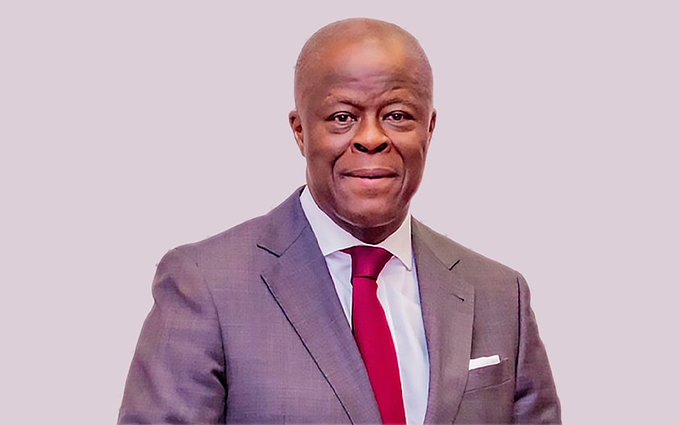



Minister of Finance and Coordinating Minister of the Economy, Wale Edun, has identified the ongoing geopolitical unrest in the Middle East as a primary driver of recent economic instability in Nigeria.
Addressing the Islamic Development Bank (IsDB) Group, the Minister highlighted that the conflict has intensified existing domestic burdens, such as high energy costs and rising food prices.
In a statement released Monday by his spokesperson, Dr. Ogho Okiti, the Minister emphasized that these global shocks coincide with the government’s efforts to implement foundational economic reforms.
Edun specifically pointed to the Strait of Hormuz as a critical friction point, noting that disruptions there have impacted crude oil pricing mechanisms by as much as 35\% to 50\%.
Nigeria’s Bonny Light crude, he noted, surged from about $70 $73 per barrel to highs above $110 $120, reflecting the global supply disruptions.
“As an oil producer, the government recognises that a longer duration of the conflict means improvements in foreign earnings and fiscal revenues. However, the shock comes as Nigeria seeks to strengthen its macroeconomic stability and resilience,” he said.
Edun explained that while higher oil prices may boost government revenues, the broader economic shock is negative, as it fuels inflation and raises the cost of living.
Petrol prices have risen by over 50 per cent to between N1,260 and N1,330 per litre, while diesel prices climbed by more than 70 percent to around N1,550 at peak levels.
He identified three major transmission channels through which the crisis is affecting Nigeria’s economy energy prices, capital flows, and global logistics.
According to him, heightened geopolitical risks are driving investors toward safer assets, potentially weakening capital inflows into emerging markets like Nigeria.
In addition, disruptions to global shipping routes are expected to increase freight costs, further raising import prices and worsening domestic inflation.
Meanwhile, the International Monetary Fund (IMF) has warned that countries facing balance of payments shocks may require up to $50 billion in emergency financing, as global growth prospects weaken due to the crisis.
IMF Managing Director, Kristalina Georgieva, indicated that the Fund may cut global growth projections at the ongoing Spring Meetings in Washington, citing rising energy costs, supply disruptions, and infrastructure damage linked to the conflict.
Edun, who is leading Nigeria’s delegation to the meetings, maintained that the government is taking steps to cushion the impact of the shock, including efforts to boost oil production to about 1.86 million barrels per day and maximise foreign exchange earnings.
He also highlighted key policy measures such as the naira for crude initiative, foreign exchange market liberalisation, and recent tariff adjustments aimed at supporting domestic production and trade.
Despite global instability, Edun asserted that Nigeria’s macroeconomic foundation is stronger now than during previous shocks like COVID-19.
He argued that current reforms have built a “resilience buffer,” allowing the government to focus on navigating uncertainty through private sector investment and the expansion of local capital markets to ensure broader economic growth.
Author







Leave a comment