











In a dramatic confrontation between the executive and judicial branches of the US government, President Donald J. Trump has moved to bypass a landmark Supreme Court ruling just hours after it was handed down.
On Friday, February 20, 2026, the President signed a new executive order imposing a 10% global tariff on all imports, effectively challenging the Court’s authority to restrain his signature trade agenda.
The move followed a stinging 6-3 defeat at the Supreme Court earlier in the day.
The justices ruled that the administration had exceeded its legal authority by using the International Emergency Economic Powers Act (IEEPA) to levy sweeping tariffs.
Chief Justice John Roberts, writing for the majority, stated that the 1977 law does not grant the President unilateral power to impose taxes on imports, a role constitutionally reserved for Congress.
”A Disgrace to the Nation”
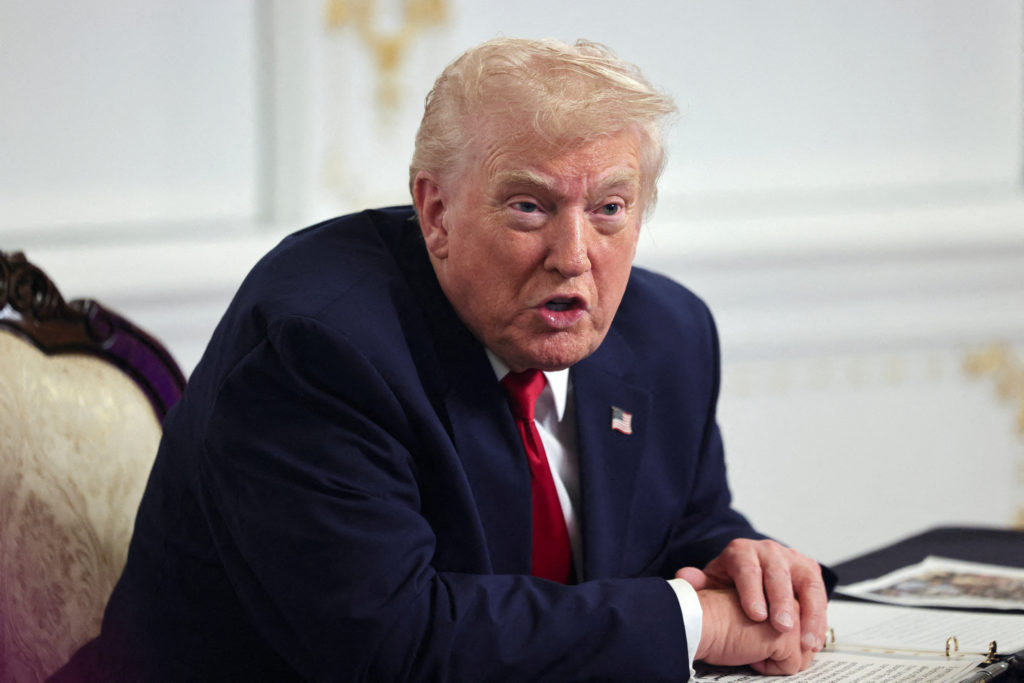
An incensed President Trump held an impromptu press conference at the White House, where he lashed out at the justices who voted against him, calling the decision “ridiculous,” “deeply disappointing,” and “unpatriotic.”
”Today’s decision by the Supreme Court is a disgrace to our nation and does not substantially constrain my ability to protect the American worker,” Trump declared.
“Effective immediately, I am signing an Order to impose a 10% GLOBAL TARIFF under Section 122 of the Trade Act of 1974.”
By pivoting to Section 122, the President is utilizing a different legal lever designed to address “large and serious” balance-of-payments deficits.
While this authority allows for tariffs of up to 15%, it is legally limited to a 150-day duration unless extended by Congress—setting the stage for a ticking clock on global trade stability.
Economic and Legal Fallout
The President clarified that existing “National Security” tariffs under Section 232 (steel and aluminum) and Section 301 (targeting China’s trade practices) remain in full effect, as they were not directly overturned by Friday’s ruling.
Legal experts suggest this new executive order will almost certainly face immediate challenges in lower courts. Meanwhile, international markets reacted with volatility.
Trading partners, including the EU and Canada—who had briefly celebrated the Supreme Court’s initial ruling—are now bracing for the renewed 10% levy.
The administration’s Treasury Secretary, Scott Bessent, defended the pivot, claiming that the use of Section 122 will ensure that projected tariff revenues for 2026 remain “virtually unchanged,” despite the judicial setback.
Author







Leave a comment