




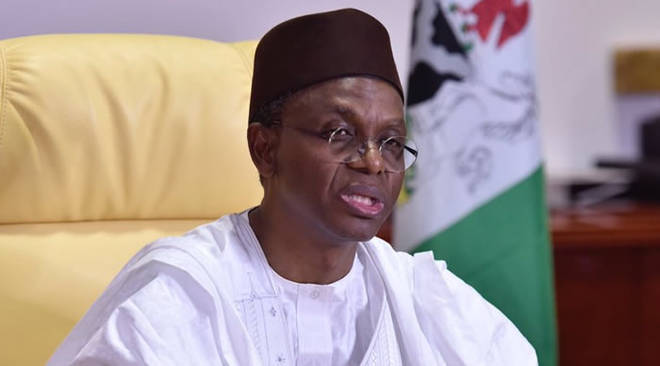
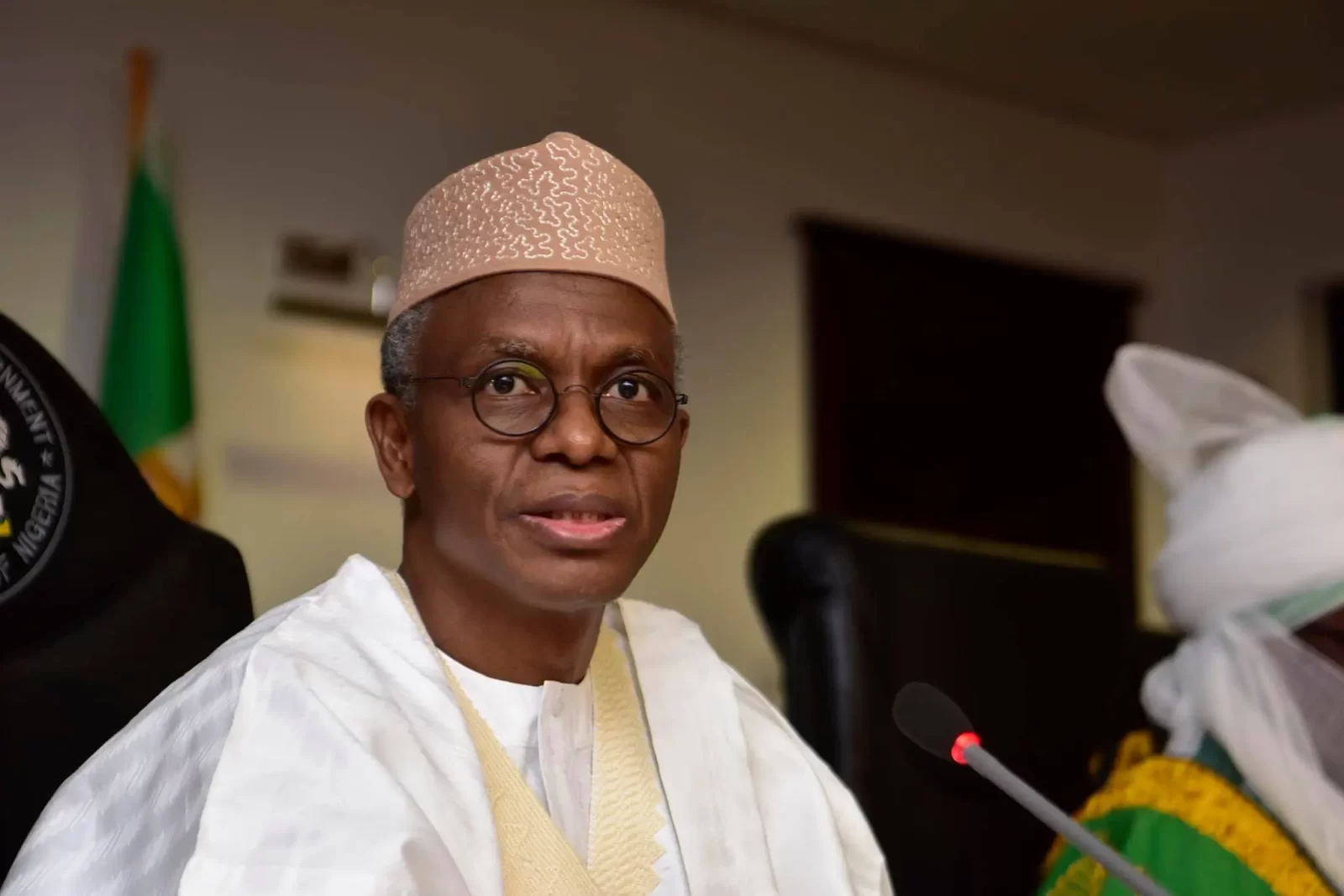



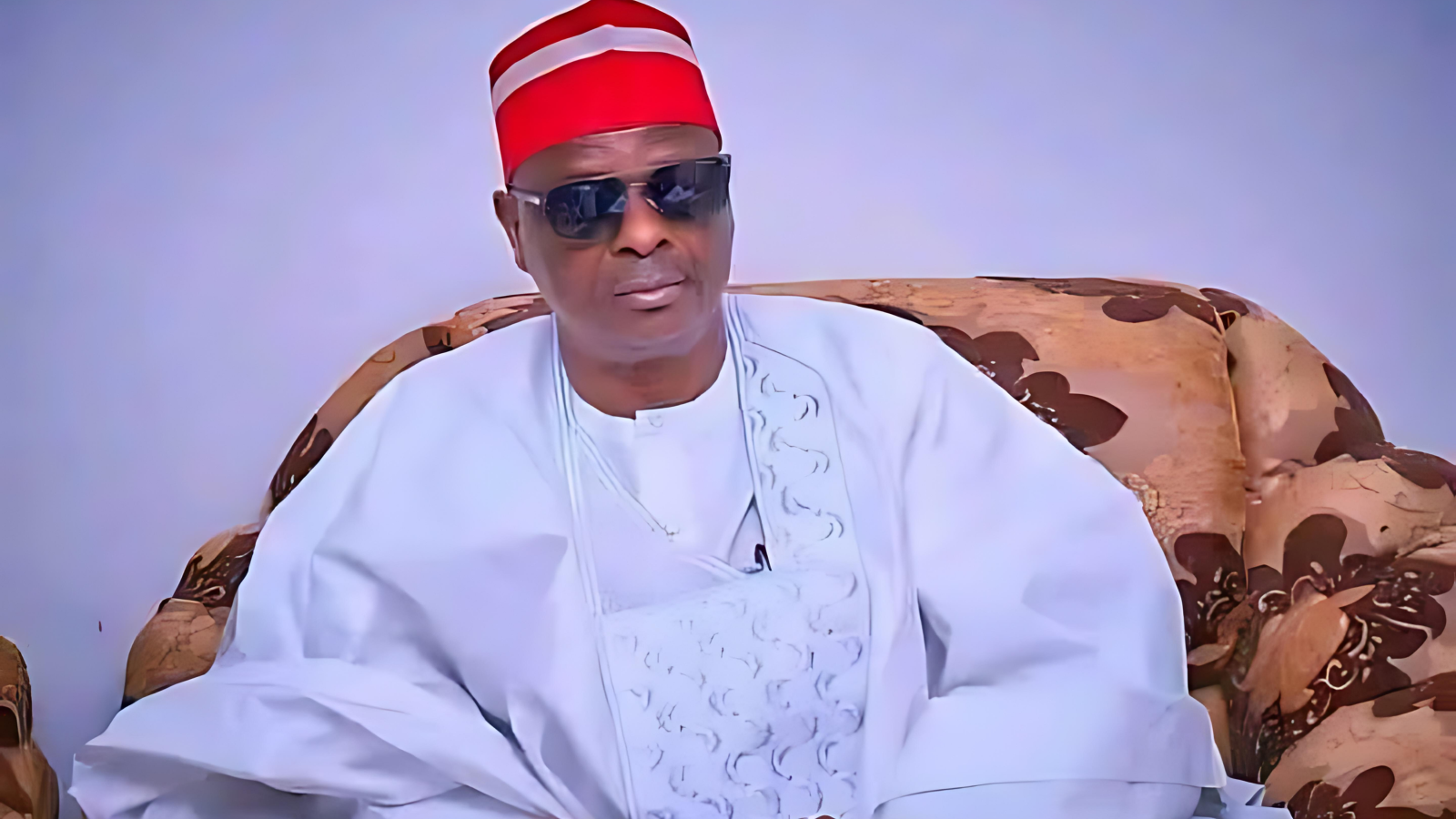
Former Kaduna State Governor Nasir El-Rufai was detained by the Economic and Financial Crimes Commission (EFCC) in Abuja on Monday night following an intensive interrogation.
The ADC chieftain is under investigation for a suspected ₦432 billion corruption case and is expected to face further criminal charges for allegedly bugging the phone of National Security Adviser Nuhu Ribadu.
Sources confirmed that El-Rufai arrived at the Jabi headquarters at 10:00 AM to honor an invitation.
His questioning centered on findings from a 2024 Kaduna State House of Assembly report, which accused his administration of misappropriating loans, bypassing contract protocols, and leaving the state with a massive debt burden.
“The commission has been investigating him for about a year now. As a commission, we don’t just rush to invite suspects. Persons accused are always the last; that is after we might have done our investigation to an advanced stage.
“We are investigating him on the allegations against him by the Kaduna State Assembly,” a senior EFCC source told one of our correspondents.
EFCC spokesperson Dele Oyewale confirmed that the former governor honored the agency’s invitation but declined to provide specifics regarding the interrogation or subsequent legal steps.
This detention represents a significant escalation in the legal challenges facing the former FCT Minister.
El-Rufai, known for his outspoken nature, has recently drawn attention for his public criticisms of the Federal Government and security agencies—rhetoric that has fueled fresh political tensions.
The current probe specifically targets findings from a 2024 Kaduna State House of Assembly ad hoc committee, which scrutinized the finances, loans, and contracts approved during his eight-year tenure (2015–2023).
The 2025 House report, presented by Henry Zacharia, paints a grim picture of El-Rufai’s eight-year administration, alleging that loans were routinely diverted.
Speaker Yusuf Dahiru Leman went further, accusing the former administration of siphoning ₦423 billion and leaving the state in financial ruin.
Beyond the primary embezzlement claims, the report provides a granular look at the alleged corruption, citing ₦1.37 billion in diverted rail project funds and illegal cash payments totaling ₦155 million.
While the Assembly has now handed the matter over to the EFCC and ICPC for prosecution, El-Rufai remains defiant.
He insists the allegations are a political smokescreen, defending his record as one defined by transparent investment in Kaduna’s infrastructure and social services.
However, Monday’s detention suggests that anti-graft agencies have moved beyond preliminary review to active interrogation.
Meanwhile, the Federal Government had filed criminal charges against him before the Federal High Court in Abuja over alleged unlawful interception of the phone communications of the National Security Adviser, Nuhu Ribadu.
The three-count charge, marked FHC/ABJ/CR/99/2026 and filed under the Cybercrimes (Prohibition, Prevention, etc) Amendment Act, 2024 and the Nigerian Communications Act, 2003, accused El-Rufai of admitting during a television interview that he and unnamed associates unlawfully intercepted Ribadu’s communications.
According to the charge sheet, the alleged admission was made on February 13, 2026, when El-Rufai appeared as a guest on Arise TV’s Prime Time Programme in Abuja.
In Count One, the Federal Government alleged that El-Rufai “did admit during the interview that you and your cohorts unlawfully intercepted the phone communications of the National Security Adviser, Nuhu Ribadu,” an offence said to be contrary to and punishable under Section 12(1) of the Cybercrimes (Prohibition, Prevention, etc) Amendment Act, 2024.
Count Two accused him of stating during the same interview that he knew and was associated with an individual who unlawfully intercepted the NSA’s phone communications without reporting the person to relevant security agencies, contrary to Section 27(b) of the Act.
Count Three alleged that El-Rufai and others still at large, sometime in 2026 in Abuja, used technical equipment or systems that compromised public safety and national security by unlawfully intercepting Ribadu’s phone communications, an offence punishable under Section 131(2) of the Nigerian Communications Act, 2003.
According to the prosecution, El-Rufai’s purported admission during a recent TV interview has sparked widespread security concerns among Nigerians.
No official date has been set for his court appearance.
The legal fallout centers on his Friday interview with Arise TV, where he alleged that he learned of his potential arrest through a leaked private communication from the NSA’s mobile device.
“Ribadu made the call, because we listened to their calls. The government thinks that they are the only ones who listen to calls. But we also have our ways. He made the call, he gave the order that they should arrest me.
“That technically is illegal. I know, but the government does it all the time. They listen to our calls all the time without a court order. But someone tapped his phone and told us that he gave the order,” he said.
The disclosure sent shockwaves through political and security circles, with analysts warning that if substantiated, the interception could amount to a grave breach of national security protocol.
Presidential aides were quick to react. The Special Adviser to the President on Information and Strategy, Bayo Onanuga, accused El-Rufai of attempting to create political tension and divert attention from corruption allegations in Kaduna State.
He wrote that the former governor’s actions were meant to “create political tension in the country, create an atmosphere of fear and unrest, and then damage the government through deliberate misinformation” and “divert attention from his domestic problems in Kaduna State, where he is facing massive corruption allegations.”
In Nigeria, unauthorised phone tapping is a serious offence.
According to the Cybercrimes (Prohibition, Prevention, etc.) Act 2015, offenders can face up to 10 years imprisonment, fines of up to N10m or both.
Under Section 12 on unauthorised interception, individuals who illegally intercept non-public communications (phone calls, emails, etc.) face a prison term of up to two years, a fine of up to N5m or both.
In another development, the DSS has reopened investigations into the 2019 disappearance of Abubakar Idris, popularly known as Dadiyata, and has begun probing El-Rufai and his sons over the case.
Dadiyata, a lecturer at the Federal University Dutsinma, Katsina State, was declared missing on August 1, 2019, after gunmen reportedly took him from his residence in Kaduna. His whereabouts remain unknown nearly seven years later.
The DSS recently seized El-Rufai’s passport at the Nnamdi Azikiwe International Airport, Abuja, to prevent him from travelling abroad while investigations are ongoing.
“The DSS has reopened the case of the 2019 disappearance in Kaduna of a renowned government critic, Abubakar Idris, better known as Dadiyata, and several other cases of missing persons.
“El’Rufai is fully aware that the DSS is investigating him and his two sons for Dadiyata’s kidnapping. That was why he rushed to the ARISE news channel to cook up stories about (Umar) Ganduje and the confessions of a ghost police officer, all in a bid to divert attention.
“He is aware of the security implications of seizing his passport. He knows he can’t officially leave the country, which is very bad for him. Several laws place a responsibility on citizens to assist with crime reporting and prevention.
“Section 123 of the Criminal Code Act prohibits the willful destruction or concealment of evidence, while the Criminal Code Act and the Penal Code, applicable to Kaduna State, deals with covering up treason, destroying evidence, or aiding suspects,” the source said.
Another source said investigators were examining social media posts made by El-Rufai’s sons, Bello and Bashir, following Dadiyata’s disappearance.
“Former governor El’Rufai claimed that until Dadiyata’s disappearance he didn’t know that anybody with such a name existed. However, social media posts by his sons, Bello and Bashir, suggest otherwise. Posts by his sons on ‘X’ clearly showed that Dadiyata was a problem for their family.
“That is why Bello and Bashir will be invited along with their father to help in our investigations,” the source added.
El-Rufai has maintained publicly that he neither knew Dadiyata personally nor had any reason to target him, insisting that the missing lecturer was a critic of the Kano State Government at the time.
Author






Leave a comment