










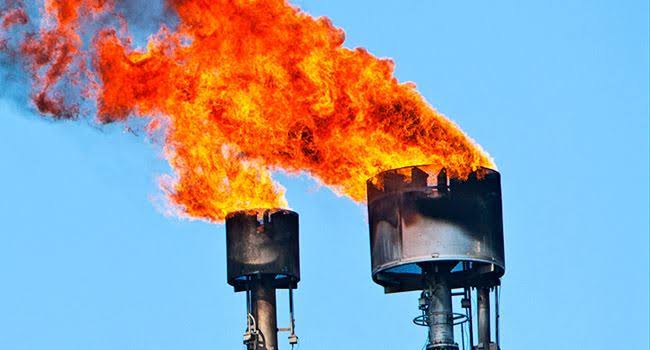




Despite achieving over 92% gas utilisation, Nigeria flared a staggering 203.9 billion standard cubic feet of natural gas in 2025, highlighting the country’s ongoing struggle with gas flaring.
According to the Nigerian Upstream Petroleum Regulatory Commission (NUPRC), the flared gas represents 7.54% of the country’s total gas production.
The NUPRC’s 2025 Gas Production Status Report reveals that Nigeria produced 2.71 trillion standard cubic feet of gas, with 1.46 trillion scf from Associated Gas and 1.25 trillion scf from Non-Associated Gas.
While the country’s gas utilisation rate is relatively high, the flared volume is concerning, especially given the environmental and economic implications.
A breakdown of the data shows that 776.6 billion scf of gas was used for field operations, 780.6 billion scf was supplied to the domestic market, and 942.7 billion scf was exported, largely through liquefied natural gas shipments.
However, the flared gas volume increased from 192.9 billion scf in 2024, despite regulatory efforts to curb flaring.
Monthly flaring volumes ranged from 15 billion scf to 18 billion scf, with the highest flaring rates recorded in January (18.7 billion scf) and July (18.3 billion scf).
The worst performance was in September, with a flaring rate of 9.05%.
The flaring issue is largely attributed to Associated Gas production, which is more vulnerable to flaring due to infrastructure constraints and limited offtake capacity.
Non-Associated Gas production, on the other hand, contributed less to flaring due to better infrastructure alignment with market demand.
The economic and environmental implications of gas flaring are significant.
The flared gas could have generated substantial revenue for the country, while also contributing to greenhouse gas emissions and environmental degradation.
The NUPRC’s efforts to address gas flaring through initiatives like the Flaring Reduction and Methane Elimination (FRAME) programme aim to reduce flaring and promote gas utilisation.
However, more needs to be done to address the underlying infrastructure challenges and promote sustainable gas development.
Author











Leave a comment