















By Samuel Akpan
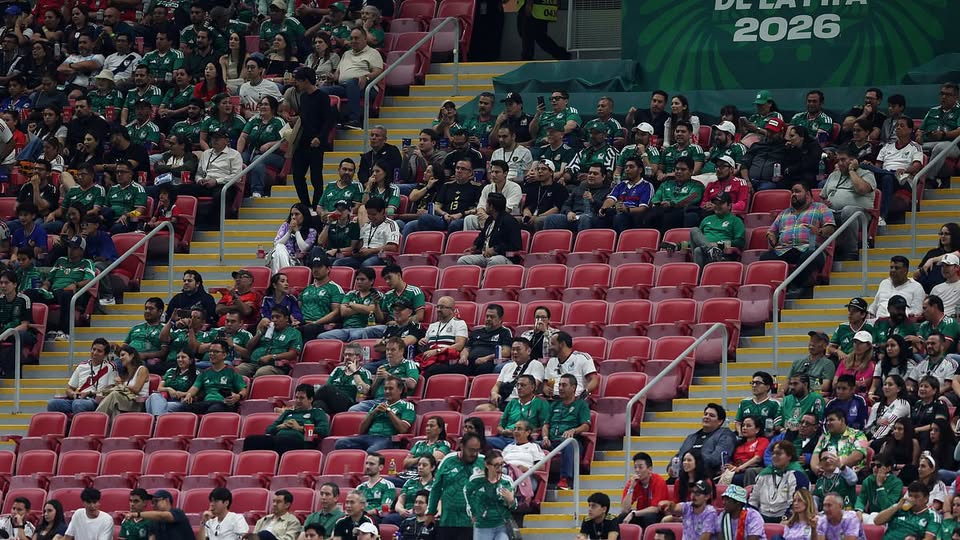
FIFA suffered humiliation at the 2026 World Cup when swathes of empty seats appeared during South Korea’s comeback victory over Czechia in Guadalajara, contradicting President Gianni Infantino’s claims of record ticket demand fueled by high pricing concerns.
The 45,664-capacity stadium was said to have attracted 44,985 fans according to the announcer.
Broadcast images, however, revealed far more vacant places—especially in the VIP sections—than the approximately 700 unsold tickets FIFA had cited, even in a bustling metropolis of 5.6 million people.
This optics problem emerged despite Infantino’s public assertion that the tournament had drawn 500 million ticket requests, a figure ten times greater than the combined requests for the previous two editions of the competition.
Confronted with supporter discontent, FIFA moved to slash prices for every one of the 104 matches scheduled across the three host nations.
Still, many group matches carried price tags exceeding $300, and plenty of seats continued to be listed on the resale platform, even for high-profile fixtures such as the United States against Paraguay in Los Angeles.
The picture looked far brighter at the legendary Estadio Azteca, where Mexico launched their campaign with a 2-0 defeat of South Africa before a packed house of 83,264 spectators in a rematch of the sides’ 2010 World Cup opener.
The build-up featured an elaborate ceremony highlighted by Shakira and Burna Boy delivering the official 2026 World Cup anthem, “Dai Dai,” together with a notable duet from K-Pop Demon Hunters star Ejae and classical singer Andrea Bocelli.
Trouble soon overshadowed the festivities, however, as violent protests erupted outside the Mexico City venue.
Demonstrators threw petrol bombs and bricks at security forces while expressing fury over human rights abuses and the plight of missing citizens.
At least eight separate demonstrations took place simultaneously, involving searching mothers’ collectives, the CNTE teachers’ union, federal judiciary staff and transport sector groups, all aiming to focus global scrutiny on Mexico’s domestic crises, including poor working conditions.
According to the National Registry, 134,460 people are currently recorded as missing in the country, a grim statistic that has only grown and sparked sustained public outrage.
The opening day of the tournament therefore left FIFA grappling with a damaging narrative: while one venue celebrated a full house and star power, another exposed the perils of pricing strategy, and street unrest threatened to steal the spotlight from the football itself.
Author











Leave a comment