









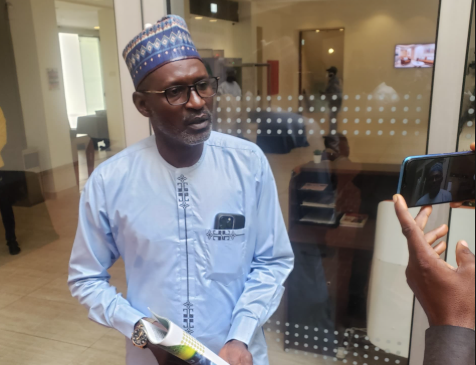



In an exclusive interview with a Persecondnews correspondent in Abuja, Lawal expressed confidence that his extensive experience and expertise make him an ideal candidate for the role.
“Everybody who is a top coach in the country aspires to coach the national team, and I also nurse the same ambition,” Lawal disclosed.
Persecondnews reports that with his impressive track record and dedication to the sport, it’s only a matter of time before Lawal achieves his goal.
Lawal’s illustrious career with the Super Eagles is a testament to his dedication and hard work.
He was part of the team that won the Olympic gold medal in 1996, a feat that still stands as one of the greatest achievements in Nigerian football history.
He also played in two FIFA World Cups (1998 and 2002) and four African Cup of Nations.
Lawal’s versatility on the pitch was unmatched, playing in various positions ranging from defence to attack on the left wing.
From the pitch to the technical bench, Lawal’s experience extends beyond playing.
He has been involved in various coaching and administrative roles, including serving as the general manager of Kaduna United and team coordinator for the Nigeria U17 national team.
“I am currently the General Manager of Kada Warriors in the NNL, so I’m still in the coaching department,” Lawal said.
As Lawal looks back on his career, he reflects on the lessons he has learnt and the experiences that have shaped him.
“The difference between the Super Eagles then and now is the resilience,” he notes. “Tactics are good, individual talent is also good, but if you don’t work extra hard on the pitch, it all comes to nothing.”
Lawal’s words mirrors his own journey, from a young banker to a professional footballer.
The ex international transition to becoming a professional footballer was not without its challenges. He left his banking job in 1991 to pursue his passion for football, joining Julius Berger FC.
“My inner conviction, self-discipline, and resilience on and off the pitch of helped me scale through,” he recalls.
“When I joined Berger, they signed 60 players that season, and every one of us had a contract and we were paid monthly. Nobody was owed a dime.”
Full Interview:
PSN: What are your aspirations for your future in football?
Lawal: Absolutely, I aspire to coach the Super Eagles. Every top coach in the country harbors the ambition to lead the national team, and I’m no different. With self-belief, confidence, and God’s grace, anything is possible.
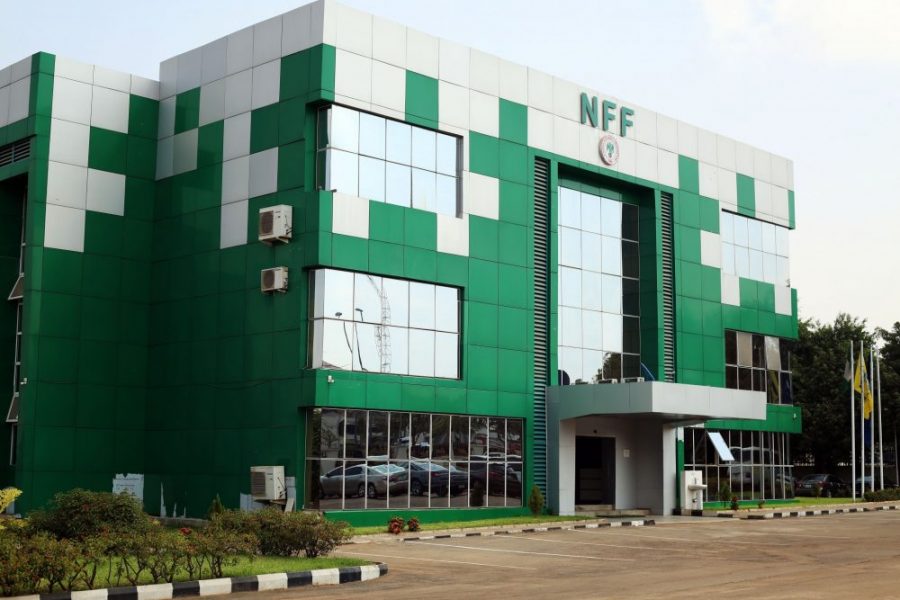
Currently, I serve as the General Manager of Kada Warriors in the NNL, so I’m still very much involved in the coaching aspect. If I notice something the coach might have missed, I draw his attention to it. Don’t forget, I also have a background in the NFF’s technical department.
PSN: What do you believe is the key to success for the Super Eagles?
Lawal: The crucial difference between the Super Eagles of the past and the current team is resilience. While tactics and individual talent are important, they amount to nothing if you don’t put in the extra hard work on the pitch.
The present team’s attitude and character must change. We have talented individual players, but what we sorely lack is resilience.
Consider our current World Cup qualification predicament; the team put themselves in this position, and only the players can turn the tide. They understand the significance of qualifying for the World Cup. I was fortunate enough to participate twice, in 1998 and 2002.
Winning the Olympic gold in 1996 was my greatest moment with the national team, a record that remains unbroken. I played in the AFCON and the World Cup, and all these achievements were born from hard work and resilience.
In the current squad, I primarily see resilience in players like Osimhen and Lookman. This isn’t to discredit the other players, but it’s a quality that stands out in them.
PSN: Tell us about your journey from banking to football.
Lawal: I worked as a banker for two years before leaving to pursue my football career. I was in the banking sector until 1991, the same year I joined Julius Berger FC.
When I signed with Berger, they brought in 60 players that season. Every one of us had a contract and was paid monthly – no one was owed a dime. However, out of those 60 players, only 11 could actually play. That was my first major challenge as a footballer.
My inner conviction, self-discipline, and resilience, both on and off the pitch, helped me overcome that hurdle. Back then, a banking schedule allowed for morning and evening training, which is different from what we have now.
When I decided to leave the bank, my bosses advised against it. They suggested I was too young to move to Lagos and that I could always return if football didn’t work out. But once I left, I never looked back.
Author










Leave a comment