







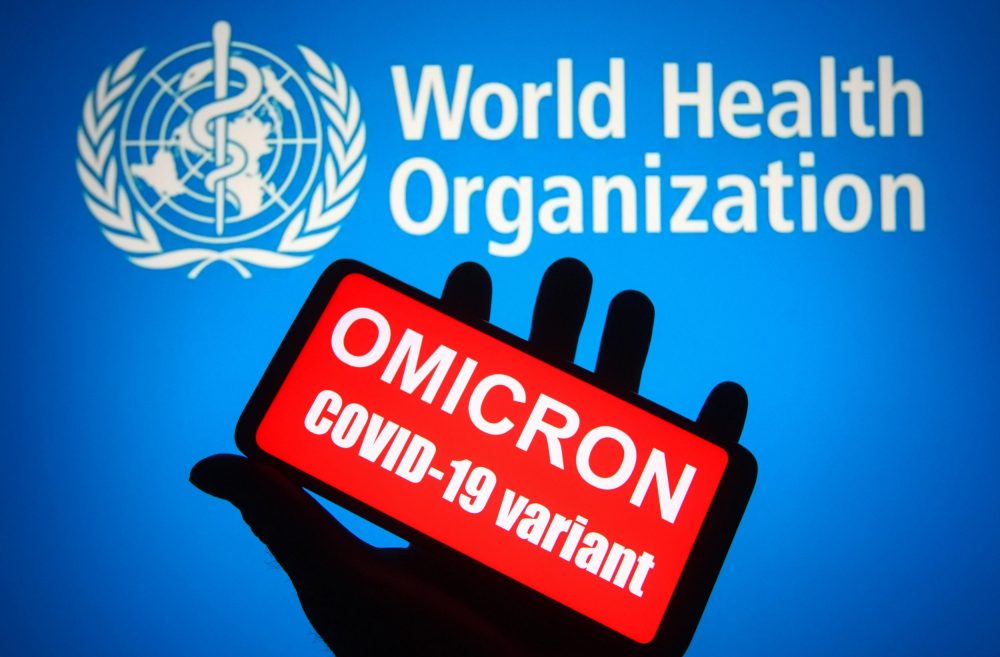



The world’s greatest fear about the coronavirus pandemic was confirmed last week with the discovery of a new mutation of the virus, known originally as the B.1.1.529, a development which reminded us strongly that the pandemic was far from over. More than 20 months after the virus was detected in Wuhan, China, the world has gone through many twists and turns, with lockdowns, travel restrictions, a global demand and supply crisis, the struggle to find a vaccine, and the politics of vaccine manufacturing and vaccination. By the middle of 2021, economies began to return to the path of recovery. Economists had also started thinking of better possibilities in the new year. But the emergence of a new coronavirus variant has sent shock waves around the world. Last Friday, currencies and markets plunged. Crude oil lost as much as $10 per barrel. The Dow Jones Average dropped 900 points. By yesterday, the Australian dollar, the Japanese yen and the Mexico peso had rebounded slightly but Omicron as the new variant has now been named clouds the economic outlook for the immediate future in many countries around the world. What comes next will be dictated by what scientists end up with as they buy time to understand the nature and transmissibility of this new mutant.
What is certain is that economic uncertainty has risen. Economists have been compelled to be a bit humble with their scenario planning. Omicron is a major setback in the battle against COVID-19 and a dent to whatever progress may have been made so far. We face the prospect of a compromised Christmas season, and a long-running conversation about COVID-19. There is a ring of familiarity to it. We have been here before but the uncertainty is deeper this time around because of the threat of “vaccine escape”; that is a new strain of the virus which may evade immunity responses and prove to be resistant to existing vaccines. Omicron is said to be most likely more deadly than the Delta variant, with 30 or more mutations in the spike protein which raises the risk of immune evasion.
Evolutionary virologists often talk about the infinite capacity of viruses to evolve, but the only consolation is that no virus can transform itself forever, it can only evolve until it reaches a genetic end-point. But who knows how much more havoc the coronavirus pandemic would cause before it reaches that end-point? Angelique Coetzee, the Chair of the South African Medical Association who alerted health officials to a certain variant with a “clinical picture that doesn’t fit Delta”, and who treated 30 patients has been quoted as saying the symptoms of Omicron are relatively mild. Whereas such statements may give hope, the truth is that no definitive scientific statement has been made yet on the latest variant. In South Africa, COVID positivity rate jumped from 3.6 % on Wednesday to 9.2% by Saturday. In the UK, Health Secretary, Sajid Javid says government is nowhere near imposing further restrictions. But the truth is that around the world, Omicron has sparked a chain of reactions. From Europe to Asia, to North America, travel restrictions have been re-introduced, stringent travel protocols have been imposed on travellers from certain parts of the world, especially Southern Africa where the strain was first reported in Botswana, and then later confirmed through genome sequencing by South African scientists. The new strain was brought to international attention by November 25.
The unfortunate part of the Omicron saga so far would be the initial attempt to stigmatise the countries of Southern Africa and label B.1.1.529, an African variant. By weekend, one country after another including the United Kingdom and Israel had banned flights to and from six Southern African countries; South Africa, Namibia, Botswana, Lesotho, Eswatini and Zimbabwe. Israel added Mozambique, and then later banned travel from all foreign countries. By Monday, Indonesia had surprisingly added Nigeria. The US had a list of eight countries. It added Malawi to the existing list of Southern African countries. Paraguay has restricted entry form 10 African countries. The push back from Africa was prompt and swift. South Africa protested an attempt by the international community to mischaracterize it for making information available to the global community. South African President Cyril Ramaphosa has accused Western countries of discriminating against South Africa by imposing “scientifically unjustified” travel restrictions. Dr Matshisido Moeti, Africa WHO Regional Director added that the travel restrictions would place a “burden on lives and livelihoods.” President of the African Development Bank (AfDB), Dr Akiwumi Adesina also spoke against stigmatization and called for vaccine equity as a more important target for the world. Malawi’s President, Lazarus Chakwera, has accused Western countries of “Afrophobia”. The attempt at stigmatization was brief, and perhaps, it died abor-ning. For a brief moment, however, attention was drawn to the politics of the coronavirus pandemic or perhaps the politicization of the international public health system. In 2020/2021, former US President Donald Trump insisted on referring to coronavirus as the China virus. The WHO eventually introduced the Greek alphabet classification of COVID variants of concern in order to eliminate stigma and emphasize the international character of the pandemic.
Read Also: Just in: New Omicron COVID variant detected in 2 travellers from Nigeria in Canada
Omicron is the fifth variant to take on a Greek alphabet identity. Alpha. Beta. Gamma. Delta. And now OMICRON. The conflict between man and pathogen is perhaps one of the most momentous events of the century. It has advertised not just the divisions in international politics, but also the inequities in the world. Developed countries have been able to vaccinate more than 60% of their populations – 64% in North America, 62% in Europe. They have excess vaccine doses. In the UK, for example, the Joint Committee on Vaccination and Immunisation (JCVI) has recommended that children aged 12 -15 should be offered a second jab after their first. Adults over 18 can now get booster jabs. The gap between second doses and boosters has been reduced from six to three months. In comparison, low- and middle-income countries have not been able to vaccinate up to 10% of their populations. A combination of inadequate supply, infrastructural challenges, vaccine hesitancy, lack of syringes and other facilities, together with a new mutant strain is bound to put additional pressure on those vulnerable countries of the world. US top infectious diseases adviser and President Joe Biden can afford to tell their people not to panic, but the poorer countries of the world should panic. They have every reason to do so. This should be the focus of the emergent conversation. How can the world save its most vulnerable people? What should be the priorities for policy makers? What kind of new challenges is the world facing, and what is the best way to address those challenges for the benefit of the larger majority irrespective of geography, colour or faith?
This is why in fact, it makes sense that a group of Nigerian virologists has been calling on the Nigerian government not to leave anything to chance. Amid the subtle labelling of South Africa as the source of Omicron, which it is not, Nigeria plays host to President Ramaphosa on his first state visit to the country. This is a demonstration of African Brotherhood, a strong element in the foreign policy process of many African countries. What is confusing, however, is that as of the time of this writing, the Nigerian managers of the coronavirus pandemic do not even know whether there is the Omicron variant in the country or not. About this same time, Nigeria has been included in a list of countries from which travel had been restricted by the Indonesian authorities. Similarly, the Ministry of Health in Ontario, Canada reported that three persons who had travelled to Canada through Nigeria have tested positive for the Omicron variant of the coronavirus pandemic. What is the truth about Nigeria? Does anyone know? Why would Nigeria be mentioned in Indonesia and Canada in association with Omicron, and all that the Nigeria Centre for Disease Control (NCDC) can tell us is that the agency is still busy with surveillance? Is there something that is known to Indonesia and Canada about us that we need to find out? Whatever the truth may be, Nigeria must like other countries take necessary precautions. The country has so far managed to survive every other strain of the virus. It is a miracle how Nigeria is not a hotbed of infections. On December 1, the Federal Government’s COVID mandate will come into effect in all Federal establishments. Federal workers who may not be vaccinated by that date are expected to stay away from work, or get vaccinated immediately. Leaders around the world are treating Omicron with caution. They do not want to repeat past mistakes. Nigeria must not fold its arms. It is not impossible that the Omicron variant is already present in Nigeria.
Vaccine makers – Moderna, Pfizer and BioNtech are racing against time to come up with Omicron-specific vaccines, but this could take weeks, if not months. No one knows. This moment calls for leadership. President Joe Biden stepped up to be counted yesterday when he took charge of the narrative in the United States and addressed the people. The key point for me in President Biden’s intervention is his submission that travel restrictions may slow down the spread of the omicron variant of the coronavirus, but it may not prevent it. The surest protection still lies in vaccination. Which is why the main challenge is in getting the under-privileged parts of the world vaccinated. But where would the poor find the vaccines? The United States has no plans to fight the coronavirus pandemic with shutdowns or lockdowns but with “more widespread vaccinations, boosters, testing and more”. Can any of the poor countries say the same? If the new variant proves to be deadly, it is the poor that will bear the brunt. Nigeria recently launched a mass vaccination campaign that would be driven by private-public sector collaboration to get the vaccine to the people in all possible places including the market place. It is important to secure the buy-in of the sub-nationals, the level of government closer to the hinterlands where the majority of the people live.
Nonetheless, the biggest challenge in Nigeria is what can best be described as the people’s COVID fatigue. In the early days of the pandemic, it was possible for the Nigerian government to impose nationwide lockdowns, restrictions of movement and compulsory use of masks in public places. Nightclubs, and restaurants were shut down in major cities and towns. Places of religious worship were required to follow strict COVID-19 protocols. I recall how in those days, even super markets observed social distancing rules. Only a specific number of persons were allowed on the shop floor at any time. Temperature checks were enforced and of course, the use of the mask was compulsory. But life has since returned to normal in Nigeria. Nobody cares anymore. Events centres are now filled to the brim every weekend. Those task forces in the Federal Capital Territory and in Lagos which used to monitor the space and enforce compliance have all been disbanded or have been downgraded. I hardly see anyone wearing a mask these days. The few who still wear the mask seem as if they are doing so to fulfil all righteousness. I have seen masks used as chin-guards, or as fashion items – those masks whose designs blend with the main attire, conveying the impression that the main consideration is not public health but the vanity of the mask wearer. Some people have different colours to match different attires. They now regard the coronavirus pandemic as a joke, a source of amusement. The minimum that a country like Nigeria can do is to urge a return to the general COVID protocols: wear a mask; wash your hands and observe social distancing, and get the people vaccinated.
Nigeria is not doing enough to combat the virus. In one report, the National Primary Health Care Development Agency (NPHCDA) indicates that only five state governments are taking the COVID mass vaccination seriously: Ogun, Nasarawa, Oyo Osun, Ekiti. Lagos state shows up as No. 6 on the chart. Civil society groups have a responsibility to save the populace from the increasing threat of the coronavirus pandemic. OMICRON should be a wake-up call, a reminder of how as human beings, we remain almost fatalistically, at the mercy of the vagaries of the environment and its many pathogens.
Author








Leave a comment