













As part of strategies to combat post-harvest losses, create jobs and boost the contribution of the agriculture sector to Nigeria’s Gross Domestic Product (GDP), the Nigeria Incentive-Based Risk Sharing System for Agricultural Lending (NIRSAL) is championing advocacy for the operationalization of a Secured Agricultural Commodity Transport and Storage Corridor (SATS-C).
NIRSAL’s Managing Director/CEO, Mr Aliyu Abdulhameed, said a fully operational SATS-C policy could directly lead to a five per cent increase in the agriculture sector’s contribution to national GDP by reducing by half annual post-harvest losses of 12 billion dollars.
SATS-C is a policy document being prepared for the consideration of the Federal Executive Council (FEC) by the Federal Ministry of Industry, Trade and Investment (FMITI) with its officials present at the stakeholders identification and engagement forum.
The Ministry hosted a breakfast meeting Monday attended by four other federal ministries deemed critical to the successful domestication of the SATS-C initiative. The ministries are those of Agriculture, Finance, Transport and Works.
As advocates of an agriculture sector with efficient production, transportation and storage systems, NIRSAL was also represented at the meeting by an executive management.
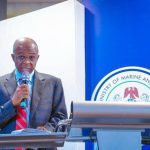
At the breakfast meeting, the Minister of Industry, Trade and Investment, Chief Adeniyi Adebayo, presented the SATS-C initiative to participants.
Abdulhameed told journalists after the meeting that the trade ministry’s commitment to SATS-C had given a ray of hope for an implementable SATS-C initiative to address post-harvest losses and increase inflow of funds to the sector.
He expressed the hope that SATS-C would complement and perfect one of NIRSAL’s business models/concepts known as PH-P3 (Primary Production and Harvest, Primary Processing, Primary Transportation and Primary Storage) which ensures efficient production in the farms and optimum capture of value at harvest by enabling prompt evacuation of produce from farm-gates.
“It would also facilitate haulage of commodities across the country through designated corridors,’’ the NIRSAL boss said in a statement made available to Persecondnews.
With the SATS-C’s envisaged enabling of seamless movement of produce from production zones, to processing zones to markets, Abdulhameed said: “It would help to upgrade agro-logistic value chains, flush blockages and usher in an era of increased flow of finance and investments into and through agricultural value chains.
“For this reason, NIRSAL is reaching out to enabler institutions, driving necessary dialogues and championing advocacy to support the FMITI in the development and implementation of the SATS-C policy in Nigeria.’’
Other benefits, he noted include the lowering of food prices, creation of 125,600 direct and indirect jobs, and the heightened possibility of adhering to standards for improved access to export, industrial and consumer markets.
“As a key player in the Federal Government’s macroeconomic plans, the Ministry of Industry and Trade’s work on the SATS-C project is timely. Among other things, it will bring a coherent, harmonized tax scheme to bear on Nigeria’s agricultural logistics sub-sector which is currently leaking revenue through multiple taxation, extortion and post-harvest losses.’’
The Minister of Industry and Trade, Adebayo urged the collaborating ministries to be committed for the successful implementation of the proposed policy document, especially as they prepare to execute a common Client Service Charter that will enforce adherence to agreed rules and standards in a bid to accelerate the project.
There are existing capacities, policies and structures that are complementary to the operational framework of the SATS-C initiative. The stakeholders intend to factor them in as they work on the details of the policy. Some of them include the One-Stop-Shop (OSS) Policy, the Road Crime Control System (RCCS) operated by the Federal Ministry of Transport, and the Agro Ranger Operations under the Nigerian Security and Civil Defence Corps (NSCDC).
New initiatives include social engineering to prepare beneficiaries and users for the SATS-C, Executive/Legislative intervention to empower Ministries, Departments and Agencies (MDAs) to expand their mandates and capacity building for stakeholders.
Author













Leave a comment