











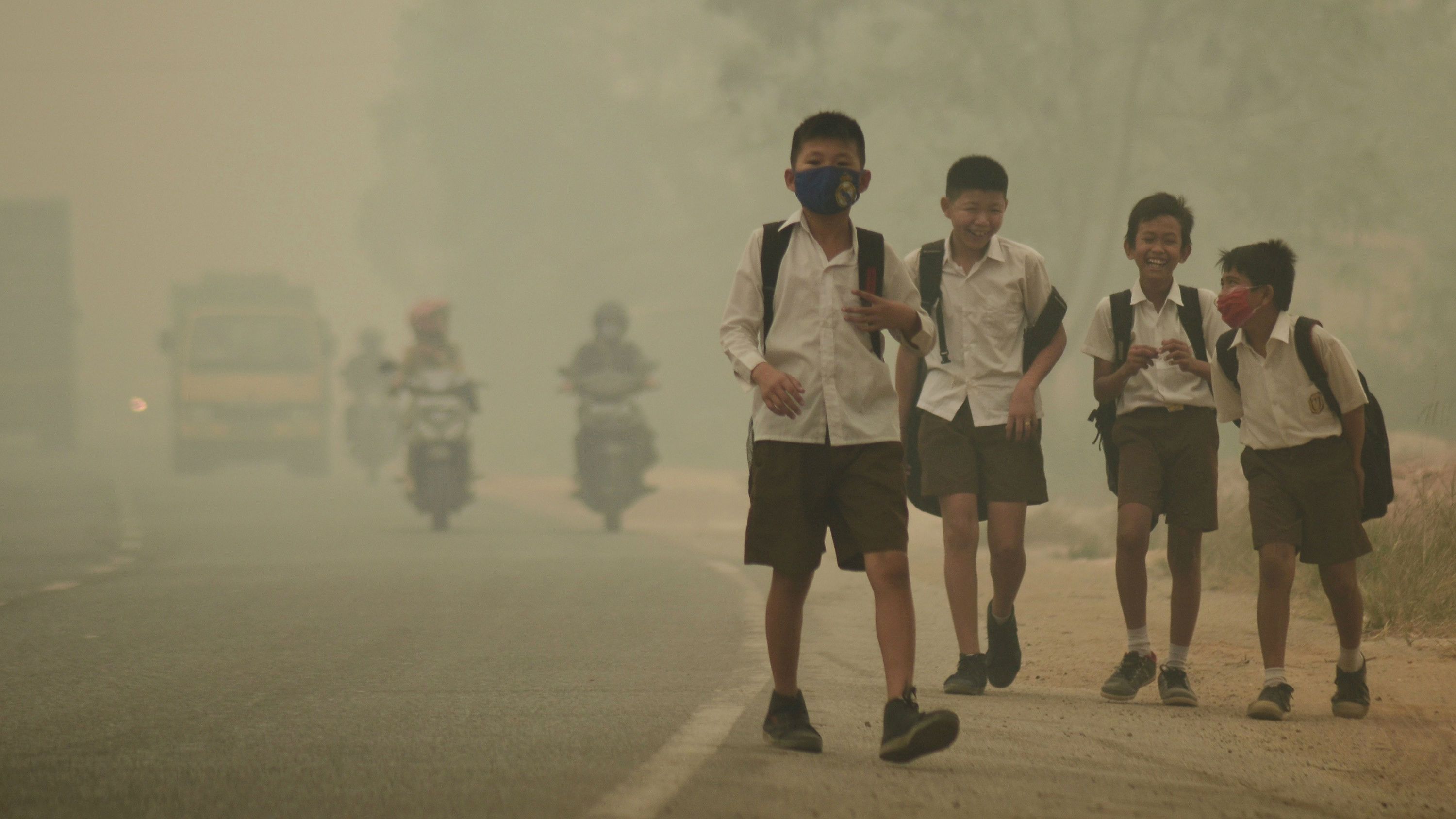




The World Health Organisation (WHO) said on Wednesday that air pollution levels remain dangerously high in many parts of the world with nine out of 10 people breathing air containing high levels of pollutants.
“Air pollution threatens us all, but the poorest and most marginalised people bear the brunt of the burden,” WHO Director-General Tedros Adhanom Ghebreyesus said in a statement.
“It is unacceptable that over three billion people — most of them women and children — are still breathing deadly smoke every day from using polluting stoves and fuels in their homes. If we don’t take urgent action on air pollution, we will never come close to achieving sustainable development.”
Air pollution represents the biggest environmental risk to health. Yet solutions exist and the data shows some countries have made substantial progress.
WHO estimates that around seven million people die every year from exposure to fine particles in polluted air that penetrate deep into the lungs and cardiovascular system, causing diseases including stroke, heart disease, lung cancer, chronic obstructive pulmonary diseases and respiratory infections, including pneumonia.
Ambient air pollution alone caused some 4.2 million deaths in 2016, while household air pollution from cooking with polluting fuels and technologies caused an estimated 3.8 million deaths in the same period.
More than 90 per cent of air pollution-related deaths occur in low- and middle-income countries, mainly in Asia and Africa, followed by low and middle-income countries of the Eastern Mediterranean region, Europe and the Americas.
Around three billion people — more than 40 per cent of the world’s population — still do not have access to clean cooking fuels and technologies in their homes, the main source of household air pollution.
WHO has been monitoring household air pollution for more than a decade and, while the rate of access to clean fuels and technologies is increasing everywhere, improvements are not even keeping pace with population growth in many parts of the world, particularly in sub Saharan Africa.
WHO recognises that air pollution is a critical risk factor for non-communicable diseases (NCDs), causing an estimated one-quarter (24 per cent) of all adult deaths from heart disease, 25 per cent from stroke, 43 per cent from chronic obstructive pulmonary disease and 29 per cent from lung cancer.
More than 4,300 cities in 108 countries are now included in WHO’s ambient air quality database, making this the world’s most comprehensive database on ambient air pollution.
Author









Leave a comment