












Oladapo Oluwagbemiga
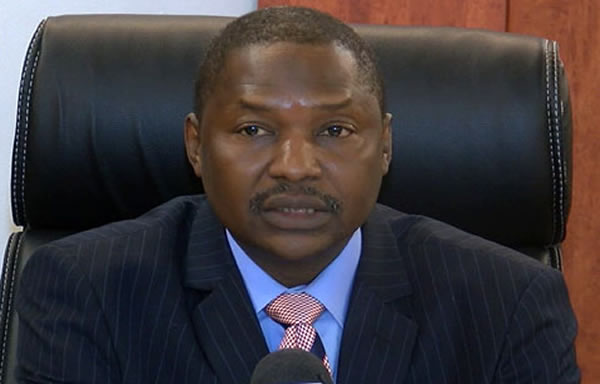
When the true history of the Muhammadu Buhari administration is written, one man that would go down as perhaps, the most unacknowledged is Abubakar Malami, the Attorney-General and Minister of Justice. Chroniclers of this administration would find Malami was a diamond in the sand that was made to look like dirt.
There is no doubt one of the reasons for this would be the man himself! Malami, very much like the man who appointed him minister, is a self-effacing workaholic who may care less about public perception of his action as he cared about getting results. But much of the reason has to do with the media which has misrepresented many of his actions and utterances.
The media has been fixated on a certain characterisation of the man so much that it is unfortunately unwilling or unable to appreciate the quiet contributions of the AGF to criminal justice administration in the country. One of the major challenges of effective administration of justice in Nigeria is the lack of a clear and coherent national policy on justice. This is why the sector had stagnated for years.
But for the first time in the history of Nigeria, the Buhari administration initiated reforms of the justice sector, which has now culminated in the development of the first ever National Policy on Justice. The policy is geared towards ensuring effective coordination in the sector and evolves a system that delivers fair, effective, accessible and efficient justice.
The national policy on justice was the result of a National Justice Summit which brought together heads of different arms of government-the executive, judiciary and legislature to critically examine the draft document, validate and adopt it for national implementation. At the end of the summit, the National Policy was adopted by all participants and therefore represent the common aspiration of the justice sector stakeholders for the justice system in Nigeria.
A fall out of this important development was the announcement by the Chief Justice of the Federation recently that all Nigerian courts would soon become automated.
But the area where the AGF has impressed me the most, and I’m sure many others, is in the area of improving the quality of crime prosecution and efficiency of the criminal justice administration in Nigeria. This is what has brought him into a head-on-collision with the Acting Chairman of the Economic and Financial Crimes Commission,EFCC, Ibrahim Magu.
The AGF has been critical of the quality of investigation and prosecution of EFCC cases and had written to Magu and President Buhari to express his mind about this. But this, unfortunately, was leaked to the media and twisted as an attempt by the AGF to stop EFCC from continuing with the prosecution of some high profile corruption cases, especially the scandal over the Malabu oil deal involving some officials of previous administration.
Under the inspiration of the AGF a National Prosecution Policy and a Code of Conduct for prosecutors were developed, setting guidelines for prosecutors. This is to strengthen prosecurial practice for effective service delivery and to complement the implementation of the Administration of Criminal Justice Act, 2015.
But more importantly, a National Prosecution Co-ordinating Committee was also inaugurated with the AGF as Chairman. The committee has the mandate to coordinate the prosecution and ensure prompt disposal of high profile cases. The committee has been working closely with relevant anti-corruption agencies to ensure cases are properly investigated and prosecuted.
The committee has also engaged the judiciary on the need to expedite action on corruption related cases. Consequently, the Chief Justice of Nigeria had taken steps to designate special courts that will prioritise corruption and financial crimes related cases.
Efforts in this regard and continuing engagement with the judiciary and the Nigerian Bar Association has led to increased disciplinary actions against erring judges and legal practitioners by the National Judicial Council and the Legal Practitioners Disciplinary Committee.
All these have led to increased and more successful prosecution of cases by the government. Between 2015 and 2017, the Department of Public Prosecution of the Federation received 6, 339 cases from the Nigerian Police Force for prosecution in various courts in the FCT. In addition it received over 2,500 other cases bordering on specialised crimes and terrorist activities.
Out of this, only 63 cases have been concluded. But it is instructive that out of the 63 cases concluded, the government secured 59 convictions. This is a far cry from what obtains in previous years when government hardly wins a case.
Malami’s reformist effort is also saving the government a lot of money. Through the cases that have been brought to successful completion, the ministry of justice was able to save the sum of N145 billion and $5.3 billion for the federal government. These are monies claimed by various parties who initiated suits against the federal government as damages for losses incurred or suffered.
Under Malami, the ministry of justice has initiated a policy of using in-house state counsels to prosecute cases as against the practice in the past of hiring external solicitors. This has also saved government money and improved the capacities and motivation of state counsels. Between 2012 and 2015 alone, the ministry spent over N4.5 billion on the engagement of external solicitors to handle cases. The new policy is saving government money and building the capacity of state counsels.
This is also the first time the government is looking at strengthening the laws to ensure more transparency and accountability in government, and make corruption unattractive. The ministry of justice has inaugurated a Law Review Team to facilitate the review of existing laws on anti-corruption, transparency and accountability. The review team has proposed new bills that addressed the limitations in existing laws.
These include the Money Laundering Prevention and Prohibition Bill 2017; Anti-Terrorism Prevention and Prohibition Bill 2017; National Financial Intelligence Centre Bill 2017; Proceeds of Crime Bill 2017; Public Interest Disclosure and Witness Protection Bill 2017 and the Mutual Legal Assistance in Criminal Matters Bill 2017. Work on these bills is at various stages of completion.
Oluwagbemiga wrote in from Lagos
Author





Leave a comment