





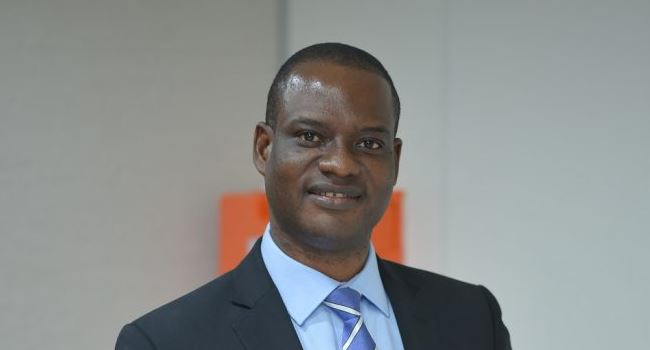
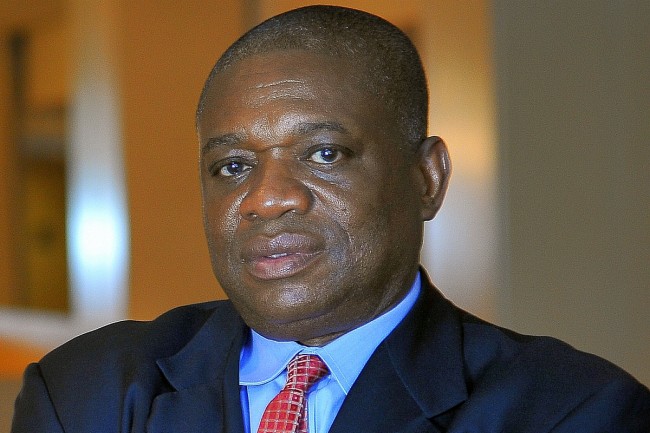




The Nigeria Civil Aviation Authority (NCAA) has responded to an allegation by former Abia State Governor, Senator Orji Kalu, regarding alleged illicit drug activities among some Nigerian pilots.
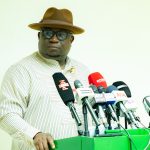
Speaking on the floor of the Senate on Wednesday, October 15, Kalu sharply criticized the lack of rigorous checks in the aviation sector.
He specifically blamed regulatory agencies, particularly the NCAA, for failing in their monitoring duties.
The lawmaker asserted that this lax oversight poses a direct threat to the safety of air passengers nationwide.
The former governor maintained that the NCAA had not lived up to expectations in its regulatory role and accused it of allowing a culture of negligence to persist within the industry.
Kalu also revealed that he had personally, on some occasions, stopped certain pilots from flying him over inadequacies spotted before departure.
He stressed that he could not risk his life under questionable flight conditions and urged the authorities to take urgent steps to address the alarming lapses in aviation oversight and pilot conduct.
He said: “I feel that the authorities guiding these pilots, some of them are very lousy. I have on many occasions stopped flying because of the inadequacy of the pilots’ preparation.
“Some of the pilots are not prepared. Some of them use Indian hemp. Yes, it’s true. Some of them smoke Indian hemp, and some of them are not properly audited by the authorities.
“I am telling you what I know, because the NCAA and the NAMA and other authorities are not looking after these pilots and checking them for drugs, on the sport assessment.
“They are not doing it because it is dangerous, and you see them walking into the aeroplane, nobody checks their blood pressure, nobody checks anything, nothing, nothing.”
While criticizing the pilots, Senator Kalu specifically mentioned modern aircraft, like the Boeing 737-500.
He argued that because these planes are largely automated and equipped with automated landing gear systems, they should rarely experience landing problems.
He, therefore, insisted that the incidents recorded in the country must be due to pilots’ negligence.
“Note that aircraft, most of them, 737-500, have an automatic landing gear system. It does not need a pilot to land the plane. What is needed to land the plane is a computer and an autopilot.
“Because some of them are high, they are not going to do this thing. Because any aircraft that is of a new generation does not need a pilot. They do not need a pilot to fly. Landing and take-off are purely automatic.
“So most of these pilots are so careless. I have witnessed, I have seen by myself, I have come to fly, I told my pilots, I said, No, no, no, I do not think you are normal today. You have to go back home.
“So all these agencies must come back home to look after these pilots, and what do you call them, and the cabin staff, because some of them take this Indian hemp like cigarettes. They will tell you. If you go close to them, you will smell it,” Kalu insisted.
Persecondnews recalls that a recent preliminary report from the Nigeria Safety Investigation Bureau(NSIB) indicted an assistant pilot and flight attendants working with Nigeria’s largest airline, Air Peace, of involvement with Indian hemp and alcohol.
The senator, however, urged the Minister of Aviation and Aerospace Development, Mr. Festus Keyamo(SAN), to ensure that airport runways are regularly maintained, noting that some are in poor condition.
In response to the senator’s claims, the NCAA, in a statement on Thursday, October 16, signed by its Director General, Chris Najomo, debunked his claims, saying his stance was inadequate.
The NCAA clarified that all pilots flying Nigerian-registered aircraft are required to hold valid licences and current medical certificates, in accordance with Nigerian Civil Aviation Regulations.
The authority explained that these medical certificates are issued only after comprehensive evaluations by NCAA-authorised medical examiners, and further reviewed by the NCAA’s in-house aero-medical team.
It stressed that the medical examinations cover a wide range of health factors, including cardiovascular, neurological, psychological, and respiratory conditions.
The statement reads: “While the Authority holds the Distinguished Senator and the National Assembly in the highest esteem, it is necessary to provide factual clarifications in the public interest.
“Contrary to the impression created, the Nigeria Civil Aviation Authority maintains a rigorous and internationally recognised system for certifying and monitoring the medical and professional fitness of all pilots operating in Nigeria.
“No pilot is permitted to operate a Nigerian-registered aircraft without holding both a valid pilot licence and a current medical certificate, as required by the Nigeria Civil Aviation Regulations (Nig. CARs) Part 8.4.1.4. Holders of Commercial Pilot Licences (CPL) and Airline Transport Pilot Licences (ATPL) are, by the provisions of Nig. CARs 2.3.5.1 and 2.3.7.1, required to possess a Class 1 Medical Certificate before they are allowed to operate.”
Also on drug intake, the NCAA stated that its regulations strictly prohibit any crew member from operating an aircraft under the influence of alcohol or drugs.
It said that the authority conducts both random and targeted drug and alcohol testing periodically.
The authority recalled how a Valuejet pilot was suspended for initiating departure procedures without proper clearance.
It stated: “In addition to this, Nig. CARs Part 8.5.1.5 explicitly prohibits any crew member from acting as a flight crew member within eight hours after consuming alcohol, while under the influence of alcohol, or while using any psychoactive substance that could affect alertness, judgment, or performance.
“In accordance with this regulation, the NCAA carries out on-the-spot alcohol or drug testing when there is reasonable suspicion of intoxication.
“It further authorises random and unannounced testing for crew members and allows the results of such tests to be used as legal evidence.
“Beyond the medical certification process, NCAA inspectors conduct daily ramp inspections at airports across the country. These inspections are not limited to aircraft alone; they include direct engagement with flight crew.”
Author








Leave a comment