










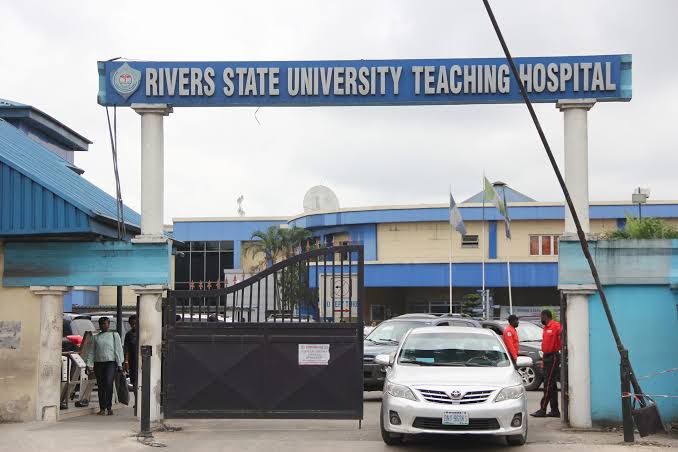




Nigerian doctors have been thrown into mourning following the tragic and preventable death of Dr. Oluwafemi Rotifa, a young resident doctor at Rivers State University Teaching Hospital (RSUTH).
Dr. Rotifa reportedly collapsed and died after working a grueling 72-hour continuous call duty.
Known to his colleagues as “Femoski,” the late doctor was a former president of the Port Harcourt University Medical Students’ Association (PUMSA) and had been registered with the United Kingdom’s General Medical Council, awaiting placement abroad.
According to those who witnessed the events, Dr. Rotifa had been working in the Emergency Room for three consecutive days before going to the call room to rest.
It was there that he collapsed.
Despite immediate efforts to resuscitate him in the Intensive Care Unit, he passed away.
The President of the Nigerian Association of Resident Doctors (NARD), Dr. Tope Osundara, confirmed the incident, stating that it was both preventable and a stark reflection of the country’s failing healthcare system.
“What happened is that he was on call in the Emergency Room. Afterward, he went to the call room to rest, and it was there that he died. Unfortunately, he was the only one attending to the patients.
“The overuse of manpower strained his health and led to this painful death. It was a death on duty,” Osundara lamented.
He called on government to urgently support the family of the deceased and overhaul the system that continues to push doctors to exhaustion.
“The burnout among medical doctors, especially resident doctors who are manning most of the teaching hospitals, is becoming very worrisome.
“We have cried out repeatedly. The few doctors left in this country are overworked, underpaid and poorly motivated.
“Government must look into remuneration and ensure immediate replacement of doctors who resign or emigrate. Otherwise, this cycle of needless deaths will continue,” he said.
He said Nigeria’s health sector has in recent years been hit by a massive brain drain, with thousands of doctors leaving for better opportunities abroad, adding that those who remain are stretched thin, often forced to cover double or triple shifts without rest.
Osundara warned that the consequences extend beyond doctors themselves.
“We are not asking for these reforms just for our own welfare, but for the patients. When a doctor is mentally, physically and emotionally broken, he cannot render quality care.
“Patients end up spending unnecessary hours in hospitals, waiting for one doctor to attend to thousands. It is the patients who ultimately suffer the most,” he said.
Osundara stressed the need for the government to urgently address the severe issues plaguing the medical profession.
He emphasized three key areas: resolving the critical staff shortages, improving welfare packages for doctors, and enforcing humane work schedules.
Osundara highlighted the stark contrast between Nigeria’s healthcare system and international standards.
He pointed out that while the World Health Organization (WHO) recommends a ratio of 1 doctor to 600 patients, Nigeria currently struggles with a ratio of 1 doctor to 10,000 patients.
Author









Leave a comment