


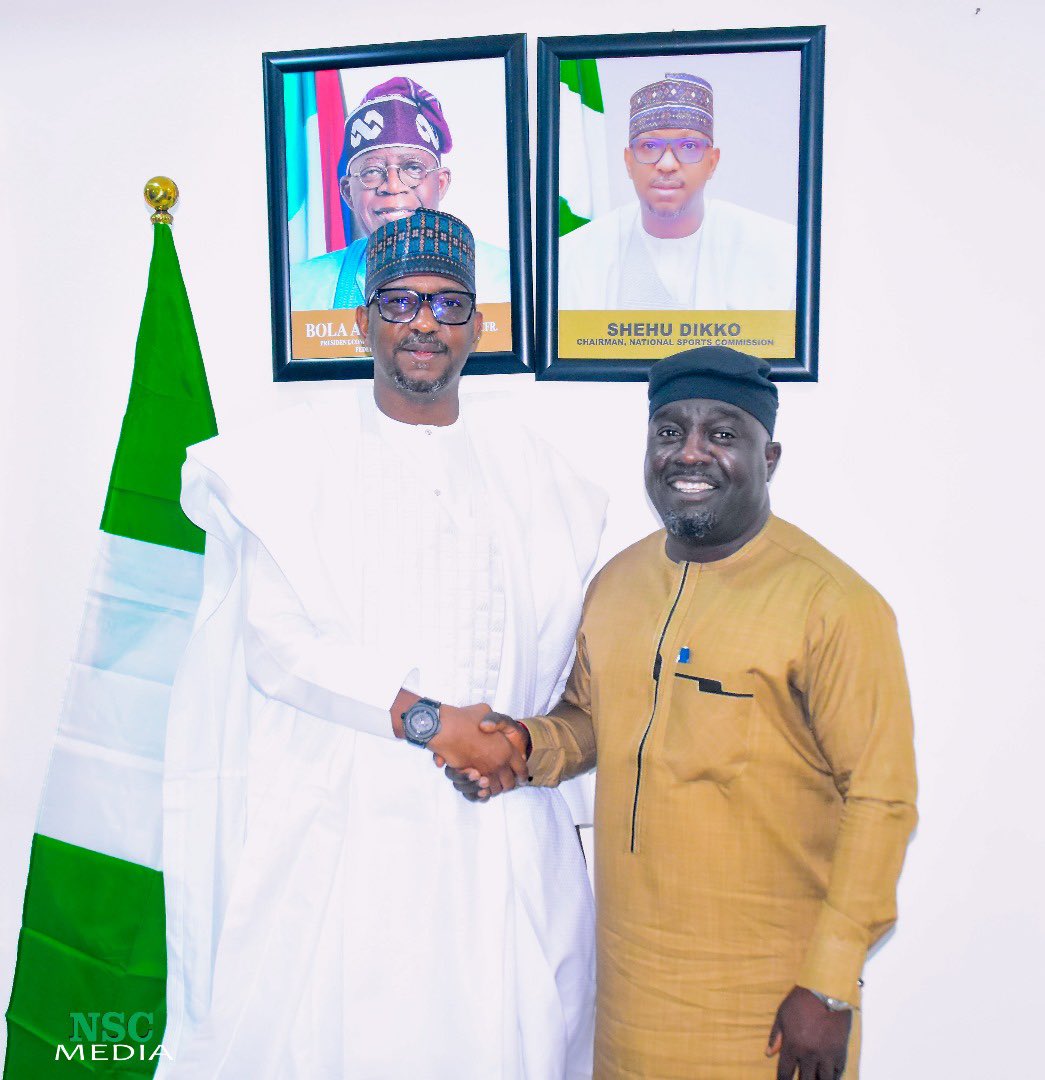


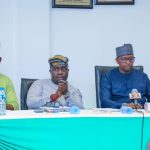
The National Sports Commission (NSC) has denied reports of a power struggle between its Director General, Bukola Olopade, and the Chairman, Shehu Dikko, labeling such claims as “deliberate mischief” with no place in serious journalism.
A top official of the Commission, who spoke on condition of anonymity on Wednesday, noted that the chairman and the DG are working harmoniously, piloting the affairs of the Commission to greater heights.
The official urged media outlets to seek clarification before jumping to conclusions, stating, “We encourage media outlets to seek clarification before jumping into conclusion, there is nothing like that at all.
“The chairman and the DG are having the best of time piloting the affairs to a great height.”
This call for responsible journalism comes amid reports of a supposed rift between the two top officials.
Since the scrapping of the Federal Ministry of Sports in October 2024 and the launch of the RHINSE Initiative, the Commission has undergone a significant transformation.
Under the leadership of the Chairman, Shehu Dikko, the Commission has adopted a new approach to sports administration, marking a paradigm shift in its operations.
The RHINSE Initiative has been a key driver of this change, aiming to revamp the sports sector and drive progress.
The commission has made significant strides in athlete development, with the inauguration of the Elite Athletes Development and Podium Board in January 2025.
The board’s primary objective is to develop a sustainable high-performance system for Nigerian athletes, focusing on welfare, talent identification, and success at international competitions.
Under the Category A Programme of the Elite Athletes and Podium Board, 69 athletes receive $20,000 each as annual training grants.
Olopade emphasized that athletes’ welfare is non-negotiable, stating, “Athletes’ welfare is non-negotiable, the commission reiterates its commitment to supporting athletes both in their sporting endeavors and in life beyond competition.”
The commission has been working behind the scenes to support athletes and will continue to do more.
The commission’s talent identification program, known as the Invited Junior Athletes (IJA), aims to bridge the gap between grassroots sports and elite competition.
About 90% of the athletes representing IJA are under 17, handpicked from the previous year’s Youth Games in Asaba.
These young athletes compete as the symbolic 38th State at the National Sports Festival, with opportunities to join the elite cadre and make history.
Author





Leave a comment