













…If we are preparing prisoners to be reintegrated into the society, why deny them a say in who governs that society – Ogboru
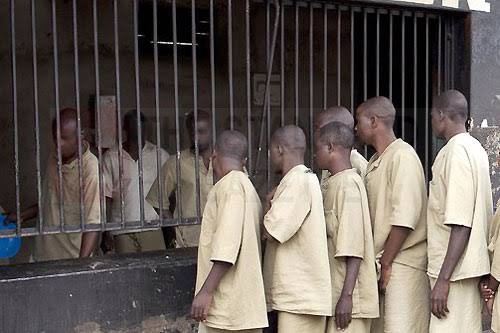
The Independent National Electoral Commission’s (INEC) proposal to allow eligible inmates to vote in Nigerian elections has ignited a significant debate, drawing mixed reactions from stakeholders.
While some respondents were of the view that inmates’ right to vote should be forfeited upon incarceration, others disagreed, saying as citizens who would be reintegrated into the society on serving out their sentences, they should be allowed to vote and choose their leaders while still in prisons.
The respondents, who spoke exclusively with Persecondnews in Abuja are Otunba Tioluwani Adenegan; a lawyer, Mr. Stanley Job; a communication expert and media strategist, and Dr. Gabriel Nwambu, the Director-General of the Centre for Credible Leadership and Citizens Awareness (CCLCA).
Others are Matthias Igwe; a lecturer, and a retired senior civil servant, Mrs. Eunice Ogboru.
For Adenegan, a person’s right to vote should be forfeited upon incarceration, insisting that individuals who commit a crime relinquish this right.
He supported a more lenient approach for those awaiting trial, noting that they are presumed innocent until proven guilty in line with fundamental principles of justice.
The Abuja-based solicitor pointed out that both the 2022 Electoral Act and the Constitution would need to be amended to grant the inmates rights to vote.
Persecondnews recalls that INEC Chairman, Prof. Mahmood Yakubu, had recently made a case for inmate voting during a courtesy visit to INEC headquarters in Abuja by the Controller-General of the Nigerian Correctional Service (NCoS), Sylvester Nwakuche.
Yakubu acknowledged the growing demand for this reform, noting that many inmates are currently on remand and awaiting trial.
He pointed out that several other countries, including Ghana, Kenya, and South Africa, already allow prisoners to vote.
Buttressing the point, he highlighted that Nigerian courts have previously ruled in favour of this right.
He said: “We are aware that the right to vote is a human right which cannot be taken away from a citizen on account of time being served in a correctional facility.
“In many parts of the world, including some African countries such as Ghana, Kenya and South Africa, where our officials observed elections, inmates exercised the right to vote.”
He cited two landmark rulings from the Federal High Court in Benin (2014) and the Court of Appeal (2018), which upheld the voting rights of inmates awaiting trial.
He, however, clarified that the courts said voting is a voluntary act that must be asserted, not a mandatory duty.
He also said: “The commission is aware of the judgments of the Federal High Court in Benin delivered on December 16, 2014 and the Court of Appeal, also in Benin, delivered on December 7, 2018 pertaining to the right to vote by five plaintiffs awaiting trial.
“Based on the combined provisions of Article 25 of the International Convention on Civil and Political Rights (1966) and Section 25 of the Constitution of the Federal Republic of Nigeria 1999 (as amended) on citizenship, the court affirmed the rights of plaintiffs who were inmates awaiting trial to vote in elections.
“However, the judges ruled that the right to vote is only excisable when asserted as it is a choice to be exercised voluntarily by a citizen and not a duty to be imposed by force of authority”
Adenegan, however, advised the INEC chairman to prioritize electoral reform over inmate voting.
He believed that inmate voting could only be successful with the use of efficient electronic voting machines, which would also reduce electoral fraud.
Additionally, Adenegan called for the separation of electoral tribunal panels from regular judges, arguing that the potential for corruption on these panels could compromise the regular work of the judges.
“Enhancing INEC’s independence by transferring the power to appoint its Chairman from the President to an Electoral College, thereby shielding the commission from executive influence.
“Implementing judicial reforms to ensure the timely resolution of election disputes before the swearing-in of elected officials, thus preventing prolonged electoral crises.
“Ensuring transparency in the appointment process for INEC leadership, with merit-based selections that prioritize expertise and integrity.
“Leveraging technology to modernize the electoral process, including the adoption of electronic voting and result transmission systems to enhance efficiency, accuracy, and transparency,” he told Persecondnews.
Adenegan emphasized that electronic voting improves electoral accuracy and integrity by reducing vote counting errors.
He said this system also speeds up the announcement of results, lowers the risk of manipulation, and encourages more people to vote.
Additionally, he recommended that electoral petitions be resolved before elected officials are sworn in to prevent prolonged uncertainty.
“It is crucial to resolve election disputes super fast, way before the winners are sworn in – so we do not end up in a messy limbo where nobody knows who is really running the show,” he said.
Also speaking with Persecondnews, Job, a political analyst and former chairman of the Nigeria Union of Journalists (NUJ), Rivers State Council, advised INEC to prioritize diaspora voting over inmate voting.
Job questioned how inmates could make an informed choice, given their exclusive, restricted environment. He argued that they are often unaware of events outside the prison walls.
Addressing concerns about the potential misuse of diaspora voting in countries like Niger and Chad, Job suggested that Nigerian embassies should conduct a proper registration of Nigerian citizens to ensure a transparent and secure process.
The communication expert and media strategist also called for an overhaul of the Nigerian Constitution, stating that it was a military-era document and is not suitable for a democratic system.
He said: “My concern is that we have been implementing reforms for every new election, but ultimately INEC comes along and undermines the whole process. So, I think what we need at this point is a comprehensive review and overhaul of our constitution.
“That is more crucial to us than anything else, because, if I am being honest, we have done reforms in the past and they have come to nothing. We were hopeful about the last election, but it did not amount to much.”
Dr. Nwambu, the Director-General of the CCLCA, stated that inmate voting is not practiced in the United Kingdom or in advanced nations like the United States.
He said the U.S. understands the importance of excluding inmates, particularly terrorists and rapists, from the nation’s decision-making process, which is why they have a special prison facility at Guantanamo Bay.
He said: “Prisoners should not be allowed to vote because they are not of sound mind and judgement, having been convicted of serious enough offences to warrant imprisonment. As such, it is reasonable that they should not have a say in determining who governs the affairs of the country.”
On his part, Igwe, a lecturer, supported the initiative, arguing that every individual, regardless of their circumstances, deserves to be heard and represented.
He believed that inclusivity is the foundation of a true democracy, challenging those against the proposal, asking if an inmate ceases to be a Nigerian citizen just because they are in prison.
Igwe accused opponents of inmate voting of being hypocritical, claiming they are more pious than God, yet worse than those who are incarcerated.
He said: “Many of us are hypocrites, professing to be more righteous than God. Ironically, some who oppose this initiative are more culpable than those incarcerated.
“Have you been to prison – what they now call correctional facilities? Have you seen their living conditions, the quantity and quality of food they are given, or the hygiene standards there? How can they effect change if not by voting for leaders who promise to improve their prison conditions?.
“Those not serving life sentences will eventually be released. Won’t they want to return to a better, more functional Nigeria? So, as you can see, they have just as much stake in this as we do.”
Rather than writing them off entirely, Igwe suggested that INEC should consider proxy voting for inmates, since the ultimate goal is to ensure their voices are heard and their interests protected.
Persecondnews reports that voting by proxy is an agreement where prisoners nominate a trusted individual, such as a family member, friend, or advocate, outside of the prison to cast a ballot on their behalf in elections.
Mrs. Ogboru believes that allowing inmates to vote can help promote civic engagement, rehabilitation, and reintegration.
She argued that by participating in the democratic process, prisoners can develop a sense of responsibility and a connection to their community. This, in turn, could help reduce recidivism.
“When prisoners participate in civic activities, such as voting, they can develop a sense of purpose and belonging. This can help shift their mindset and behavior, ultimately aiding in their rehabilitation.
“By feeling connected to their community and society, prisoners can begin to see themselves as part of a larger whole, rather than being isolated or disconnected. This sense of purpose and belonging can motivate them to make positive changes in their lives.
“This connection can make their transition back into the community smoother after release, reducing the likelihood of recidivism.”
“It’s all about rehabilitation, isn’t it? If we are preparing prisoners to reintegrate into society, why deny them a say in who governs that society?” Persecondnews quotes Ogboru as saying.
Author





Leave a comment