











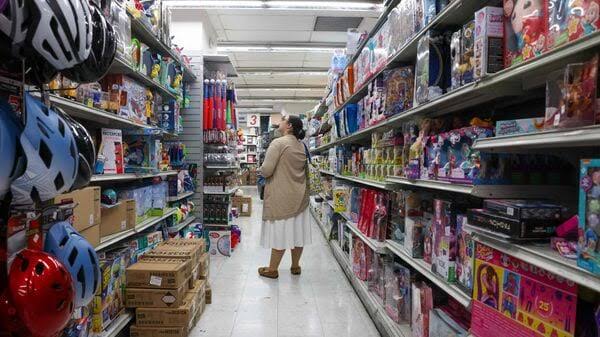




The US economy is experiencing some turbulence due to President Donald Trump’s sweeping tariffs with consumer prices reflecting the impact of these policies.
According to the Department of Labor, the consumer price index (CPI) rose 2.7% in July from a year ago, unchanged from June.
This rate was slightly lower than the 2.8% expected by analysts surveyed by Dow Jones Newswires and The Wall Street Journal.
Despite the steady CPI rate, underlying price increases picked up, with the “core” CPI accelerating to 0.3% on a month-on-month basis in July, up from a 0.2% rise in June.
From a year ago, underlying inflation rose 3.1%, exceeding expectations of a 3% pace.
Indexes that rose over the month included medical care, airline fares, and household furnishings.
Notably, prices for takeout and restaurants jumped 3.9% over the last year, contributing to a 2.9% increase in overall food prices.
The report suggests that Trump’s tariffs are beginning to impact consumer costs, with businesses potentially passing these expenses onto customers.
Gus Faucher, senior vice president and chief economist at PNC Financial Services Group, noted: “Consumers are going to start to feel a little more stretched over the next few months as we see more of the impact of tariffs passed through from businesses to consumers.”
Companies like Walmart, Nike, and Macy’s had warned of incoming price hikes due to multi-million and even billion-dollar tariff impacts.
After the latest inflation figures were released, Trump claimed, “It has been proven, that even at this late stage, Tariffs have not caused Inflation, or any other problems for America, other than massive amounts of CASH pouring into our Treasury’s coffers.”
He also attacked Fed chair Jerome Powell, suggesting he might sue Powell over costly renovations to the Fed’s buildings, and tweeted, “Jerome ‘Too Late’ Powell must NOW lower the rate.”
The steady inflation rate, coupled with the rising underlying prices, indicates that the US economy is navigating a complex landscape.
While energy prices declined, overall energy prices were down 1.6% for the year, which probably stabilized the overall pace of inflation.
Economists say that it takes time for tariffs to show up in consumer prices, and some retailers have been stocking up their inventory to delay the impact of tariffs and keep prices stable.
Author













Leave a comment