










…..FG should legalise homeschooling – Bukky Nwachukwu, Education Advocate
The Federal Capital Territory (FCT) branch of the Nigeria Union of Teachers (NUT) which ended its 100 days strike about a month ago, has confirmed that the FCT Minister, Nyesom Wike, has met 70% of the union’s demands.
According to NUT Chairman Mohammed Shafa, primary school pupils have already been back in class for about a month.
Persecondnews reported that the teachers had gone on strike in March to protest the non-implementation of a new national minimum wage of N70,000.
Other demands included the payment of a 25% and 35% salary increase, a 40% peculiar allowance, and a N35,000 wage award.
The union also wanted the FCT administration to implement a 2022 agreement on outstanding teacher entitlements.
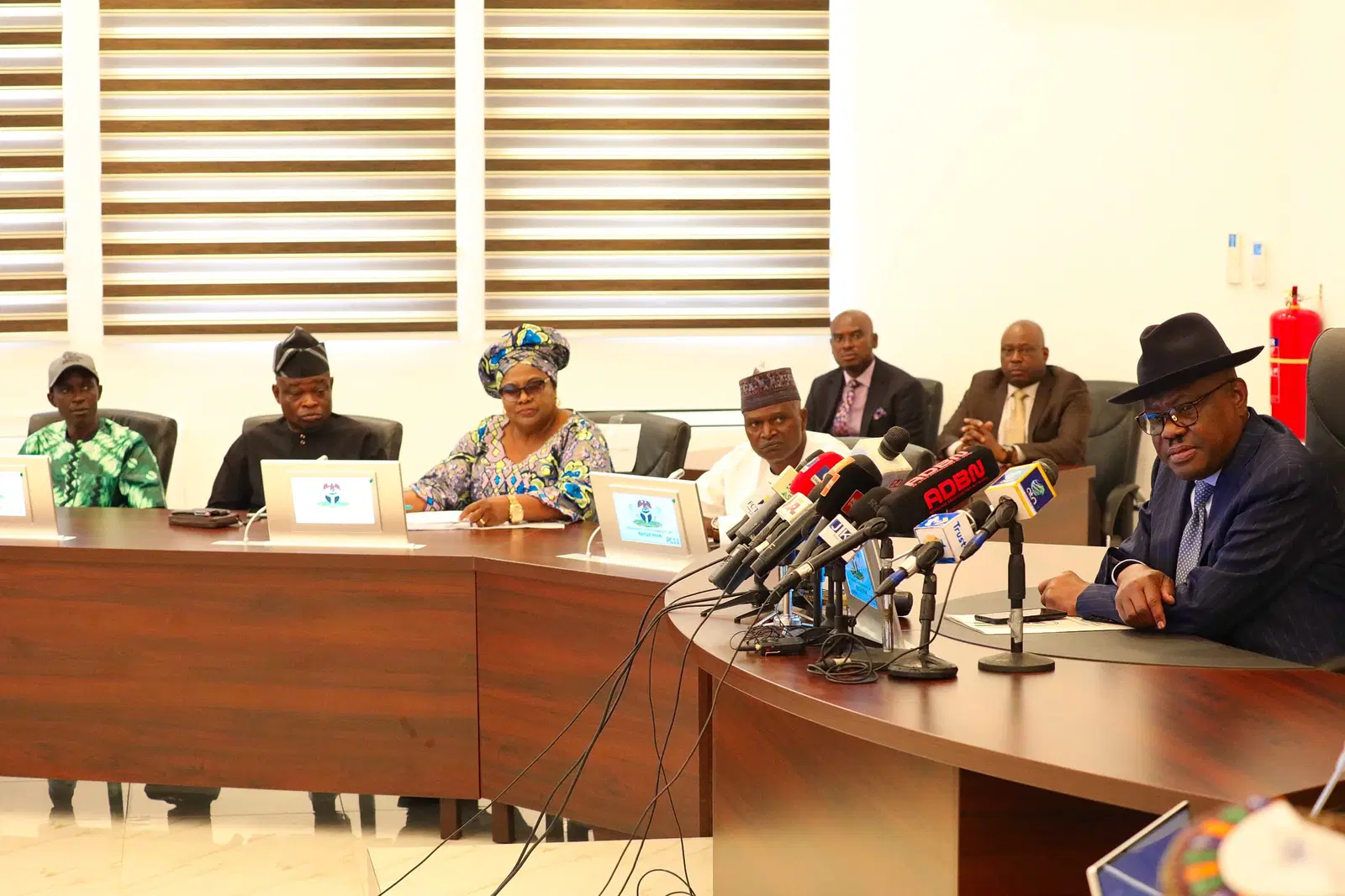
In response, Minister Wike met with the Area Council Chairmen and NUT leaders on July 3. During the meeting, they agreed to use 10% of the Area Councils’ Internally Generated Revenue (IGR) from the last six months to pay 70% of the owed minimum wage.
To resolve the remaining issues, Wike created a special committee. The committee includes three NUT members, two FCTA members, an Area Council Chairman, and a representative from the National Association of Nigerian Students (NANS).
The committee is tasked with addressing all other outstanding issues and submitting a plan for a permanent solution within two weeks.
When Persecondnews reached out to Shafa to enquire how schools were picking up, he explained that after spending about 14 weeks on strike, the strike was called off, just before the long vacation.
“Now, we are to utilise the remaining 4 to 5 weeks before the holiday, plus the holiday, to teach the pupils,” he said.
In response to concerns from parents about a condensed academic schedule, the NUT Chairman, Mohammed Shafa, has asked for patience.
He urged parents to trust that teachers will deliver quality education despite the tight timeline.
Shafa also addressed the issue of a potential teacher shortage.
While the union has not yet formally demanded more staff, he stated that if they determine it is a pressing issue, they will recommend that the government hire additional teachers.
To see how schools are coping, Persecondnews visited a large primary school in the Karu area of Abuja on Wednesday, July 30.
The usually lively school was unusually quiet, with students scattered around during a silent break period.
According to the headteacher (names withheld), the school lost 560 pupils to private schools during the three-month strike.
“Look around you; do you not see how quiet the pupils are? They lost most of their friends to private schools,” she said, adding that she was very confident that some of the pupils would return once they realised the school was back next session.
She said: “This is not the first time something like this has happened. The parents, whom I do not blame for switching their children, have to do what they believe is best for them. Normally, they bring the pupils back once everything returns to normal.
“Do you think that if those parents had the means for private school, they would have come here in the first place? They are here because they know their children will receive quality education at a subsidized rate.”
When asked if the government had fulfilled the promises made before the strike was called off, the Head Teacher concurred, saying: “Do you think you would have found anyone here if they had not? So far, they have met 70% of our demands.
“We are expecting more, though. But it is not something we will shout about again, saying we are going on strike. Strikes, especially those embarked by teachers, have very detrimental effects on the academic growth of pupils.
“That is why developed countries try to avoid them as much as possible. Those in power need to consider the adverse impact of these strikes on the academic calendar and pupils’ growth.”
For some parents, the strike left them with no options.
Nyizagi Ndakuso, a petty trader with three children in primary school, told Persecondnews on July 30 that she and her husband couldn’t afford to move their children to a private school.
“I know the implications of three months without learning,” she said.
“If I were more educated, I would have been teaching them one or two things, but as you can see, I am just a petty trader.”
However, others were able to make different choices. Eric Kwame, a Ghanaian living in Nigeria, moved his children to a private school less than a week after the strike began.
He said: “These children are the reason I am grinding day and night to give them the best, including the best education. Though I have been considering moving them to a private school, the strike was the final straw that broke the camel’s back.”
Eric Kwame, a Ghanaian who moved to Nigeria in 2003, didn’t hesitate to transfer his children to a private school.
Married to a Nigerian woman, Kwame sees his children’s education as his heritage and refused to let a strike compromise it.
In a separate interview with Persecondnews on Monday, August 4, education advocate Bukky Nwachukwu appealed to the Nigerian government to legalize homeschooling.
This educational approach, where parents or guardians teach their children at home, is already legal in many countries, including the US, UK, Canada, and Australia.
Nwachukwu believes that since parents are already involved in their children’s learning through homework and holiday lessons, the government should formalize homeschooling and provide proper oversight for parents who choose this path.
She said: “If you saw how some students in government primary schools were roaming around during the last strike, you would pity our education system.
“Now, ask yourself: if homeschooling were legalised in this country, would they be roaming about due to strikes?
“Let us put the strike issue aside. Recently, a one-year-and-two-month-old toddler was killed by a school gate man in a private primary school, and earlier, an eight-year-old girl was sexually violated.
“The truth is, some schools are no longer safe for our children, exposing them to bullying, violence, kidnapping, and even death.
“Many countries have adopted homeschooling, and it is working well for them. Even South Africa, a fellow African nation, is currently practicing it.”
Author








Leave a comment