














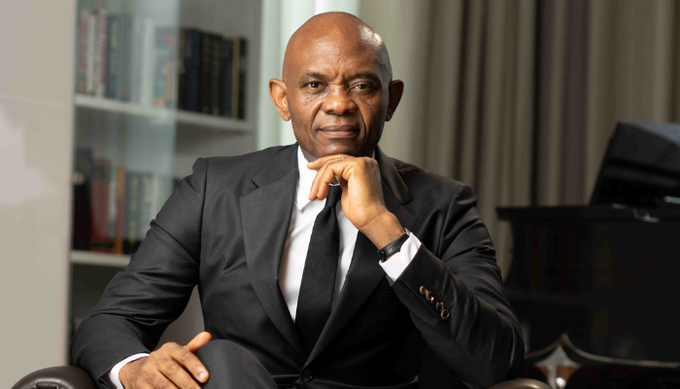
Akinwumi Adesina, president of the African Development Bank (AfDB), denied the alleged debt crisis in African countries during an interview on the sidelines of the Forum on China-Africa Cooperation (FOCAC) Beijing Summit.
Western nations accused China of hoodwinking poor African nations into debt overload.
“Let me be very clear: Africa has absolutely no debt crisis,” Adesina told the press after a discussion at the High-level Dialogue Between Chinese and African Leaders and Business Representatives, which was closed Tuesday as part of the FOCAC Beijing Summit.
“African countries are desperate for infrastructure. The population is rising, urbanization is there, and fiscal space is very small,” the AfDB president said. “They are taking on a lot more debt, but in the right way.”
Africa saw an overall debt-to-GDP ratio of 37 percent last year, which, albeit up from 22 percent in 2010, is within the reasonable range for low-income countries, Adesina said, stressing the ratio is markedly lower than 100 percent or 150 percent of many higher-income countries and over 50 percent of emerging economies.
For years, China has been providing money-starved African countries with loans that are urgently needed to build roads, power plants, and factories, as infrastructure is considered the precondition for African countries to propel industrialization and achieve prosperity.
China is saddling poor nations with unsustainable debt,Ray Washburne, head of the U.S. Overseas Private Investment Corporation (OPIC) has said recently.
According to him, the large-scale infrastructure projects run by the Chinese are not economically viable.
Washburne is not the first to warn of growing debt linked to Chinese infrastructure projects.
International Monetary Fund (IMF) Managing Director Christine Lagarde in April cautioned China’s Belt and Road partners against considering the financing as “a free lunch”.
Sri Lanka formally handed over commercial activities in its main southern port in the town of Hambantota to a Chinese company in December as part of a plan to convert $6 billion of loans that Sri Lanka owes China into equity.
Meanwhile, African observers say that Chinese investments in Africa will not add any debt burden to the continent. In the long run, they will ease it.
Chinese loans are mainly dedicated to the infrastructure in Africa, which is the prerequisite to attract the foreign direct investment. If a country has good infrastructure, the investors will come and they will create jobs and generate more income for the governments.
Author






Leave a comment