












By Omoyeni Ojeifo
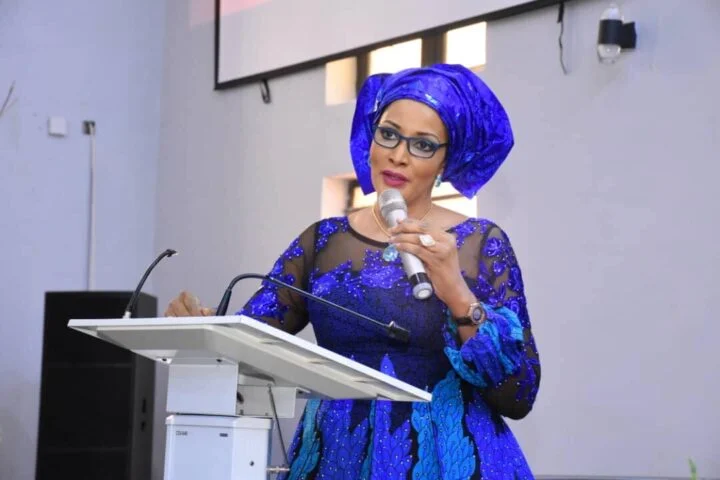
Nigeria’s foreign ministry has long been the domain of career politicians and seasoned power brokers. Yet, the appointment of Bianca Odumegwu Ojukwu marks a departure from the norm—a narrative defined by a unique blend of elegance, resilience, and a talent for self-reinvention.
A Legacy of Excellence: Roots and Discipline
Born on August 5, 1968, Bianca was raised in an environment where high achievement was a baseline requirement rather than an aspiration.
Her upbringing was shaped by two formidable figures:
*Chief Christian Onoh: Her father, a prominent legal mind and the former governor of the old Anambra State.
*Mrs. Carol Onoh: Her mother, a dedicated educator known for her disciplined approach to school administration.
This foundation provided the intellectual and moral framework that would eventually propel her from the world of pageantry into the highest tiers of international diplomacy.
Together, they built a foundation of discipline, ambition, and intellectual rigour.
Bianca attended schools in Nigeria before heading abroad first to Ackworth School in England, then Cambridge Tutorial College.
She later returned to study law at the University of Nigeria, Nsukka, and was eventually called to the Bar.
Even though she trained as a lawyer, her early foundation in law and governance quietly prepared her for a future far beyond the courtroom.
From Spotlight, Marriage and Diplomacy to Political Reinvention
Bianca first came into national prominence in the early 1990s after winning major beauty titles, including Most Beautiful Girl in Nigeria and Miss Africa.
These achievements brought her into the public eye, but unlike many of her contemporaries, she gradually transitioned into public service.
Her marriage to the late Chukwuemeka Odumegwu Ojukwu marked a defining turning point, connecting her to one of Nigeria’s most influential political legacies and embedding her within South-East political consciousness.
Her entry into governance came through diplomacy, serving as Nigeria’s ambassador to Spain, where she represented the country in international engagements and strengthened bilateral relations.
She later returned as Minister of State for Foreign Affairs, placing her at the heart of Nigeria’s foreign policy structure.
Elevation at a Critical Moment in Foreign Policy
Her appointment as Minister of Foreign Affairs followed the exit of Yusuf Maitama Tuggar, coming at a time when Nigeria is navigating shifting global alliances and mounting diplomatic pressures.
Observers say her elevation reflects both continuity within the ministry and broader political considerations, including regional balance and institutional stability.
Beyond Legacy, Women in Power and Global Expectations
While her association with the Ojukwu legacy remains significant, Bianca has steadily built an identity that stands beyond it.
Her progression reflects a careful balance between inherited influence and personal achievement.
Her rise also highlights the evolving role of women in Nigerian politics, where competence and visibility are increasingly reshaping leadership pathways in traditionally male-dominated spaces.
Now at the helm of Nigeria’s foreign policy, expectations are high. The role demands strategic engagement in trade, security, and international diplomacy at a time of global uncertainty.
From Reinvention to Responsibility
From pageantry to diplomacy and now to Nigeria’s top diplomatic office, Bianca Odumegwu Ojukwu’s journey reflects reinvention, resilience, and persistence. It captures a broader shift in Nigerian leadership where unconventional paths increasingly intersect with national power.
Her story is one that resonates beyond politics, a journey many will see as inspiring and worthy of pride, reflecting how determination and purpose can redefine public life in unexpected ways.
Nigerians’ Expectations
As Bianca takes office, the national spotlight is firmly on her. Public expectations are high, with many looking to her to revitalize Nigeria’s international standing and sharpen its diplomatic edge.
Beyond mere representation, her mandate is viewed through the lens of three critical priorities:
*Global Reputation: Rebuilding and strengthening Nigeria’s image on the world stage.
*Economic Diplomacy: Leveraging foreign relations to drive investment and domestic growth.
*Consular Reform: Ensuring that the concerns of Nigerians in the diaspora are met with swifter, more proactive support.
Author











Leave a comment