












As the Middle East grapples with an unprecedented cycle of military strikes and retaliatory fire, the Nigerian government has shifted its foreign policy apparatus into a high-capacity emergency mode.
With the Ministry of Foreign Affairs and the Nigerians in Diaspora Commission (NiDCOM) are now “closely monitoring” a rapidly deteriorating security landscape, a comprehensive list of emergency contact points has been released to safeguard thousands of Nigerians caught in the crossfire.
The necessity for this diplomatic mobilization follows a volatile sequence of events: joint Israeli-U.S. airstrikes in Iran, followed by Iranian retaliatory strikes targeting strategic locations in various Gulf states.
The impact has been immediate and physical. In the United Arab Emirates, air defense systems have been engaged in Abu Dhabi and Fujairah, resulting in injuries to foreign nationals.
Meanwhile, in Bahrain, a missile strike on the national refinery and a subsequent precautionary cut in oil production by the Kuwait Petroleum Corporation have signaled a deepening economic and security paralysis in the region.
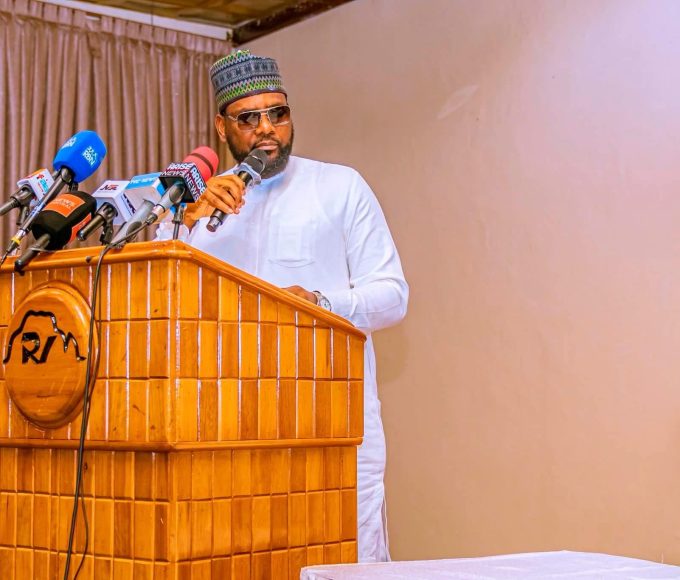
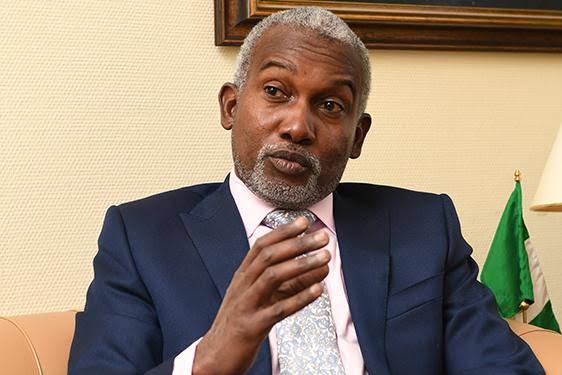
The Ministry of Foreign Affair’s spokesperson, Kimiebi Ebienfa, and NiDCOM Chairman, Abike Dabiri-Erewa, have stressed that registration with local missions is no longer a formality but a critical survival strategy.
Hence, dedicated emergency lines have been activated across the most affected zones –the Iran-Israel Corridor – Nigerians in Iran are urged to use +98 937 685 1897 or +234 906 768 4063.
Simultaneously, those in Israel—where religious pilgrimages have already been officially suspended—can reach the Tel Aviv mission at +972 547115279.
The Gulf States: With the U.S. Embassy in Riyadh recently sustaining damage from drone strikes, Nigerians in Saudi Arabia have been given direct lines to the Riyadh embassy (+966 542149456) and the Jeddah consulate (+966 56 096 5633).
In Qatar, where residents near the Doha U.S. embassy were recently evacuated following ballistic missile interceptions, citizens can call +974 3019 7102.
The Levant and Beyond: In Lebanon, where nearly half a million people are currently displaced, the Beirut mission is reachable via +961 78 861 779.
The mission in Jordan, which also oversees interests in Iraq, is operating through +962 777369428.
Beyond providing a directory of hotlines, the government’s advisory serves as a tactical guide for civilians navigating a war zone.
To this end, the Ministry has issued a “zero-exposure” directive, advising all nationals to:
1. Restrict Movement and limit all travel to absolute essentials.
2. Avoid Strategic Flashpoints – Stay clear of military installations, government buildings, and diplomatic quarters which have become primary targets.
3. Comply with Host Authorities – Follow local sirens, blackout orders, and evacuation drills without hesitation.
4. Maintain Communication – Use the newly activated WhatsApp and mobile lines (notably +965 9923 8835 in Kuwait) to provide location updates to Nigerian officials.
While NiDCOM reassures the public that the Federal Government is prepared to take “necessary steps” to prevent the loss of Nigerian lives, the underlying tone remains one of high alert.
The Ministry of Foreign Affairs continues to advocate for a return to dialogue and de-escalation, but the activation of these emergency protocols suggests that Nigeria is preparing for a protracted period of regional instability.
Author






Leave a comment