















Residents across Nigeria’s South-East celebrated the Yuletide season with the economic landscape presenting a tale of two markets – a welcome crash in food prices contrasted by the soaring costs of fashion and luxury goods.
Persecondnews reports that in Onitsha’s Relief Market, traders are seeing high volumes of business as food prices have plummeted, providing much-needed financial breathing room for families during the holidays.
Conversely, at the Main Market, the atmosphere is more somber.
The prices for clothing, shoes, handbags, and watches remain prohibitively high, leaving many parents unable to afford traditional Christmas outfits for themselves or their children.
Despite the crowded aisles of the clothing sections, most shoppers are there to window shop or voice their frustrations, as the high cost of apparel remains a significant barrier to festive spending.
Shoppers in Onitsha are experiencing a significant reprieve this holiday season as the prices of essential food items have taken a dramatic downturn.
Speaking with Persecondnews, resident Ngozi Okolie noted that staples like King’s vegetable oil have dropped from N90,000 last year to N75,000.
Similar trends are visible in processed goods, with tomato cartons falling from N35,000 to N26,000, and spaghetti prices sliding from N30,000 to N22,000.
Market Snapshot: Price Comparisons
The price reductions across grains and perishables are even more pronounced, as shown in the table below:
Item | 2024 Price (N) | 2025 Price (N)
| Beans (Bag) | 160,000 | 80,000 |
| “Foreign” Rice (Bag) | 90,000 | 60,000 |
| Maize (Bag) | 84,000 | 45,000 |
| Local Rice (Bag) | 60,000 | 35,000 |
| Bendel Garri (Bag) | 30,000 | 16,000 |
| Tomato Basket (Large) | 120,000 | 70,000 |
At Woliwo Market, trader Benjamin Odion reported that the price crash has triggered “record-breaking” foot traffic.




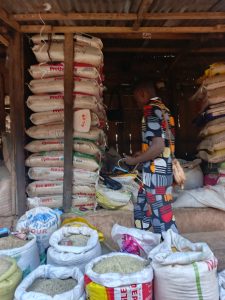


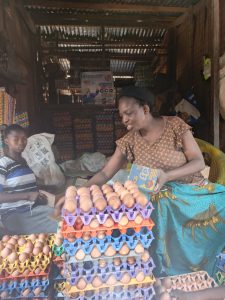
According to Persecondnews, the surge is so intense that major hubs like Coke Market—famous for fresh meat, fish, and eggs—have become nearly inaccessible.
The massive influx of shoppers caused significant bottlenecks, with crowds at the gates leaving visitors stranded for up to 20 minutes.
Buyer Anderline Ikwuka captured the local mood, expressing her delight at the savings.
“I bought a large basket of tomatoes last year for N120,000,” she shared, “but today, I paid just N70,000 for the same quantity.”
She said: “Seriously, the way food prices have fallen this year is such a joy. I paid almost twice this year’s price for the same basket of tomatoes last year.
“I do not know what happened or what the government did to make this happen but they must not stop. We need more commodity prices to drop.”
A visit to the markets by Persecondnews confirmed that the downward trend in food prices extends to perishables, with the price of a crate of eggs dropping from N7,500 to N5,500.
While many shoppers view this shift as a “miracle,” it aligns with the Federal Government’s November 2025 report citing “targeted market interventions and sustainable agricultural investment” as the primary drivers of deflation.
During the 47th National Council on Agriculture and Food Security in Kaduna, Minister Sen. Abubakar Kyari emphasized that President Bola Tinubu’s reforms focus on food sovereignty—ensuring that Nigerian-grown food remains accessible and affordable for every household.
This represents a significant turnaround from the 2024 cost-of-living crisis.
At its peak in June 2024, food inflation hit a staggering 40.87%, pushing headline inflation to 34.19%.
Fast forward to September 2025, and CPI data shows a cooling market, with food inflation plummeting to 16.87%.
Despite the food boom, the atmosphere at Onitsha’s Main Market—the commercial heart of the South-East—remains somber.
On Saturday, December 20, traders reported discouraging sales figures.
Usually a bustling hub for shoppers from all five South-Eastern states during the Yuletide, the market has seen unusually low traffic.
Many vendors lamented that their stock of clothing and accessories is simply gathering dust, as consumers prioritize affordable food over new apparel.
The fashion and retail sector at Onitsha’s Main Market is grappling with a stark shift in consumer behaviour.
As new apparel prices soar, the demand for “Okirika” (second-hand clothing) has surged, forcing many retailers to adapt their business models just to stay afloat.
Mr. Chukwudi Onwura, a clothing retailer, expressed disappointment over the low turnout of customers despite numerous inquiries. He noted that the steep price hikes have made new garments a luxury for many.
Price Comparison: Dec 2024 vs. Dec 2025, two-piece outfits rose from N13,500 to N23,000, adult jeans humped from N7,000 to N15,000 while Turkish gowns increased from N28,000 to N42,000.
To mitigate the slump in sales, some vendors are now sourcing high-quality second-hand items from Aba to supplement their inventory and meet the budget of the average shopper.
Shopper Uzoma Okechukwu argued that the price hikes were predictable.
“I stocked up on Christmas clothes back in August,” she shared, advising that early saving and “being smart” are essential for surviving the Nigerian economy.
Chinyere Okwundu, a vendor of shoes and handbags, noted a “silver lining” to the inflation.
Although her volume of sales is lower, her profit margins per item have increased.
“The profit you made selling two shoes last December is now what you make selling just one,” she told Persecondnews.
Despite the individual profits, the mood remains cautious. Okwundu warned that the real struggle lies in restocking, as wholesale prices continue to fluctuate unpredictably.
Nevertheless, a spirit of resilience prevails among the traders, with many expressing gratitude for the opportunity to celebrate the season despite the economic hurdles.
Author












Leave a comment