







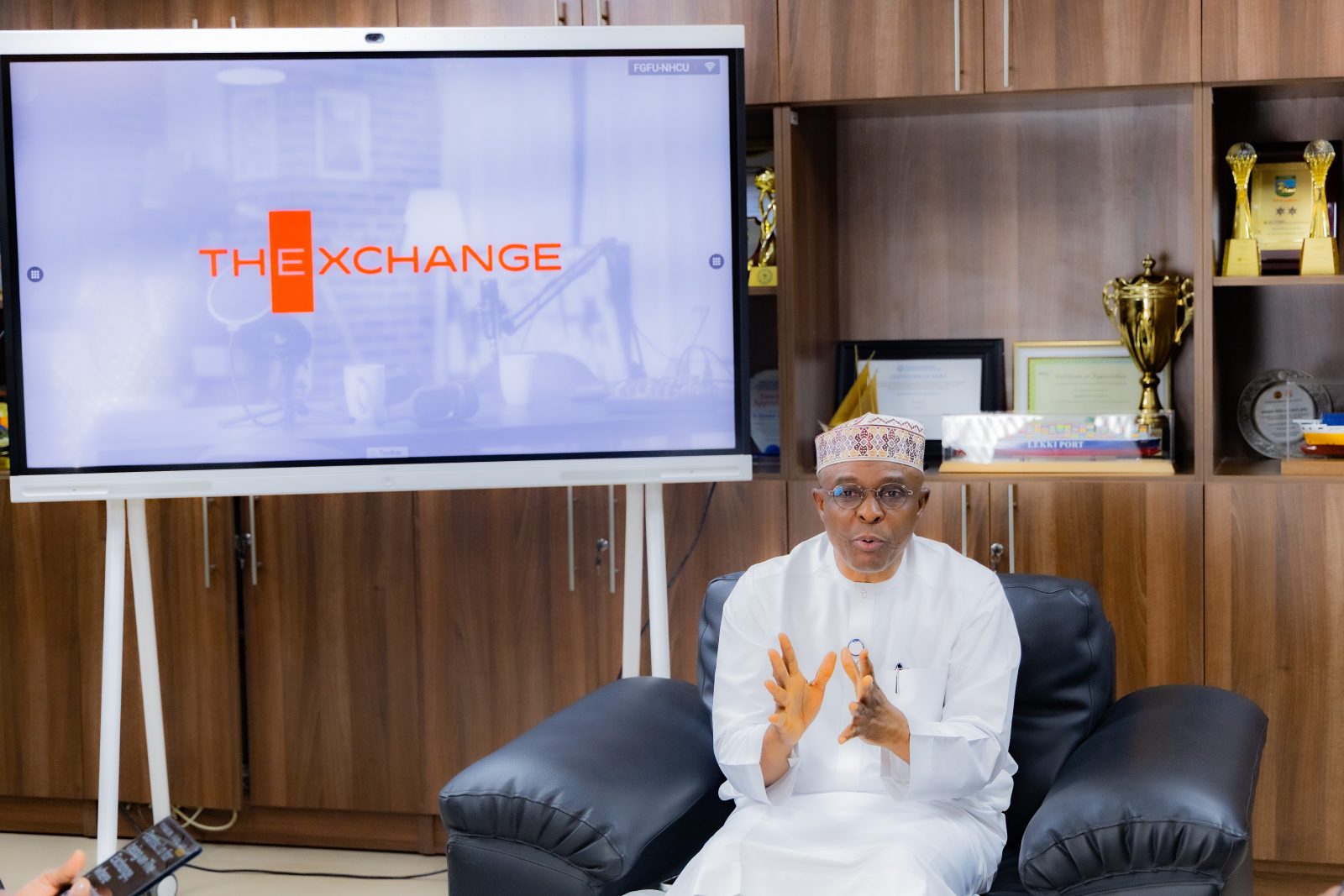



Nigeria is stepping up efforts to reclaim cargo passing through neighbouring countries and position itself as Africa’s leading maritime hub through port modernisation, new equipment and digital reforms, the Managing Director of the Nigerian Ports Authority, Dr Abubakar Dantsoho, has said.
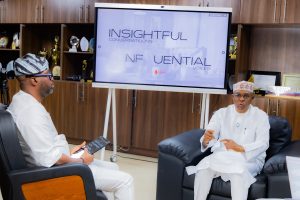
Speaking with Femi Soneye at The Exchange podcast, a Per Second News interview programme, Dantsoho said Nigeria’s port capacity must grow to reflect the size of its population, industrial activity and trade potential.
He identified infrastructure renewal, equipment acquisition and technology adoption as three major areas in which President Bola Tinubu’s administration had supported the authority’s drive to improve efficiency and strengthen competitiveness.
“Our ambition is that we are the most populous in Africa, and our port must be number one,” he said.
Dantsoho said outdated infrastructure had constrained Nigeria’s ability to receive larger vessels, allowing competing ports in the region to handle cargo ultimately destined for the Nigerian market.
He named ports in Benin, Togo, Ghana and Côte d’Ivoire among those competing with Nigeria for maritime business, stressing that domestic demand alone would not translate into leadership without adequate facilities.
According to him, the modernisation of Apapa and Tin Can Island ports, alongside planned improvements at Port Harcourt, Onne and Calabar, is central to addressing those limitations.
He said progress had been made towards contract awards and the commencement of modernisation work, describing the infrastructure programme as a significant intervention by the administration.
Dantsoho explained that accommodating larger ships requires more than deeper channels. Ports also need stronger quay infrastructure, suitable cargo-handling equipment and stacking areas capable of supporting higher volumes.
He said these investments would enable Nigeria to benefit from the economies of scale associated with larger vessels and reduce its dependence on cargo transferred through other countries.
Illustrating the challenge, Dantsoho recalled a visit to Apapa where several vessels carrying smaller container loads were occupying berth space after receiving cargo transferred through Tema, Ghana.
He said a single larger vessel could carry substantially more cargo while requiring fewer separate berthing and operational arrangements than several smaller ships.
With improved infrastructure, he argued, shipping lines would have a stronger commercial incentive to bring Nigerian cargo directly into the country, creating opportunities for Nigerian ports to redistribute goods to smaller regional destinations.
Dantsoho also highlighted the acquisition of marine equipment to support increasingly demanding operations, including offshore services linked to the Dangote refinery.
He explained that offshore operations require equipment suited to longer journeys and more complex assignments than conventional movements within the harbour.
“The government has given us the equipment that is needed to do modern port operations,” he said.
On technology, the NPA managing director identified approvals for the National Single Window and the Port Community System as important steps towards more coordinated and efficient trade processes.
He described the National Single Window as a platform designed to bring participating agencies and operators into a common digital environment, while the Port Community System would connect stakeholders within the port ecosystem.
Dantsoho said the administration’s backing had enabled the authority to pursue reforms that had been needed for years.
“There hasn’t been anything that we recommended or proposed that was declined,” he said, referring to presidential support channelled through the supervising minister.
He said the interventions were contributing to improvements in operational capacity, efficiency and revenue generation.
Beyond infrastructure and technology, Dantsoho highlighted process reforms, including the electronic truck call-up system and export processing terminals.
He said the export terminals were intended to coordinate processing, uphold international standards and reduce the risk of Nigerian goods being rejected in overseas markets.
On deep seaport development, Dantsoho said Nigeria required additional capacity to serve its domestic market and compete for transit cargo destined for landlocked countries, including Niger, Chad and Mali.
He said annual container traffic had remained around two million containers over the past decade, a level he considered below the country’s potential.
According to him, some goods arriving through neighbouring ports subsequently enter Nigeria through formal and informal routes, underscoring the gap between domestic demand and the cargo handled directly by Nigerian ports.
Dantsoho said plans to expand Lekki Deep Seaport were also being pursued to increase its berthing capacity.
He explained that the authority’s approach combined the rehabilitation of existing ports with the development of new deep seaports over the medium and long term.
However, he stressed that new ports require substantial private investment, supported by credible feasibility studies and clear commercial prospects.
He described interest from major international port and logistics operators as an indication of confidence in Nigeria’s maritime potential.
Dantsoho said port expansion must also align with growth in agriculture, mining and manufacturing, which he identified as major sources of maritime cargo.
“If you are planning to expand your economy, then you have to expand the port capacity,” he said.
He argued that rising production and trade would place greater demands on port infrastructure, making sustained investment essential to the country’s economic ambitions.
Dantsoho expressed confidence that Nigeria could secure a stronger position in African maritime trade by combining modern infrastructure and equipment with technology, efficient processes and skilled personnel.
“We have the population, we have the economy,” he said. “That is our vision. That is our thinking. That is our hope.”
Author








Leave a comment