















By Omoyeni Ojeifo
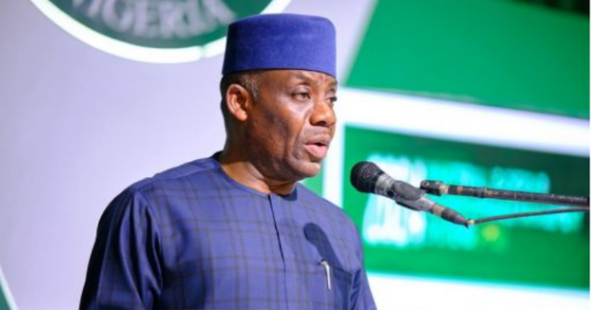
The Federal Government has defended scrapping select overseas scholarship schemes, with Education Minister Dr. Tunji Alausa citing soaring costs and the growing strength of Nigeria’s own universities.
According to Alausa, local tertiary institutions now offer many of the specialized programs students previously had to travel abroad to study.
PerSecondNews correspondent reports that the minister made the remarks in Abuja on Friday, at a press briefing on the Tertiary Institutions National Laureate Prize, an initiative established to recognise and reward outstanding academic research, innovation and intellectual excellence across Nigeria’s tertiary education system.
The Minister said the bilateral scholarship arrangements were established about 20 years ago to enable Nigerian students acquire training in areas where the country lacked sufficient manpower.
He maintained that the growth of Nigeria’s universities, polytechnics and colleges had changed the circumstances that informed the original agreements.
“When those programmes were set up, it was 20 years ago. They were meant to get students to go train in other countries where we did not have capacity. But in the last 20 years, we’ve built enormous capacities in education, universities, technical colleges and colleges.
“I got approval for just about 150 students going to Morocco to study courses in mass communication, journalism and psychology, and that one-year cost us 650 million,” he told newsmen.
Alausa stressed that some students sent to Morocco also spent their first year learning French before proceeding with their chosen programmes, further raising the cost of the arrangement.
“The bilateral scholarship agreement was not making sense again to us and the government. It was a way to waste government funds.”
He noted that Nigeria’s decision to stop funding the arrangements would allow government to redirect resources towards strengthening domestic institutions and expanding opportunities for more students.
“We said countries that want to continue, the new government can continue to do that, but as for us, we will not be spending public fund in a way that we think is worthwhile.”
Alausa emphasized that the government’s position was also guided by its commitment to prudent management of public resources.
“This President would not waste any fund, any public fund, and we will not be spending public fund in a way that we think is not worthwhile.”
Author








Leave a comment